The best gravel for fire pit area projects is usually angular crushed stone for the compacted base, paired with a comfortable decorative gravel or stone for the seating surface. This layered approach gives chairs a steadier foundation, helps water drain, and makes the finished area easier to maintain in a North Texas backyard.
Planning a fire pit area? Contact McCraw Landscape Supply for help selecting base and surface materials before you order.
The material around a fire pit is not necessarily safe inside the fire pit. Keep ordinary landscaping gravel, river rock, decorative stone, and other unverified products away from direct flame and intense heat. Use only the fire pit manufacturer’s approved media inside the appliance or burn chamber, and follow local fire rules.
What is the best gravel for a fire pit area?
For most backyard seating areas, the best build uses compactable angular gravel below and a stable, comfortable surface material above. Crushed limestone or another angular aggregate can interlock under compaction. The top layer can then be selected for appearance, chair stability, walking comfort, and maintenance.
There is no single gravel that is ideal for every layer. A rounded stone may look inviting but shift under chair legs. A coarse angular product may form a strong base but feel uncomfortable under sandals. Separating the structure from the finish lets each material do the job it handles best.
Recommended materials by project role
| Project role | Useful material trait | Why it matters |
|---|---|---|
| Compacted base | Angular particles with fines | Particles knit together to support furniture and reduce movement. |
| Walking and seating surface | Small, consistent stone with manageable movement | A comfortable surface is easier to walk on and maintain around chairs. |
| Decorative border | Color, texture, and larger visual scale | A border defines the space without placing loose stone beneath chair legs. |
| Inside the fire pit | Manufacturer-approved fire media only | Standard landscaping products must not be assumed safe for direct flame. |
Compare McCraw’s available landscape gravel and natural stone options by their intended role. Ask the McCraw team which current product is appropriate for your base, surface, or border. Product availability can change, and no landscaping product should be treated as fire-rated unless that rating is specifically verified.
Build a stable base on North Texas soil
A durable fire pit area begins below the visible gravel. North Texas clay soils can expand when wet and shrink as they dry. A well-prepared, compacted base helps the seating area stay more even through those seasonal changes.
Mark the footprint and check the site
Lay out the full seating area before digging. Include space for the fire pit or appliance, chairs, walking paths, and a clear route out of the area. Confirm the placement and clearances in the fire pit manufacturer’s instructions. Also check for buried utilities and follow local requirements before excavation.
Look at the site after rain. Water should move away from the house and should not collect beneath the planned fire pit. If the yard holds water, correct the drainage plan before ordering stone. Gravel can help water pass through a properly built section, but it will not fix a low spot with nowhere to drain.
Excavate and compact in layers
Remove turf, roots, and loose organic material. The required excavation depth depends on the soil, traffic, chosen materials, and finished elevation. Instead of relying on one universal depth, confirm the base specification for your project and compact it in manageable lifts.
A mechanical plate compactor produces a more dependable result than foot traffic alone. Check the surface as you work. Low areas can collect water, while an uneven base can make chairs rock even after the decorative layer is installed.
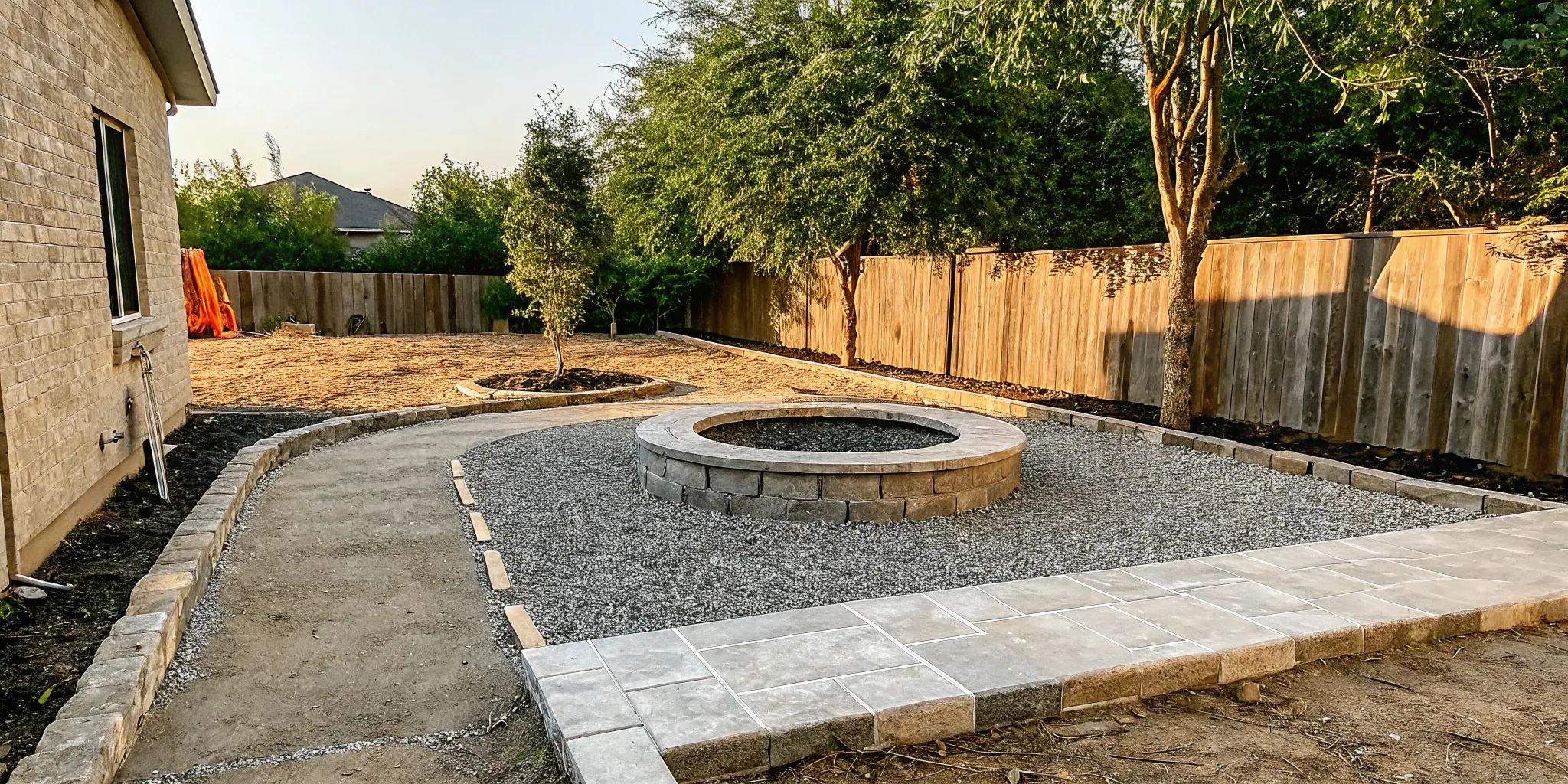
Decide whether separation fabric fits the project
Geotextile fabric can help separate aggregate from the soil on some sites. It is not a substitute for excavation, compaction, or drainage. Ask a qualified contractor whether fabric belongs in your build, especially if the site has soft soil, concentrated runoff, or a history of settlement.
Choose the surface by how the area will be used
The best surface stone balances chair stability, walking comfort, drainage, upkeep, and appearance. Start with how people will use the space, then narrow the options by color and budget.
Angular gravel for a firmer seating surface
Angular particles resist rolling because their edges catch against neighboring pieces. That makes angular gravel a practical choice where people will move chairs or walk frequently. A correctly installed compactable product can create a firm surface while keeping the informal look of gravel.
Surface texture still matters. Very coarse stone may be stable but uncomfortable underfoot. Very fine material can track into the house or move during heavy rain. Inspect the product in person and explain the intended use to the supplier before deciding.
Rounded gravel for a softer visual effect
Rounded gravel offers a smooth, finished appearance, but its particles move more readily. Chair legs may sink or drift if the layer is deep. It often works better as a decorative accent or in lower-traffic areas than beneath frequently moved seating.
For a closer comparison of two common surface approaches, read McCraw’s guide to pea gravel versus decomposed granite. The right choice depends on whether your priority is a softer look or a more compact surface.
Decorative stone for borders and accents
A border can add contrast without sacrificing a stable center. Larger decorative stone can define the perimeter, connect the feature to nearby planting beds, and keep the main seating material contained. McCraw carries rock and stone for landscaping, but exact sizes and current inventory should be confirmed before ordering.
Keep decorative materials outside the direct-flame area unless the manufacturer explicitly approves them for that use. River rock and other moisture-bearing or unverified landscaping stones must not be placed inside a fire bowl or exposed directly to intense heat.
Which materials can be exposed directly to flame?
Only use media explicitly approved by the fire pit or appliance manufacturer inside the burn chamber or any direct-flame zone. Standard landscape gravel is selected for ground cover and construction, not for direct heat exposure.
Heat can affect stone unpredictably. Some materials can retain moisture, crack, or break apart when heated. For that reason, do not assume a product is safe because it is natural stone, because it has been used outdoors, or because a similar-looking product appears in a photo.
Separate the appliance from the landscape surface
Treat the fire pit itself and the surrounding seating area as separate systems. The appliance needs an approved foundation, clearance, ventilation, fuel setup, and fire media. The landscape surface needs drainage, stable footing, edging, and comfortable circulation.
Follow the fire pit manufacturer’s installation manual first. If the instructions call for a noncombustible pad, specified fire media, or a certain clearance, do not replace those requirements with ordinary gravel. For permanent masonry or gas features, use qualified professionals and comply with applicable codes and permits.
Use a practical safety checklist
- Confirm the manufacturer’s required clearances from structures, fences, trees, and overhead branches.
- Use only approved material inside the burn chamber or direct-flame zone.
- Keep chairs and walking routes outside the required clearance area.
- Check local burn restrictions and weather conditions before use.
- Keep the fire attended and have an appropriate extinguishing method ready.
- Do not use the area until the base, edging, appliance, and fuel connections are secure.
Need help separating landscape materials from direct-flame components? Talk with McCraw about the gravel and stone portion of your plan, then verify appliance requirements with the manufacturer.
Plan edging and drainage before ordering
Edging keeps loose material in place, while positive drainage helps protect the base. Both decisions should be made before quantity calculations because they affect the finished footprint and depth.
Contain the surface material
Without a defined edge, gravel migrates into turf and planting beds. A strong edge also makes mowing and routine cleanup easier. Stone, metal, or another landscape edging system may work, provided it suits the intended load and does not conflict with the appliance clearances.
Set the edge high enough to contain the surface but not so high that it becomes a trip hazard. If the design includes an entry path, plan a smooth transition into the seating area.
Move water away from the fire pit area
Grade the site so water does not collect around the fire pit or flow toward the house. A slight, intentional slope can move runoff while remaining comfortable for seating. Avoid creating a bowl-shaped excavation that traps water below the gravel.
On difficult sites, a contractor may recommend additional drainage measures. Those measures should discharge water to an appropriate location. Simply adding more gravel to a wet low point often hides the problem temporarily instead of solving it.
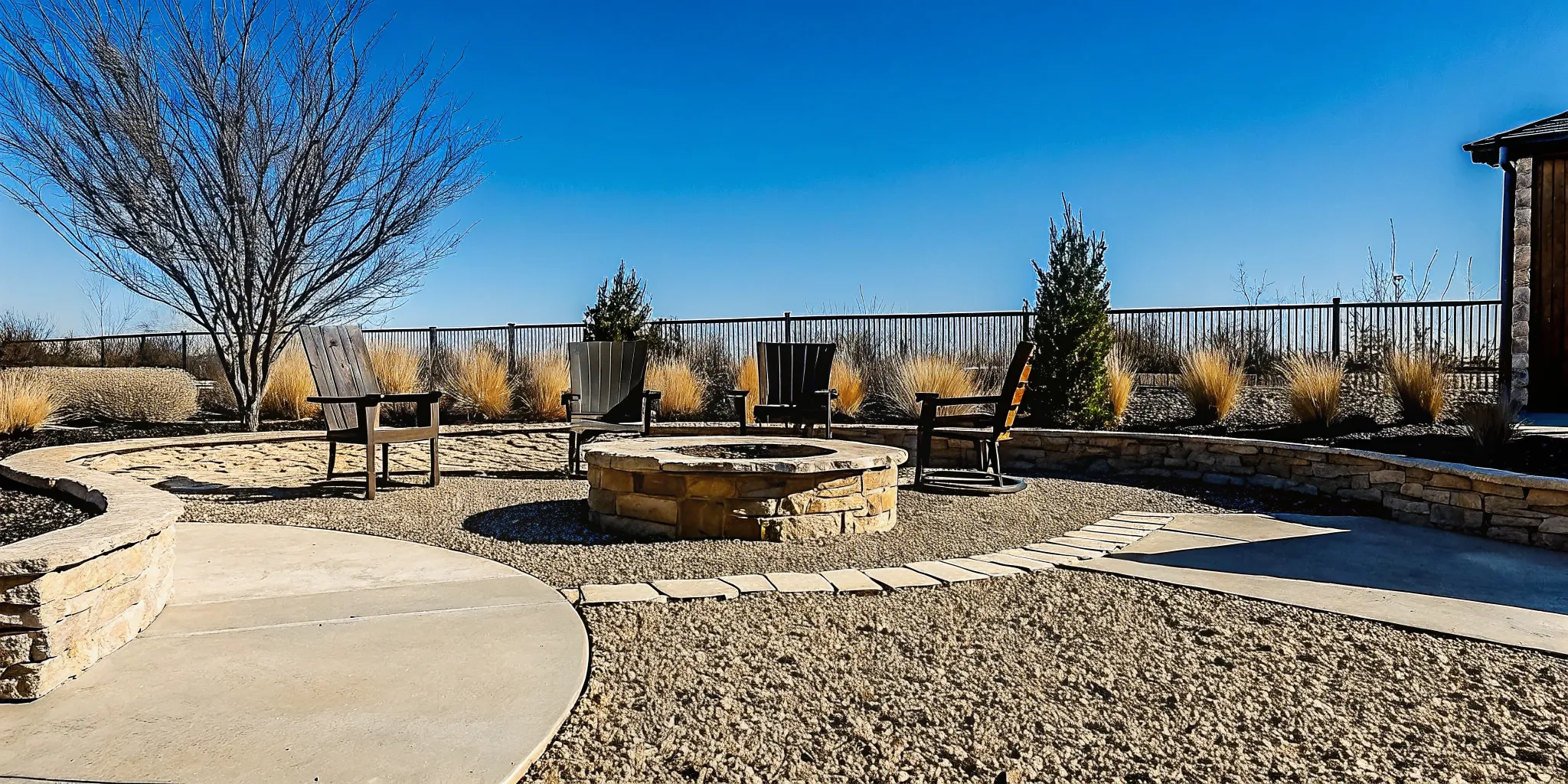
How much gravel does a fire pit area need?
For a rectangular area, estimate cubic yards by multiplying square feet by depth in inches, then dividing by 324. Circular layouts require an area calculation first. Always calculate base and surface layers separately because they may use different products and depths.
Calculate each layer
- Measure the planned footprint in square feet.
- Confirm the installed depth for the base layer.
- Multiply square feet by base depth in inches, then divide by 324.
- Repeat the calculation using the surface-layer depth.
- Confirm the estimate with the supplier before ordering.
For example, a 300-square-foot seating area with a 2-inch surface layer requires about 1.85 cubic yards before any allowance for compaction, settlement, or irregular edges. That example is only a quantity calculation, not a recommended depth for every project.
McCraw’s area calculator can help you estimate material needs. For more context on conversions and ordering, review the guide on estimating tons of gravel. Your supplier should confirm whether a selected product is sold by volume or weight and how compaction affects the order.
Account for real-world conditions
Perfect geometric calculations rarely match an irregular backyard exactly. Curves, widened entries, grade corrections, compaction, and spillage can all change the amount needed. Measure the final layout rather than relying on an early sketch, and discuss a reasonable ordering allowance with McCraw.
Fire pit gravel planning checklist
A good order starts with a clear plan for safety, structure, finish, and quantity. Use this checklist before arranging pickup or delivery.
- Choose the fire pit or appliance and read its installation instructions.
- Confirm local requirements, utilities, clearances, and site access.
- Mark the seating footprint and evaluate drainage after rain.
- Select a compactable base material for the site’s conditions.
- Select a surface material based on chair stability and walking comfort.
- Choose edging that contains gravel without creating a trip hazard.
- Keep all unverified landscaping gravel and stone outside direct flame.
- Calculate the base and surface quantities separately.
- Confirm current products, quantities, and logistics with McCraw.
This sequence prevents the common mistake of choosing a decorative rock first and trying to make the construction plan fit it later. It also gives McCraw’s team the information needed to discuss suitable landscape materials for your project.
Frequently asked questions
Can I use standard landscaping gravel inside a fire pit?
No. Do not place standard or unverified landscaping gravel inside the burn chamber or direct-flame zone. Use only media specifically approved by the fire pit manufacturer. Ordinary gravel can react unpredictably to intense heat.
Is pea gravel a good surface around a fire pit?
Pea gravel can create an attractive surrounding surface, but its rounded particles tend to move under chairs and feet. It may be better for accents or low-traffic areas. Keep it outside the direct-flame zone and compare it with more stable surface options.
Does gravel improve drainage around a fire pit?
Gravel can be part of a well-drained build, but it does not correct poor grading by itself. The site must direct water away from the house and fire pit area. Persistent low spots may require a contractor-designed drainage solution.
Should I use landscape fabric under the gravel?
Geotextile fabric can separate aggregate from soil on some sites, but it is not a substitute for a stable base or proper drainage. The right choice depends on the soil, intended use, and construction method.
How do I estimate gravel for a circular fire pit area?
Calculate the circle’s square footage using radius squared multiplied by 3.14. Then multiply that area by the layer depth in inches and divide by 324 to estimate cubic yards. Calculate each material layer separately.
Choose materials with McCraw Landscape Supply
A reliable fire pit seating area uses the right material in the right place. Build for stable footing and drainage, choose the visible stone for real-life use, and keep all unverified landscaping products away from direct flame.
Contact McCraw Landscape Supply for help comparing gravel and stone for your North Texas project. Bring your measurements, planned depths, and fire pit manufacturer’s instructions so the team can help you prepare an accurate landscape-material order.
