When North Texas rain settles into dense Blackland Prairie clay, standing water can threaten turf, hardscapes, and foundations. Choosing the best gravel for French drain construction is what keeps that water moving instead of letting fine clay choke the trench. For most residential systems, the reliable choice is clean, washed, angular stone around 3/4 inch, paired with non-woven geotextile fabric and a correctly sloped perforated pipe.
Contact McCraw Landscape Supply for help selecting and ordering French drain gravel.
Best Gravel For French Drain: What is the best gravel for a French drain?
The best option for most North Texas French drains is 3/4-inch clean, washed, angular gravel. Washed stone has minimal dust and fines, while angular pieces create stable voids that let water reach the pipe. In local clay soil, wrap the gravel and pipe with non-woven geotextile fabric so migrating clay does not gradually clog those drainage paths.
A French drain depends on the entire assembly, not stone alone. The trench needs a steady fall toward a safe outlet, the perforated pipe needs proper placement, and the fabric must separate native soil from the gravel envelope. Start by reviewing McCraw’s clean gravel options for drainage projects, then confirm the right material and quantity for your site.
Key takeaways for a long-lasting North Texas French drain:
- Choose clean, washed, angular gravel, generally around 3/4 inch.
- Avoid pea gravel and any aggregate containing dust or fines.
- Separate Blackland Prairie clay from the stone with non-woven geotextile fabric.
- Build a continuous gravel envelope around the pipe and maintain a positive slope to the outlet.
- Plan the outlet before excavation so collected water has a safe place to discharge.
Specify washed stone with minimal dust and fines. Unwashed aggregate carries small particles into the gravel envelope, where they reduce void space and can contribute to clogging over time. In North Texas, clean angular stone provides the open, stable structure needed to move water through the trench efficiently.
The best size for water flow
The best size for most jobs is 3/4 of an inch. Stone this size leaves enough space for water to rush through. If the rocks are too small, like pea gravel, they pack too close. This blocks the water and slows the drain down. If the rocks are too big, they are hard to move and might leave large gaps that let dirt in.
Larger projects may call for 1 1/2-inch stone when the trench design and expected flow support it. For many residential North Texas drains, 3/4-inch stone balances drainage voids, pipe support, and ease of placement. Confirm the specification before ordering because trench dimensions, outlet capacity, and site conditions all affect the final choice.
Why jagged stone is better
You may want to use smooth river rocks because they look nice. But sharp, jagged stone is a better choice for a drain. These pieces have rough edges that lock together. This makes the stone bed firm. It will not shift or slide when the ground moves. This grip is key for long-term results in North Texas soil.
Jagged stone also leaves more open gaps. This is sometimes called void space. These gaps are where the water travels to reach the pipe. When you look at crushed stone vs river rock for drainage, the jagged stone wins for flow and grip. It keeps your drain working even during a big storm. The rough feel also helps the stones stay put when you fill the trench.
North Texas clay needs
The soil here is called Blackland Prairie clay. It acts like a sponge and holds water for a long time. This can cause the ground to shift and crack. To fight this, your gravel must stay clear of soil. You must use a fabric wrap around your stone. This keeps the clay out while letting the water in. This helps the stone do its job for many years.
Wet clay is heavy and can migrate into an unprotected trench. A suitable fabric separator and washed angular stone help preserve drainage paths as the soil swells and shrinks. When water remains near a foundation or flooding is chronic, consult a qualified drainage professional rather than relying on aggregate selection alone.
| Aggregate | Typical size | French drain fit |
|---|---|---|
| Washed angular stone | 3/4 inch | Strong residential choice |
| Larger washed crushed stone | 1 1/2 inches | Useful when the design calls for larger aggregate |
| Pea gravel | 3/8 inch | Usually too small and rounded for the buried envelope |
| River rock | Varies | Better suited to visible landscape areas |
Why clean angular stone works better
Select buried drainage aggregate for performance rather than appearance. For many North Texas residential French drains, clean 3/4-inch angular stone is a practical choice because it provides stable pipe support and open paths for water. Decorative rock can be used at the surface without replacing the functional aggregate below.
Avoid rounded river rock and pea gravel
Rounded river rock and pea gravel can work well in visible landscape features, but they are usually weaker choices for the buried drainage envelope. Smooth stones do not interlock like angular aggregate, so they can shift under load and provide less stable support around the pipe. Keep decorative stone above the fabric or in adjacent landscape areas rather than substituting it for the specified drainage aggregate.
Pea gravel is also too small for most heavy clay soils. In North Texas, our thick clay can easily press into small gaps. If the rocks are too small, the clay will soon fill the spaces and stop the water from flowing. You need larger, sharp edges to create a strong frame that stays open for years.
The risk of using gravel with fines
When comparing aggregate, watch for terms such as “fines” or “crusher run.” These materials contain smaller particles left from crushing and are useful for compacted bases. Not open drainage envelopes. For the buried portion of a French drain, specify washed stone with minimal fines so the trench retains open pathways for water.
Comparing river rock with crushed stone shows why washed angular aggregate is usually preferred inside the trench. Washing removes much of the dust and fines before delivery, while the crushed faces interlock around the pipe. Those characteristics help preserve drainage voids during North Texas rain and soil movement.
Why angular stone is the standard
Angular stone has sharp, jagged edges that fit together like a puzzle. When you put it in the ground, it forms a solid mass that does not move. This strength is key for guarding your home foundation and your lawn. Experts from university drainage guidance suggest using clean, washed, angular gravel that is about 3/4 inch in size. This size is large enough to let water pass but small enough to support the weight of the soil above it.
In our area, the heat and rain cause the soil to move a lot. Using a strong, sharp rock helps the drain hold its shape through these changes. It creates a lasting path for water to leave your yard and stay away from your house. By picking the right stone now, you save yourself from having to dig the whole system up again in a few years.
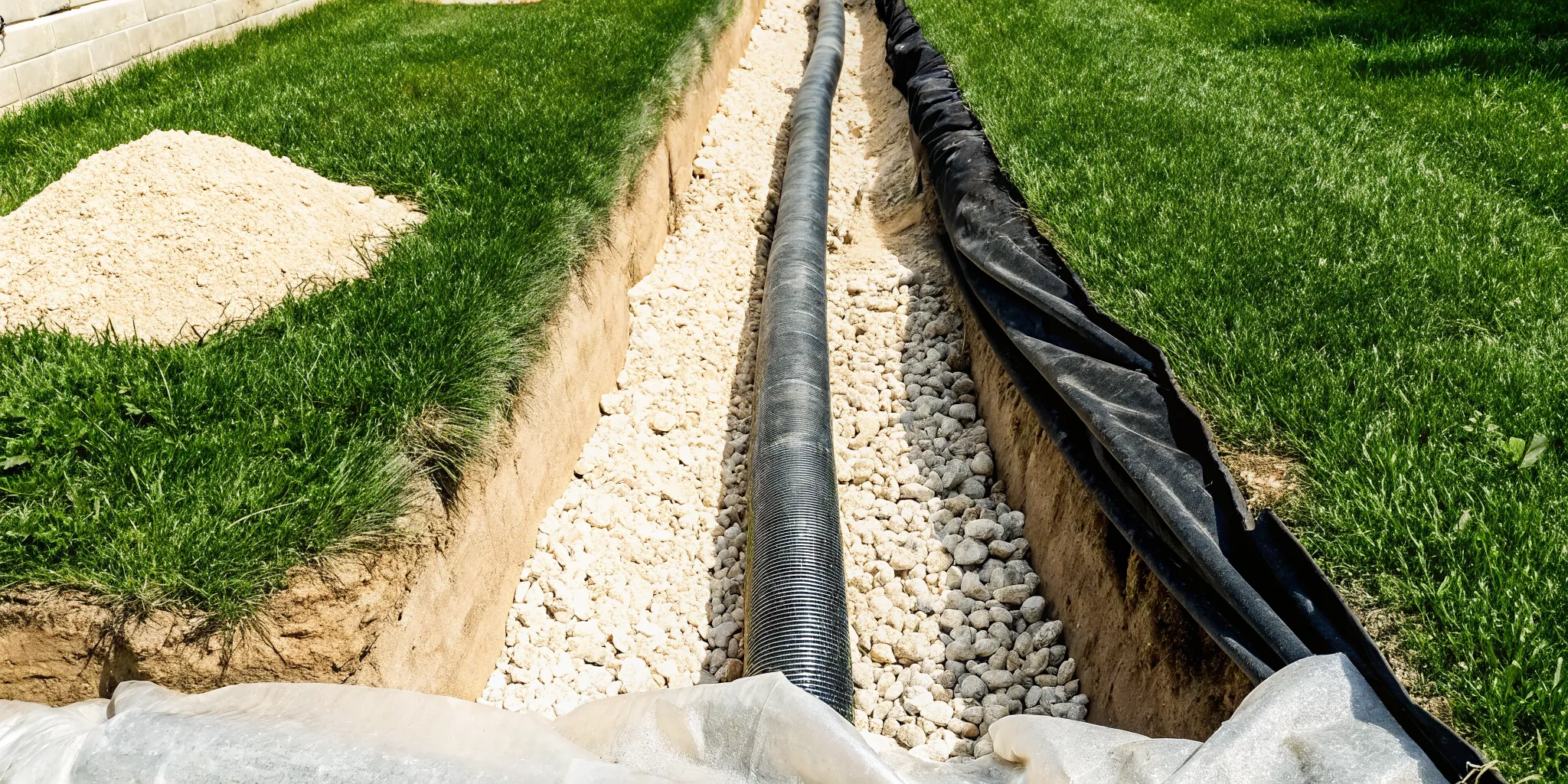
How much gravel should surround the drainpipe?
To build a drain that lasts, you must create a wide enough gravel bed. The stone around your pipe acts as a filter and a path for water. If you use too little stone, the system can clog or fail to keep up with heavy rain. Finding the right balance of width and depth ensures your yard stays dry during a storm. Your site setup, such as the slope and soil type, will also change how much stone you need.
Trench width and base depth
The first step is to dig a trench that provides plenty of space for the stone. A common rule is to make the trench at least twice as wide as the pipe. For a four-inch pipe, your trench should be about 10 to 12 inches wide. This allows for several inches of stone on each side of the pipe. This side space helps water flow into the pipe from the nearby soil. If your yard has very heavy clay, a wider trench can help catch more water.
You also need to think about the base depth. Most French drains in North Texas are 12 to 24 inches deep. Before you place the pipe, you must add a layer of stone at the bottom. This base layer should be about two to three inches thick. It gives the pipe a steady base and keeps it off the dirt. Proper bedding helps you set a steady slope toward the exit. If the ground is very soft, you may need a thicker base to keep the pipe from sinking.
Best gravel for French drain bedding
Stone specification matters as much as trench depth. Clean, washed, angular aggregate around 3/4 inch is a common residential choice because it leaves useful drainage voids while supporting the pipe. Stone that is too small can compact tightly, while oversized stone may be harder to place evenly around a standard four-inch pipe.
Angular stone interlocks more effectively than smooth river rock, creating a stable bed around the pipe. Specify washed material that is free of soil, sand, and excess fines because those particles can settle into drainage voids. This combination of angular shape and clean grading is more important to long-term performance than the stone’s color or surface appearance.
Covering the pipe for North Texas clay
Once the pipe is positioned, place additional washed stone around and above it according to the system design. Required cover varies with trench depth, expected loading, surface finish, runoff, and the pipe manufacturer’s instructions. Leave enough fabric to fold over the completed gravel envelope before backfilling.
How to build the gravel and pipe assembly
Prepare the trench and route
Before digging, call 811 to have underground utilities marked. Then clear the proposed route and mark the outlet point. A French drain needs a legal, reliable discharge location; gravel cannot compensate for a blocked or improperly placed outlet.
Many residential French drains are 12 to 24 inches deep, but site grade, outlet elevation, utilities, loading, and the drainage problem determine the correct depth. Establish a consistent fall toward a safe outlet before excavation; if the site cannot provide it, seek professional design help.
You may need to check local codes before you start. Some cities have rules on where you can send water. It is a good idea to talk to a pro if your yard has a steep hill or deep ponds of water.
Once you have a clear plan, dig the trench. Remove any big roots or rocks from the bottom of the trench. A clean floor helps the drain work as it should.
Lay the fabric and gravel bed
Line the entire trench with non-woven geotextile fabric. This separator helps keep fine clay from migrating into the drainage stone while allowing water to enter. For many residential systems in our area, 3/4-inch washed angular stone is the practical starting specification.
Using a clean, washed, angular gravel makes sure that water can move through the spaces between the stones. Avoid using stone with small bits or sand. These bits will block the flow of water over time.
Pour a two-inch layer of this stone into the bottom of the trench. Place this stone on top of the fabric. This layer creates a level bed for your pipe.
It also keeps the pipe from sitting in the mud. Smooth out the gravel so the pipe will have a steady slope toward the outlet. A flat bed prevents sags where water can sit.
Install the pipe and backfill
Place your perforated pipe on top of the gravel bed. Make sure the holes in the pipe face down. This helps the water rise into the pipe and flow away faster.
Check your slope one last time with a level to confirm the water will move well. Connect any pieces of pipe with the right parts to keep the line tight and straight.
Fill the rest of the trench with more of the same stone. This is the best gravel for French drain systems because it lets water sink down fast.
Place the specified stone cover above the pipe, then fold the fabric edges over the completed gravel envelope. The cover depth should follow the system design and account for the surface finish and expected loading.
- Find and mark all power lines before you start to dig.
- Dig a trench that is 12 to 24 inches deep with a steady slope.
- Line the trench with non-woven fabric to block out clay soil.
- Add a two-inch bed of 3/4-inch clean stone to the bottom.
- Set the perforated pipe on the stone with the holes facing down.
- Cover the pipe with more gravel until it is near the top of the trench.
- Wrap the fabric over the gravel and top with soil or rock.
After you wrap the fabric, you can finish the top of the trench. You can use soil and grass to hide the drain. You can also use pretty river rock to make a dry creek bed.
Confirm that the outlet is clear and discharges to a safe, permitted location. Monitor the system after major storms and keep the outlet free of debris so the drain can continue moving water as designed.
What changes in North Texas clay soil?
The heavy clay in North Texas, known as Blackland Prairie soil, creates unique challenges for home drainage. This thick soil acts like a sponge when it rains, but it does not let water pass through easily. This causes water to pool on the surface and press against your home foundation. Because clay holds water, it can lead to standing water and pressure that shifts your foundation over time.
The risk of soil movement
One major problem with local clay is how it moves. During heavy rain, tiny clay bits can wash into your drain system. This is called silt migration. Without the right protection, these bits fill the gaps between your drain rocks and clog the pipe. Using a non-woven fabric is the best way to keep soil out of the drain and stop this from happening. Research from Oklahoma State University drainage recommendations shows that this fabric helps keep your system clear.
Drought and rain swings
North Texas weather can swing from long dry periods to heavy rain. Clay soil swells when wet and shrinks as it dries, creating movement around the trench. Clean 3/4-inch angular stone provides a stable pipe bed, while a complete fabric wrap helps separate that aggregate from the surrounding clay.
Slow water flow
Because clay is so dense, it has very slow soak rates. This means water takes a long time to sink deep into the ground. A French drain helps by giving that water a fast path to leave your yard. To work well, the system needs a clear exit where the water can flow out freely. This stops water from sitting in the trench and soaking back into the clay near your home. Setting up a clear path for runoff is key for any drainage solutions for residential landscaping.
Common French drain mistakes to avoid
Building a French drain seems simple, but small errors can cause the system to fail fast. In the heavy clay of North Texas, these mistakes often lead to clogged pipes and standing water. Avoiding these common slips ensures your yard stays dry and your home stays safe from water pressure.
Using the wrong stone
One common error is filling the trench with aggregate that contains fines. Dust and small particles reduce open space and can migrate toward the pipe. Use clean, washed stone in the size specified for the trench design, often between 3/4 inch and 1 1/2 inches.
Many people think any rock will work, but smooth river rocks may not lock as well as crushed stone. Experts suggest using clean, washed, angular gravel in the 3/4 inch size for most home jobs. This type of stone provides the open space needed for water to move through the drain.
Skipping the filter fabric
In North Texas, our clay is very fine and moves easily with water. If you do not wrap your gravel and pipe in a fabric, the clay will seep into the gaps between the rocks. Over time, this soil buildup blocks the water path and stops the drain from working. A good non-woven geotextile fabric acts as a filter to keep soil out while letting water in.
Poor pipe and slope layout
Pipe orientation matters as much as stone selection. For a typical perforated French drain pipe, place the holes down so rising water enters from the bottom of the gravel envelope. Follow the pipe manufacturer’s instructions because specialized drainage products can use different configurations.
The pipe also needs a steady downward slope toward a reliable outlet. A flat or back-pitched run allows water to sit and can undermine the system’s performance. A common planning target is at least one inch of fall for every ten feet, but site conditions and local requirements should guide the final design. No gravel selection can compensate for a blocked outlet or inadequate fall.
How to plan your gravel order
Calculate the stone quantity before excavation so the trench is not left open while you wait for more material. The order should account for trench volume, pipe displacement, and a reasonable allowance for irregular soil. Confirm both the aggregate size and quantity with the supplier before scheduling delivery.
Measuring your trench size
Measure the full route from the collection area to the outlet, then establish the trench width and depth. Many residential French drains are 12 to 24 inches deep, but the correct depth depends on the drainage problem, utilities, outlet, and nearby structures. Accurate dimensions help estimate the best gravel for French drain projects without relying on appearance or guesswork.
You will need room for more than just the stone. You must think about the space the pipe takes up in the trench. A standard pipe is four inches wide. When you take the pipe out of the total space, you get a clear stone count. Large jobs may need clean angular gravel to fill the hole. This stone ensures water moves fast and stays away from the house.
Finding stone and volume
Multiply trench length, width, and gravel depth to estimate cubic feet, then divide by 27 to calculate cubic yards. Subtract an allowance for the pipe and ask McCraw Landscape Supply to convert the remaining volume to tons for the selected aggregate. A modest overage can account for settlement and irregular trench dimensions.
Ordering a modest overage helps account for settlement and field variations in an irregular trench. Place aggregate evenly around the pipe according to the design, avoiding unsupported gaps. The fabric should surround the full gravel envelope so native clay remains separated from the drainage stone.
Closing your order with McCraw
Once you have your numbers, talk to a local team to check on stock. You should check that the stone is clean and has no dust or sand. Dust can wash into the pipe and stop the water. You can contact our team to talk about your job needs and set a drop-off date. We can help you pick the right rock for your soil type and job size. Our yard carries a wide range of stones that work well in North Texas clay.
Tell the vendor about any path issues at your home before the truck comes. Large stone loads are heavy and need a flat spot to land. If you have a long path or soft grass, plan the drop spot with care. Our staff can help you time the drop so the stone is ready when you finish digging. Good timing keeps the trench open for a short time. This also protects your yard from a big mess.
Frequently Asked Questions
What is the best gravel for a French drain?
The best option is clean, washed, angular stone that is about three-quarters of an inch in size. Using washed stone is key because it does not have small bits of dirt that can clog your pipes. According to Oklahoma State University, this size gives enough space for water to flow quickly through the trench while keeping the system stable for years.
Do I need to use fabric with a French drain?
Yes, you must use a non-woven geotextile fabric to line your trench. This fabric acts like a filter that lets water pass through while blocking fine clay particles from entering the gravel. In the heavy clay soils of North Texas, failing to use fabric often leads to a clogged drain that stops working. Using a quality liner makes sure your drainage system stays clear and protects your home foundation from water pressure.
How deep should I dig a French drain in North Texas?
Most French drains in North Texas are dug between twelve and twenty-four inches deep. The exact depth depends on your home foundation and where you need to move the water. You must make sure the trench has a steady slope so gravity can pull the water away from your yard. Proper depth is key to handling the local clay soil, which can swell and cause major issues when it gets too wet.
Should the holes in a French drain pipe face up or down?
For a typical perforated French drain pipe, orient the holes downward so rising water enters from the bottom of the gravel envelope. Confirm the orientation in the manufacturer’s instructions, especially when using a specialized pipe or prefabricated drainage system.
Ready to pick the best gravel size for your North Texas drain?
Leaving water to pool in your yard leads to high costs for foundation fixes and lost grass, so act now to keep your home safe. Choosing the right gravel size today stops messy clogs that ruin a drain, which saves you from the hard work of redoing the job. Our local North Texas team knows our heavy clay soil and will help you find the best stone for your next drainage project.
Ready to plan your drainage project? Contact McCraw Landscape Supply to confirm gravel availability and estimate the quantity for your trench.
