What is the best stone for outdoor steps? There is not one universal answer. For most North Texas projects, choose an exterior-rated stone with a textured walking surface and adequate thickness. It also needs full support below it. The slope, traffic, drainage, and installation method matter as much as the stone name.
Browse McCraw’s landscape stone options for your outdoor steps.
What Is the Best Stone for Outdoor Steps?
For durable outdoor steps, choose a dense, exterior-rated stone with reliable traction and a thickness matched to its support and span. Textured slab stone, patio stone, or a purpose-selected cut stone can all work. The best option depends on whether the steps serve a front entry, a frequently used path, or an informal garden slope.
Outdoor steps have a demanding job. They carry repeated foot traffic, collect rainwater, and need to remain stable when soil moves or surfaces become damp. A beautiful stone that becomes slick when wet, rocks underfoot, or breaks at an unsupported edge is a poor choice no matter how attractive it looked in the sample yard.
Start with four questions:
- Will the steps be used every day or only occasionally?
- Will people approach from a front door, driveway, patio, or garden path?
- Can water drain away from each tread without washing out the base?
- Will the installation use large slabs, smaller pieces, or a combination of stone and retaining material?
These answers narrow the material choice before color and pattern enter the discussion. They also give a landscape contractor or supplier the information needed to recommend a product that is practical for the site.
Which Types of Stone Work Best for Outdoor Steps?
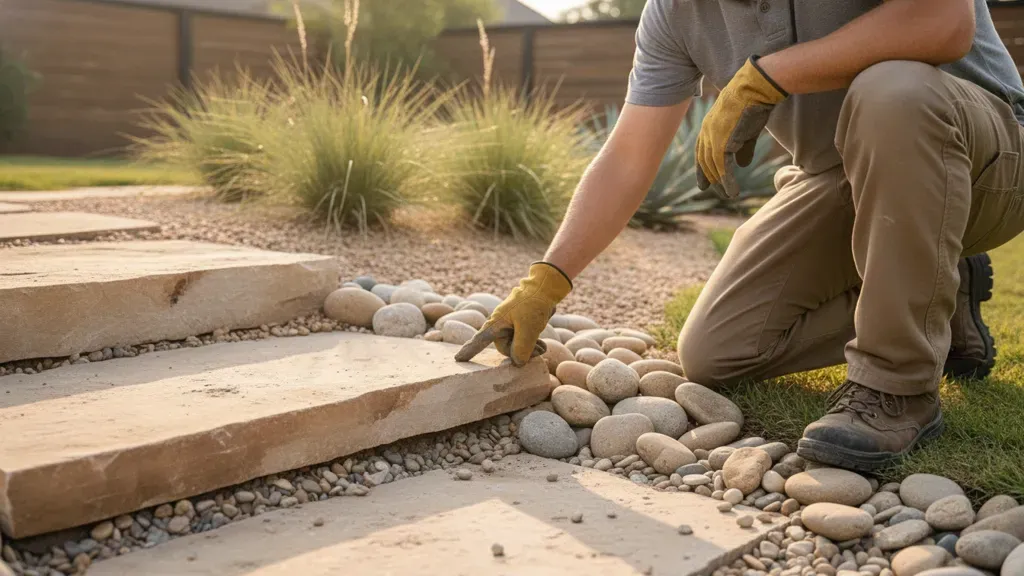
Slab stone is a strong fit for natural-looking steps when the pieces are selected for thickness, support, and traction. Cut stone treads offer more uniform dimensions for formal entries. Patio stone can work for broad landings or low steps when the product and base are appropriate. Builders stone and boulders are usually better for edges, retaining features, or accents than for the walking surface itself.
McCraw Landscape Supply carries several stone categories, including slab stone, patio stone, builders stone, chopped stone, natural stone, and boulders. Each category serves a different job. The product label alone does not replace a conversation about the intended use, because stone pieces vary in size, thickness, texture, and available colors.
| Stone choice | Best fit | What to check before ordering |
|---|---|---|
| Slab stone | Natural, irregular steps and garden paths | Thickness, support below the slab, edge condition, and walking texture |
| Patio stone | Broad landings, low transitions, and coordinated outdoor living areas | Exterior suitability, piece size, surface traction, and base preparation |
| Cut stone tread | Formal entries with consistent rise and tread dimensions | Dimensions, finish, edge detail, weight, and delivery access |
| Builders or chopped stone | Sidewalls, riser faces, retaining features, and accents | Whether the pieces are intended for structural or walking use |
Do not assume that every flat piece of natural stone is a step tread. A supplier can help separate stone intended for walking surfaces from stone better suited to walls, borders, or decorative work. That distinction is especially important when a project combines treads with raised beds, a retaining wall, or a stone landing.
How Do Traction and Surface Finish Affect Stone Steps?
Traction should be a first-order decision for outdoor steps. Favor a natural cleft, textured, or otherwise slip-resistant finish over a highly polished surface, especially where rain, irrigation, shade, or pool water can make the tread damp. A slightly varied texture can improve confidence without creating an uncomfortable walking surface.
Look at a sample from the angle people will approach it, not only under showroom lighting. Run a hand across the surface and inspect whether the texture is consistent. Very rough stone may catch dirt or become difficult to sweep, while a smooth polished finish may not provide enough grip for a wet entry.
Also inspect the front edge. A crisp edge can suit a formal design, but it should not create an unexpected trip point or a fragile overhang. An irregular edge can look natural on a garden path, yet it still needs to provide a clear, stable place for the foot to land.
Traction is affected by the whole stair design, not only the stone. Leaves, algae, loose gravel, poor lighting, and water flowing across a tread can reduce safety on a surface that looked suitable when dry. Plan the tread, drainage, edging, and maintenance routine as one system.
How Should You Choose Stone Thickness and Support?
Choose step-stone thickness based on the piece size, expected load, span, base, and installation method, not by appearance alone. A large slab needs continuous, stable support beneath it. Smaller pieces may require a different base and joint plan. Confirm the intended application and support requirements with the supplier and installer before purchasing.
Thickness is a structural decision. A stone can be strong in compression but still crack if it bridges a void, bears on an uneven point, or extends beyond its support. Large treads also weigh more, which affects handling, equipment, delivery, and the ability to place them without damaging nearby landscaping.
Ask these questions before the order is finalized:
- Is this particular product intended for step treads or only for paving and visual surfaces?
- What support will run beneath the full tread?
- Will the tread have an unsupported overhang at the front?
- How will the riser, sidewall, and landing connect to the tread?
- Can the delivery vehicle and installation equipment reach the work area?
North Texas sites can also expose weak preparation. Expansive clay soil, changing moisture, and poorly directed runoff can move a base over time. That does not mean every project needs the same foundation, but it does mean the stone should be chosen with excavation, compaction, drainage, and site access in mind.
How Does North Texas Weather Change the Decision?
In North Texas, select outdoor step stone with drainage and heat exposure in mind. Hot summers, intense sun, variable winter conditions, and clay-heavy Blackland Prairie soils can stress an installation. A durable stone still needs a stable base, controlled runoff, and joints or edges that do not allow water to undermine the steps.
Water management is the practical starting point. Steps should not become a channel that carries roof runoff or irrigation across every tread. The surrounding grade, side drainage, and landing should guide water away without eroding the supporting material.
Heat and sun also influence appearance and upkeep. Darker stone can feel hotter in direct sun, while lighter stone may show soil or organic debris more readily. Color variation can be a benefit for a natural installation because it can make ordinary dust less noticeable, but order samples or view actual material when possible rather than relying on a screen image.
North Texas weather is only part of the equation. A shaded stairway beside a retaining wall has different moisture and cleaning needs from an open front walk. A contractor entrance with heavy daily use needs different edge and tread priorities from a short garden stair used a few times each week.
Should You Use Slab Stone or Uniform Cut Treads?
Choose slab stone when the design benefits from natural variation and the installer can create consistent, safe landings. Choose uniform cut treads when predictable dimensions, a formal appearance, and straightforward layout are more important. Neither style is automatically better; the right choice depends on the site’s slope, architecture, traffic, and construction plan.
Slab stone can create a warm, regional landscape look. Irregular outlines work well with natural planting, curved paths, and informal transitions. The tradeoff is that the installer must sort pieces, plan joints, and maintain a comfortable walking rhythm. The finished steps should look natural without forcing each footfall to land on a narrow or uneven spot.
Uniform cut treads make it easier to establish a consistent rise and tread depth. They can complement a newer home, a direct front entry, or a design that uses straight lines. The tradeoffs are weight, delivery logistics, and a less rustic appearance. Cut edges and finished surfaces still need to be evaluated for traction and weather exposure.
If you want both structure and variation, use a consistent tread strategy with natural stone accents on the sidewalls or landings. That approach keeps the walking surface predictable while allowing the surrounding stonework to feel less manufactured.
What Installation Details Make Stone Steps Last?
Long-lasting stone steps depend on a stable base, full support under each tread, controlled drainage, consistent rise and tread dimensions, and secure transitions at the top and bottom. The best material cannot compensate for a void beneath the slab, runoff washing out the base, or a layout that changes height from one step to the next.
Before installation, identify the finished elevations and the path water will take. Remove unstable material, prepare the base for the site’s conditions, and avoid leaving unsupported pockets beneath the tread. The exact construction assembly should be determined by the qualified installer and the project design.
During placement, check each tread from the approach direction. A step can look level from the side and still feel awkward if the landing is too short, the front edge is inconsistent, or the next rise changes unexpectedly. Keep joints intentional and prevent loose chips from collecting where a foot should land.
At the edges, coordinate the stone with walls, planting beds, mulch, gravel, and any handrail or lighting. A clean transition reduces erosion and makes routine maintenance easier. If the steps are near a driveway or front door, include delivery and equipment access in the plan before heavy stone arrives.
After installation, inspect the steps after significant rain and after the first seasonal changes. Look for standing water, washed-out joints, rocking pieces, exposed edges, or soil movement. Address small drainage or settlement problems before they become a larger repair.
How Can Homeowners and Contractors Compare Their Options?
Compare outdoor step stone by use, traction, dimensions, support requirements, appearance, maintenance, and logistics. Homeowners should bring photos and measurements of the slope and entry. Contractors should confirm quantities, piece sizes, thickness, loading, availability, and delivery access so the selected stone fits the installation plan.
A useful comparison does not stop at color. Ask for enough information to make the decision repeatable:
- Use: Is the stair a front entry, contractor access route, patio connection, or garden path?
- Safety: Does the finish provide dependable traction when the surface is damp?
- Dimensions: Do the available pieces support the planned tread depth, rise, edges, and landings?
- Site: Can the base drain properly, and can the material reach the installation area?
- Appearance: Do the color variation and texture work with the house and surrounding landscape?
- Maintenance: Can the owner sweep, rinse, and keep nearby planting or runoff from creating slippery buildup?
- Supply: Is the selected material available in the size and quantity required for the full project?
McCraw serves homeowners and contractors in Van Alstyne, Anna, and surrounding North Texas communities with landscape and construction materials. When you contact the yard, share the project location, approximate dimensions, intended use, preferred look, access constraints, and desired timing. Those details make it easier to discuss the right stone category and order plan.
What Is the Final Recommendation for Outdoor Steps?
The best stone for outdoor steps is the product that combines dependable traction, adequate thickness, full support, drainage compatibility, and a finish suited to the way the steps will be used. For a natural North Texas landscape, properly selected textured slab or patio stone can be a strong choice. Formal projects may favor uniform cut treads.
Do not select a step material from a color sample alone. Start with the slope, traffic, moisture, and installation method. Then compare McCraw’s slab, patio, natural, builders, and related stone options with the person responsible for the base and installation details. A deliberate choice helps the finished stairs perform well through ordinary North Texas weather.
Frequently Asked Questions About Stone Outdoor Steps
What stone is best for steps?
A dense, exterior-rated stone with a textured walking surface is usually the best starting point for outdoor steps. The final choice depends on traffic, moisture, support, thickness, drainage, and appearance. Textured slab stone or uniform cut stone can both work when the product and installation method match the site.
Is slab stone suitable for outdoor steps?
Slab stone can suit outdoor steps when each piece has adequate thickness, stable support, and a surface that provides traction. It is often chosen for natural-looking paths and garden stairs. Confirm that the specific slab product is appropriate for treads, because not every flat landscape stone is intended to carry the same load.
Are smooth stone steps slippery?
A smooth or polished finish can provide less traction than a naturally textured finish when wet. Evaluate the actual surface, the site’s shade and drainage, and the way water reaches the steps. For outdoor use, ask about a finish designed for dependable footing rather than choosing a surface only for its shine.
How do you keep stone steps from shifting?
Stone steps stay stable when the excavation, base, drainage, support, and transitions are planned for the site. Each tread should be supported rather than bridging a void, and runoff should not wash out the material beneath it. Have the installation plan checked by the contractor responsible for the work.
What should I bring when buying stone for steps?
Bring the project location, photos, approximate width and slope, desired number of steps, intended use, preferred style, access limitations, and timing. The area calculator can help organize measurements for related landings and surfaces. McCraw can then help you compare stone categories, sizes, availability, loading, and delivery requirements.
