Choosing the best stone for a retaining wall in North Texas starts with more than color. The wall has to fit the slope, hold its shape through wet and dry seasons, and look right beside the home and landscape. For many projects, chopped stone is the most flexible starting point. Builders stone adds more visual mass, while boulders work well when the design calls for large pieces, grade transitions, or a natural focal point.
Talk with McCraw Landscape Supply about the right stone for your retaining-wall project.
This guide focuses on the visible natural stone used to build or face a wall. It does not replace site-specific design, drainage planning, or structural review. A retaining wall that supports a driveway, building, public area, or tall slope needs a qualified professional to confirm the design and local requirements.
What is the best stone for a retaining wall in North Texas?
Short answer: Chopped stone is often the best all-around natural-stone option for a North Texas retaining wall because its smaller, irregular pieces can create manageable courses and fit curves, terraces, and raised beds. Builders stone is a better fit when the wall needs larger face pieces and a heavier appearance. Boulders make sense for large-scale grade changes, erosion-control features, and designs built around substantial individual stones.
The right choice depends on the job, not a single universal stone grade. Compare four practical factors before ordering:
- Wall scale: A low garden wall has different handling and proportion needs than a large grade transition.
- Face and shape: Smaller chopped pieces can create tighter courses, while builders stone and boulders create a broader, more rugged face.
- Site access: Large boulders may require equipment and a delivery plan that smaller stone does not.
- Appearance: Color, texture, and variation should work with the home, paving, planting, and existing stone.
North Texas soil and weather add another layer to the decision. Clay soils can expand when wet and shrink as they dry. A wall still needs a stable base, a way for water to move out, and construction suited to its height and load. Stone selection supports the design, but it cannot correct poor site preparation or missing drainage.
How should you compare retaining-wall stone options?
Short answer: Compare each stone family by the job it needs to perform, the amount of hand placement or equipment it requires, and the look you want after installation. The table below is a planning guide, not a substitute for a site-specific wall design.
| Stone family | Best project fit | Typical visual effect | Planning consideration |
|---|---|---|---|
| Chopped stone | Low walls, raised beds, terraces, borders, and natural-stone courses | Structured but natural, with varied faces and manageable pieces | Sort pieces for stable courses and confirm the selected product’s size range |
| Builders stone | Heavier-looking walls, larger landscape features, and substantial face courses | Bold, thick, and rugged with more visible stone mass | Plan delivery, placement, wall depth, and access for larger pieces |
| Boulders | Large grade changes, erosion-control accents, natural transitions, and focal walls | Organic and highly dimensional, with each piece becoming part of the design | Allow for equipment, lifting space, drainage, and a wider footprint |
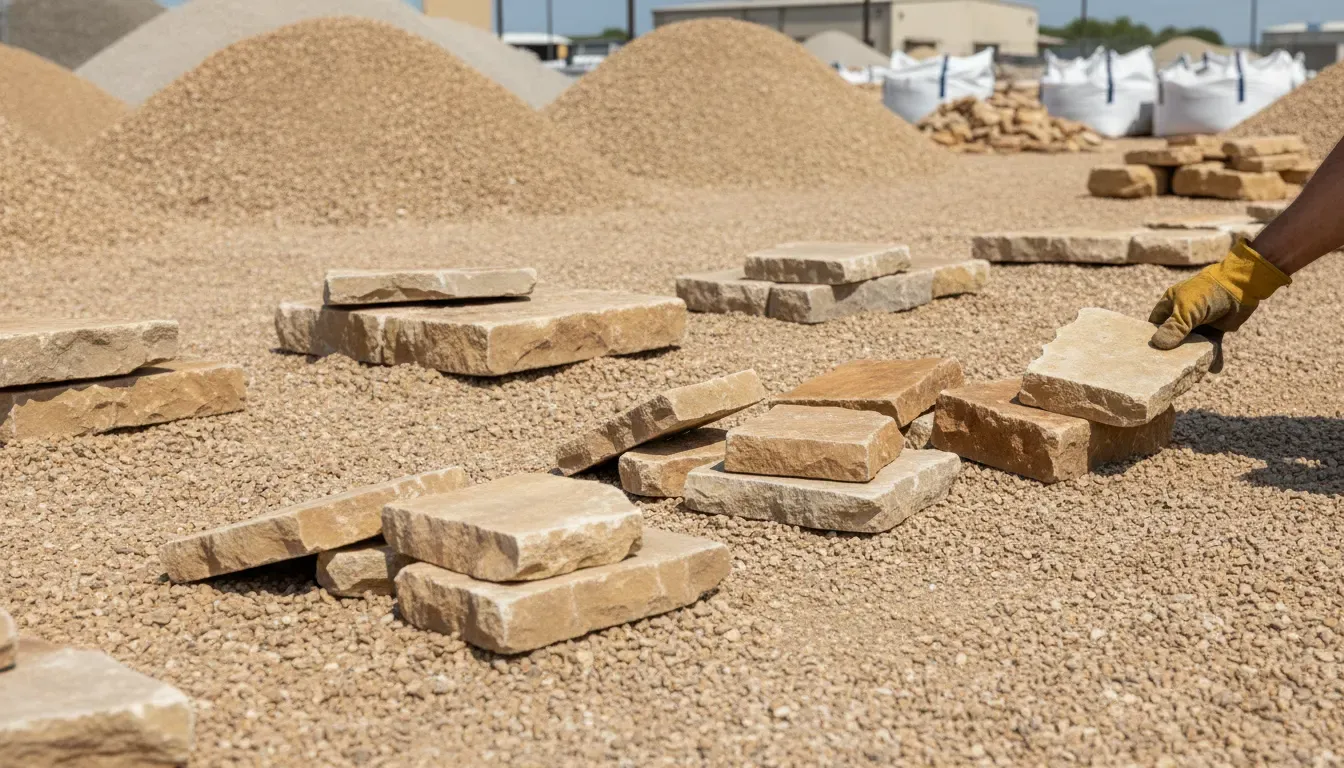
McCraw’s stone category includes chopped stone, builders stone, slab and patio stone, and several boulder families. That range makes it possible to compare a wall’s material against the rest of the project instead of choosing a color sample in isolation.
When is chopped stone the right choice for a retaining wall?
Short answer: Chopped stone is a strong starting point when you want natural texture with pieces that are easier to sort and place than large boulders. It works especially well for low retaining walls, garden terraces, raised planting beds, and borders where the wall needs to follow a curve or a changing grade.
Why homeowners and contractors choose chopped stone
- Flexible layout: A varied collection of faces can help a wall follow the shape of a bed, walkway, or slope.
- Natural character: Irregular edges and mineral variation keep the wall from looking overly manufactured.
- Manageable scale: Smaller pieces can be sorted by size and face before placement, which helps create a more consistent course.
- Multiple color directions: McCraw’s catalog lists options such as Austin Chopped Stone, Lueders Gray Chopped Stone, Lueders Tan Chopped Stone, Oklahoma Brown Chopped Stone, and Oklahoma Silvermist Chopped Stone.
Chopped stone is not automatically the right material for every wall. A very small piece can look undersized beside a tall wall or large home. A wall with a significant load above it may need a specific structural system rather than a decorative stone choice. Confirm the intended wall height, section, and installation method before selecting the final quantity.
When does builders stone make sense?
Short answer: Builders stone makes sense when the wall needs larger, thicker pieces and a substantial natural-stone presence. It can be a good match for a prominent wall near an outdoor living area, a broad raised bed, or a landscape feature where smaller chopped pieces would look too busy.
Builders stone changes the visual proportion of a project. Larger pieces create fewer visible joints and a heavier face. That can complement a brick or stone home, but it also means the wall needs enough depth and surrounding space to look balanced. The site should have a delivery and placement plan before the order is finalized.
McCraw’s stone catalog lists Oklahoma Brown 3-inch to 5-inch Builders Stone and Oklahoma Silvermist 3-inch to 5-inch Builders Stone. These named products give a contractor or homeowner a useful starting point for a conversation about color, face size, thickness, availability, and quantity. Do not assume that a product is in stock or that one listed size fits every wall. Confirm current inventory and the intended application with the supplier.
Builders stone can also pair with smaller chopped stone in a layered design. For example, larger pieces can carry the main visual weight while smaller pieces define a cap, transition, or adjoining bed. The final combination should be planned as one wall, not assembled from unrelated leftover material.
Review McCraw’s full product range before you compare stone sizes and finishes.
Are boulders a good choice for a North Texas retaining wall?
Short answer: Boulders are a good choice when the landscape benefits from large, individual stones and the site can accommodate equipment, wall depth, and a wider transition. They are less suitable when access is tight, the wall must have a narrow footprint, or the design calls for uniform courses.
Where boulders work well
- Large grade transitions that should feel integrated with the landscape
- Erosion-control features and sloped areas where mass is part of the design
- Natural-looking borders around planting areas or drainage features
- Focal walls where a few distinctive stones shape the entire view
McCraw lists boulder families such as Central Texas Rainbow, Central Texas Red, Copper Onyx, Obsidian, and Oklahoma Moss. The color and shape variation can be valuable for a natural composition, but it makes early planning more important. A contractor may need to select individual pieces, confirm truck access, and plan how equipment will place the stone without damaging nearby paving, turf, or structures.
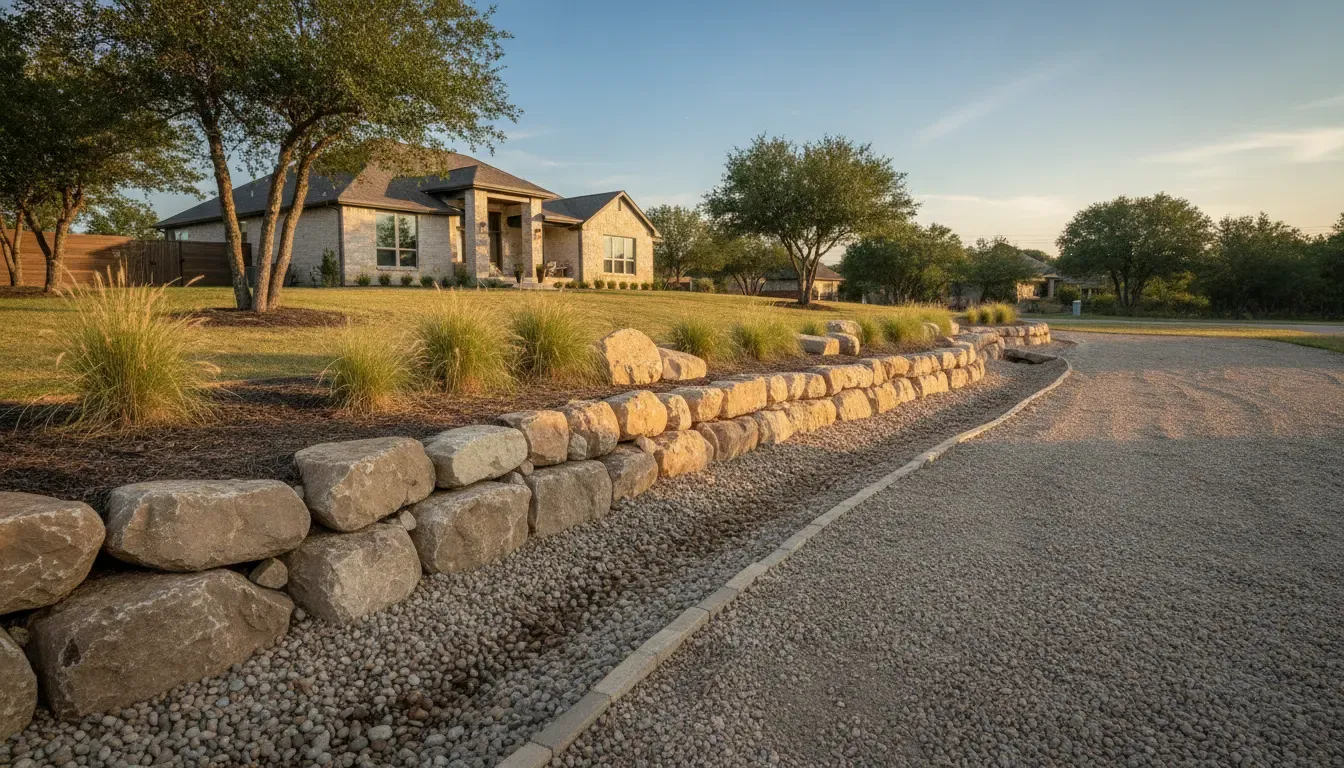
Boulders also need room to transition into the surrounding grade. A row of large stones placed directly against a narrow foundation edge can look crowded and leave little space for water management. Use the wall’s full section and the site’s access conditions to decide whether boulders are a practical retaining solution or a better accent beside another wall type.
How do North Texas soil and drainage affect the stone decision?
Short answer: Stone choice should be made alongside base, drainage, and load planning. North Texas clay can change volume as moisture changes, and water pressure behind a wall can stress the structure regardless of how attractive or durable the face stone is.
For a sound project, discuss these questions before the material is ordered:
- What is the finished wall height and how much soil will it retain?
- What is above the wall: planting soil, a walkway, a driveway, a patio, or a structure?
- Where will surface water go during a heavy North Texas rain?
- What base and drainage materials are specified for the selected wall system?
- Can the wall be accessed by the delivery truck and installation equipment?
McCraw’s guide to the best base material for retaining-wall projects covers compactable base and drainage-related materials. Use that guide for foundation and backfill questions rather than treating the wall face stone as the entire system. This article’s job is to help you choose the visible stone family after the site and wall requirements are understood.
For a tall wall, a wall near a property line, or a wall supporting a load, involve a qualified installer or engineer and confirm local permitting requirements. Material selection should follow that design direction, not replace it.
Which retaining-wall stone fits your project size and look?
Short answer: Start with chopped stone for a flexible, natural wall at a manageable scale. Choose builders stone when you want larger courses and a heavier face. Consider boulders when the site has room for large pieces, equipment, and an organic grade transition.
| If your project needs… | Start by comparing… | Why |
|---|---|---|
| A low raised bed or curved garden terrace | Chopped stone | It offers varied faces and workable pieces for changing lines. |
| A bold wall beside a home or outdoor living area | Builders stone | Larger pieces can create a substantial face and fewer visible joints. |
| A natural grade transition on an open slope | Boulders | Large stones can anchor the transition and add visual mass. |
| A narrow site with limited access | Chopped stone or a specified wall system | Large boulders may require more room and equipment than the site allows. |
| A wall supporting a driveway, patio, or structure | A qualified design first, then the specified stone | Loads, drainage, and structural requirements control the material choice. |
Bring photographs, rough dimensions, access notes, and the intended finish to the material conversation. If you already have stone on the property, bring a sample or photograph it in daylight so the new wall can be compared against the existing color and texture.
What should you confirm before ordering retaining-wall stone?
Short answer: Confirm the product family, size range, quantity, delivery access, installation plan, and current availability before placing an order.
- Measure the project: Record wall length, approximate height, curves, corners, cap details, and the area above the wall.
- Define the wall system: Establish whether the design is dry-stacked, mortared, mechanically supported, or another specified method.
- Separate face stone from support materials: Base, drainage, backfill, cap, and bedding materials may be different products.
- Check access: Note driveway width, turning space, overhead obstructions, gate openings, and the equipment needed for placement.
- Compare the finished look: Review stone colors beside the home’s brick, roof, paving, soil, and planting.
- Confirm the order: Ask about current inventory, sold-by units, estimated quantity, loading, and delivery timing.
The McCraw area calculator can help organize material estimates for applicable project measurements. Treat the result as a planning estimate and confirm the final quantity with the installer or supplier, especially when the wall has curves, irregular stone, a cap, or a changing grade.
Send McCraw your project details for product guidance, availability, pickup, or delivery options.
Frequently asked questions about retaining-wall stone
Short answer: The best choice is the stone family that matches the wall’s scale, load, access, drainage plan, and appearance. Use the questions below to narrow the conversation before ordering.
Is chopped stone better than boulders for a retaining wall?
Neither is automatically better. Chopped stone is usually easier to sort into courses and can fit smaller or more detailed walls. Boulders can be a better fit for open sites, large grade transitions, and designs that need substantial individual pieces. The wall’s scale and access should decide first.
Can builders stone be used for a retaining wall?
Builders stone can be appropriate when the wall design, foundation, drainage, and placement method support larger pieces. Confirm the product size, wall section, and installation approach with a qualified contractor or supplier before ordering.
What stone color works best in North Texas?
There is no single best color. Warm Oklahoma Brown, lighter Lueders tones, gray stone, and varied boulder colors can all work when they relate to the home and surrounding landscape. View a sample or photograph beside the existing hardscape before choosing.
Do I still need drainage behind a stone retaining wall?
In most retaining-wall designs, water management is an essential part of the system. The exact drainage method depends on the wall type, soil, height, and site. Do not assume that a durable face stone removes the need for a specified base and drainage plan.
How do I buy the right amount of stone?
Start with measured length, height, wall depth, corners, cap pieces, and the selected product’s sold-by unit. Irregular stone and boulders require project-specific planning. Use the area calculator for an initial estimate, then confirm the order with McCraw or your installer.
