Black Star Gravel North Texas Guide
Black Star gravel gives North Texas landscapes the clean, dark contrast many homeowners and contractors want, but the size you choose matters. In clay-heavy areas around Van Alstyne, Anna, and nearby communities, 3/8-inch and 5/8-inch Black Star, also called Tejas gravel, can perform very differently in walkways, borders, xeriscape beds, drainage accents, and light-duty driveway areas.
Planning a Black Star gravel project in North Texas? Request a quote from McCraw Landscape Supply and ask which Black Star size fits your square footage, base prep, and delivery needs.
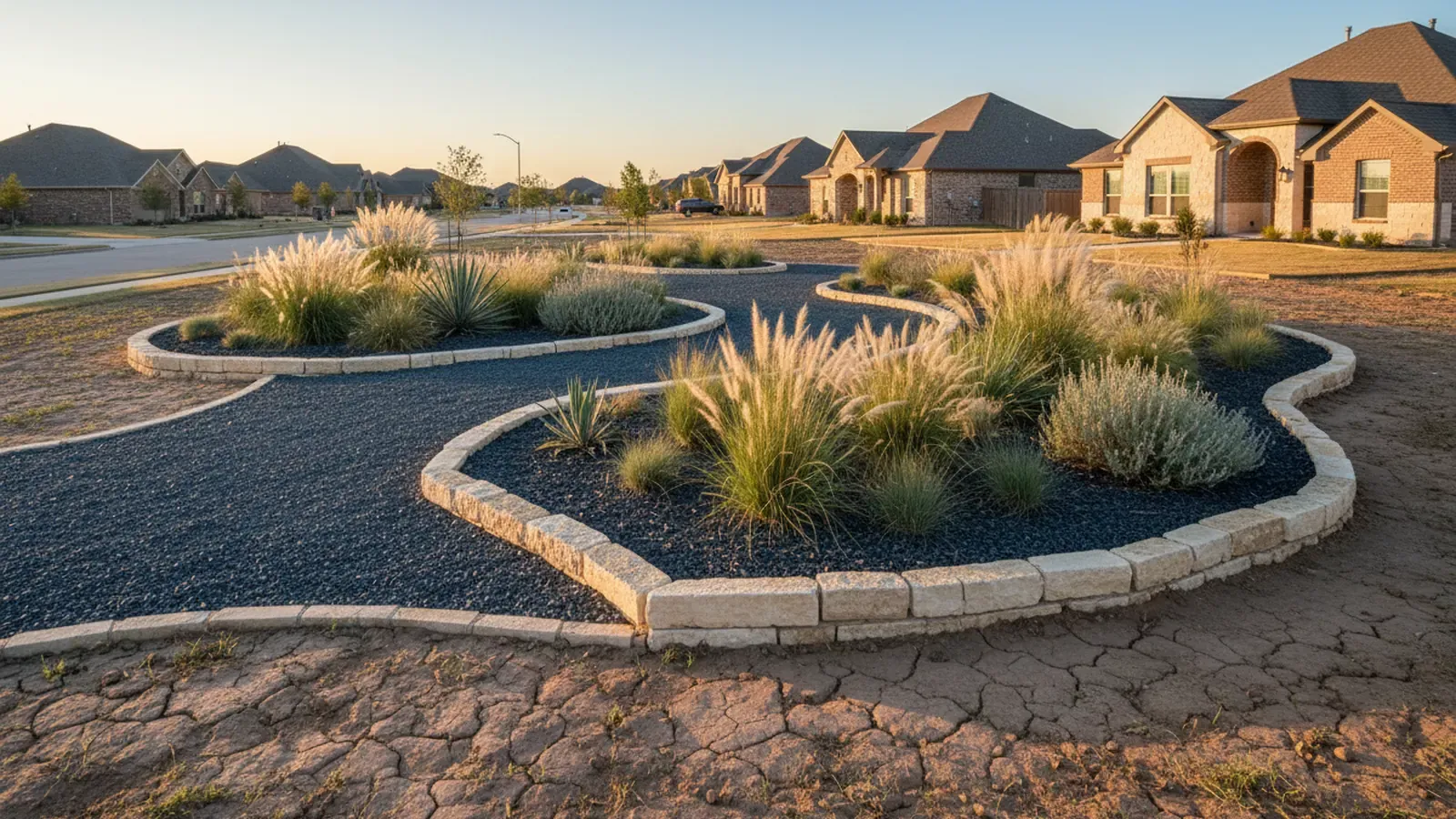
This guide compares 3/8-inch Black Star Tejas gravel and 5/8-inch Black Star Tejas gravel so you can order with more confidence and avoid the common problems that show up after the first hard rain, hot week, or busy weekend of foot traffic.
What Is Black Star Gravel?
Black Star gravel is a dark decorative aggregate often used where the landscape needs sharp contrast, a modern finish, and a clean surface that does not look like ordinary driveway rock. It is popular in North Texas because it pairs well with limestone edging, tan and gray stone, native grasses, steel borders, pavers, and low-water planting beds.
The name Black Star is commonly used for dark basalt-style decorative gravel. Tejas gravel is another name customers may hear for the same general product family. At McCraw Landscape Supply, the two Black Star Tejas options most relevant for residential and light commercial landscape projects are 3/8-inch and 5/8-inch.
Both sizes can work well, but they are not interchangeable. The smaller 3/8-inch option creates a tighter, smoother surface. The larger 5/8-inch option gives more texture, better visual separation, and better stability in some border and drainage applications.
Quick Answer: 3/8-Inch vs. 5/8-Inch Black Star Gravel
Use 3/8-inch Black Star gravel when you want a smoother walking surface, tighter visual texture, and easier spreading in narrow areas. Use 5/8-inch Black Star gravel when you want more visible stone texture, stronger definition in beds and borders, and a better choice for light-duty driveway accents or areas where small gravel may scatter too easily.
| Project Use | Better Size | Why It Works |
|---|---|---|
| Garden walkways | 3/8-inch | Smoother underfoot and easier to level in paths |
| Planting bed borders | 5/8-inch | More visible texture and better separation from soil or mulch |
| Xeriscape beds | Either size | 3/8-inch looks tighter, 5/8-inch looks bolder |
| Drainage accents | 5/8-inch | Larger pieces are less likely to move with surface water |
| Light-duty driveway areas | 5/8-inch | More appropriate than 3/8-inch for limited tire traffic when properly based |
| Decorative joints around pavers | 3/8-inch | Smaller size fits tighter spaces more cleanly |
The best choice also depends on slope, edging, base material, expected traffic, drainage, and how much maintenance you are willing to do. North Texas clay soils make those details important.
Why Black Star Gravel Works Well in North Texas Landscapes
North Texas yards have a specific set of challenges. Clay soil holds moisture, cracks when dry, expands after rain, and can make turf or planting beds difficult to keep clean. Decorative gravel does not solve grading or drainage problems by itself, but it can create a cleaner, lower-maintenance surface when it is installed with the right base and edging.
Black Star gravel is especially useful in this region for four reasons.
- Strong color contrast: The dark stone stands out against limestone, brick, concrete, buff patio stone, native grasses, and light-colored homes common in Van Alstyne and Anna subdivisions.
- Low-water design: It supports xeriscape and reduced-turf landscapes, which are increasingly practical during hot North Texas summers.
- Clean bed definition: It can separate planting zones, patios, walkways, and foundation borders without looking unfinished.
- Durable decorative finish: When contained correctly, it holds up better than organic mulch in areas where washout, wind, pets, or repeated foot traffic are concerns.
That said, dark gravel can get hot in full sun. Around tender plants, young shrubs, or south-facing beds, it is smart to plan for irrigation, plant spacing, and heat-tolerant selections. Black Star is a design-forward material, so it should be placed where the look and performance both make sense.
Best Uses for 3/8-Inch Black Star Tejas Gravel
3/8-inch Black Star Tejas gravel is the smoother, finer-looking option. The smaller particle size creates a more uniform surface and can be easier to place in tight or detailed areas.
Walkways and Garden Paths
For pedestrian paths, 3/8-inch Black Star is usually the better choice. It feels more comfortable underfoot than larger stone, especially when the path is used by children, guests, or homeowners wearing regular shoes instead of work boots.
The surface still needs preparation. A stable walkway should not be just gravel dumped over clay. For most paths, plan for excavation, a compacted base where needed, landscape fabric if appropriate, and firm edging. Without edging, smaller gravel can migrate into turf or planting beds.
Paver Joints and Decorative Infill
Where Black Star is used around stepping stones or between larger pavers, the 3/8-inch size is easier to work into narrow spaces. It gives the dark contrast without leaving oversized pieces sitting awkwardly above the paver surface.
Small Courtyards and Seating Areas
In a small seating zone, 3/8-inch gravel creates a refined, compact visual texture. It can work around fire pits, side yards, and compact patio extensions if the area is flat, edged, and not expected to hold heavy furniture that gets dragged frequently.
For contractors, 3/8-inch Black Star can also be easier to fine-grade on detail-heavy projects. The tradeoff is that it may scatter more easily than 5/8-inch stone if the space receives concentrated water flow, repeated tire contact, or poor edging.
Best Uses for 5/8-Inch Black Star Tejas Gravel
5/8-inch Black Star Tejas gravel has a bolder look and a more pronounced stone texture. It is still decorative, but it reads more like a landscape rock than a fine path material.
Landscape Borders and Foundation Beds
For bed borders, foundation strips, and wide landscape bands, 5/8-inch Black Star is often the stronger choice. The larger stone creates better visual separation from soil, plants, edging, and surrounding hardscape. It also looks intentional across a larger area instead of blending into a dark, fine-textured mass.
Xeriscape and Low-Water Beds
In xeriscape beds, 5/8-inch Black Star pairs well with agave, yucca, ornamental grasses, boulders, chopped stone, and steel edging. It gives the bed enough texture to look finished even when plantings are young and still filling in.
Because black gravel absorbs heat, keep plant selection and spacing in mind. In full sun, combine the gravel with plants that can handle reflected heat and use proper irrigation while new plantings establish.
Drainage Accents and Dry Creek Edges
For drainage accents, 5/8-inch gravel is usually safer than 3/8-inch because it is less likely to wash around during a hard rain. It can be used as a decorative edge near downspout extensions, shallow swales, and bed transitions when the area is properly graded.
For active drainage channels with heavier water flow, larger river rock or rip rap may be more appropriate. If water is moving fast enough to carve soil, small decorative gravel should not be treated as the only drainage solution.
Can You Use Black Star Gravel for a Driveway?
Black Star gravel can be used for light-duty driveway accents, parking strips, and low-traffic residential areas, but it should be specified carefully. For a full driveway that receives daily vehicle traffic, decorative gravel is not automatically the best base material.
If the goal is a decorative strip beside a concrete driveway, a guest parking pad, or a low-use access area, 5/8-inch Black Star is usually a better option than 3/8-inch. The larger stone is less likely to track as easily and gives the surface more texture. Still, the performance depends heavily on base preparation.
For driveway applications, pay attention to:
- Base depth: Decorative gravel should not be expected to stabilize soft clay on its own.
- Compaction: The base layer needs to be compacted before the decorative layer is installed.
- Edging: Tire movement pushes loose aggregate outward without strong containment.
- Slope and runoff: A sloped driveway can move smaller stone during storms.
- Maintenance: Expect occasional raking, top-off, and cleanup near the edges.
For heavier driveway use, compare Black Star with more functional driveway aggregates, such as 1-inch driveway gravel or 3/8-inch chip driveway gravel. Decorative Black Star can still be part of the design, but it may not be the right material for every load-bearing layer.
Not sure if Black Star belongs in the driveway surface or only as a border? Contact McCraw Landscape Supply with your project dimensions, photos, and traffic expectations before ordering.
How Deep Should Black Star Gravel Be?
For most decorative landscape applications, Black Star gravel is installed around 2 inches deep after the area is prepared. That depth is usually enough to cover fabric, create consistent color, and avoid a thin, patchy look.
Some projects need more depth, especially where the area is uneven or where gravel is part of a layered system. Walkways, seating areas, and driveway accents may require excavation and base material below the decorative Black Star layer. The top layer should be deep enough to look consistent but not so deep that it becomes loose and difficult to walk on.
A practical planning sequence looks like this:
- Measure the square footage of the project area.
- Decide whether the area needs base material or only a decorative top layer.
- Choose 3/8-inch or 5/8-inch based on traffic, visual texture, and drainage.
- Use McCraw’s area calculator to estimate material volume.
- Confirm the quantity with McCraw before scheduling pickup or delivery.
Estimating matters because too little gravel leaves fabric showing and makes the installation look unfinished. Too much gravel can make a walkway feel soft, especially with smaller 3/8-inch material.
Installation Tips for North Texas Clay Soil
Clay soil is one of the main reasons gravel projects fail in North Texas. The surface may look fine on installation day, then shift, puddle, rut, or wash after a few storms. Better preparation reduces those problems.
Start With Drainage and Grade
Before installing Black Star gravel, check where water goes during heavy rain. Gravel should not be used to hide a drainage problem. If water is collecting against the foundation, crossing a path, or carrying soil downhill, fix the grade or drainage plan first.
Use Edging That Matches the Use
Edging is not optional for most Black Star installations. Steel edging, stone borders, concrete curbs, paver restraints, or other firm edges help keep the gravel where it belongs. This is especially important for 3/8-inch gravel, which can travel more easily into turf or planting beds.
Separate Soil From Stone
Landscape fabric can help keep decorative gravel from mixing into clay soil. It is most useful in decorative beds and lower-traffic areas. In paths or driveway accents, the full base design matters more than fabric alone.
Do Not Skip the Base Where Traffic Is Expected
A decorative layer over soft clay will not act like a built driveway or a compacted path. If people, wheelbarrows, carts, or vehicles will use the area, include the right base material and compaction step. The more traffic the surface gets, the less you should rely on Black Star as the structural layer.
Design Ideas for Black Star Gravel in North Texas
Black Star works best when it is used deliberately. Because the color is bold, a little can create a strong effect. Too much dark gravel in full sun can feel harsh or hot if the design does not include plants, stone, shade, or contrasting textures.
- Modern front walkway: Use 3/8-inch Black Star between limestone or concrete stepping pads for a clean entry path.
- Foundation border: Use 5/8-inch Black Star along a home foundation with steel edging and drought-tolerant shrubs.
- Xeriscape island: Combine 5/8-inch Black Star with boulders, native grasses, and select accent plants.
- Driveway accent strip: Use 5/8-inch Black Star beside concrete to sharpen the edge and reduce muddy turf strips.
- Patio transition: Use 3/8-inch Black Star around pavers or seating areas where a smoother texture is preferred.
For a softer North Texas look, pair Black Star with warm limestone, tan chopped stone, buff patio stone, and green plant material. For a more contemporary look, pair it with steel edging, concrete pavers, white stone accents, and architectural plants.
How Much Black Star Gravel Should You Order?
Black Star gravel is typically ordered by volume. The amount depends on square footage and depth. A simple coverage estimate starts with length times width, then converts the desired depth into cubic feet or cubic yards.
As a quick rule, deeper is not always better. A 2-inch decorative layer is common for beds and borders, while path or driveway areas may need a base layer below the decorative gravel rather than a much deeper layer of Black Star on top.
Use the McCraw area calculator to estimate your project, then confirm before ordering. If your project has curves, multiple beds, irregular edges, or mixed depths, share those details when requesting a quote.
Contractors should also account for staging, access, wheelbarrow distance, and whether the material will be spread by hand or equipment. A clean delivery plan can save more time than a small difference in material quantity.
When Black Star Gravel Is Not the Best Choice
Black Star is attractive, but it is not the right solution for every surface. Choose another material when the project needs a different type of performance.
- Heavy drainage channels: Use larger rock when fast-moving water is present.
- Primary load-bearing driveways: Use proper driveway aggregate and base design for daily vehicle traffic.
- Soft play areas: Loose dark gravel is not ideal where children will sit, crawl, or play barefoot.
- Heat-sensitive planting beds: Consider mulch or lighter stone near plants that struggle with reflected heat.
- Unedged slopes: Loose decorative gravel will migrate if gravity and runoff are working against it.
In those situations, McCraw may recommend a different rock, gravel, sand, soil, or base material. The right material is the one that matches the site conditions, not just the color palette.
Where to Buy Black Star Gravel in North Texas
McCraw Landscape Supply provides Black Star Tejas gravel for homeowners, contractors, builders, and landscape crews serving Van Alstyne, Anna, and surrounding North Texas communities. The team can help compare the 3/8-inch and 5/8-inch options, estimate coverage, and coordinate pickup or delivery based on project needs.
Start with the product pages for Black Star Tejas Gravel 3/8-inch and Black Star Tejas Gravel 5/8-inch. If you are comparing Black Star with other decorative materials, review related options such as decomposed granite, pea gravel, and native river gravel.
Ready to price your project? Request a Black Star gravel quote from McCraw Landscape Supply. Include your project location, square footage, desired depth, and whether you are considering 3/8-inch, 5/8-inch, or both.
FAQs About Black Star Gravel in North Texas
Is 3/8-inch or 5/8-inch Black Star gravel better for walkways?
3/8-inch Black Star gravel is usually better for walkways because the smaller size creates a smoother walking surface and is easier to level between edging or stepping stones. Use a proper base and edging so the gravel does not shift into nearby beds or turf.
Is Black Star gravel good for North Texas clay soil?
Black Star gravel can work well over North Texas clay when the site is prepared correctly. The key is to fix drainage and grade issues first, separate soil from decorative stone where appropriate, and use a compacted base for areas with traffic.
Does Black Star gravel get hot?
Yes. Because Black Star gravel is dark, it can absorb and radiate heat in full sun. That is one reason plant selection, irrigation, and placement matter in xeriscape beds and foundation borders.
Can Black Star gravel be used around plants?
Black Star gravel can be used around heat-tolerant plants, native grasses, succulents, and well-spaced shrubs. Avoid piling gravel against stems or trunks, and be careful with plants that are sensitive to reflected heat.
How do I keep Black Star gravel from spreading?
Use firm edging, prepare the base, avoid overfilling the area, and choose the right size for the application. 5/8-inch Black Star generally stays put better in borders and drainage accents, while 3/8-inch needs tighter containment in walkways and small spaces.
