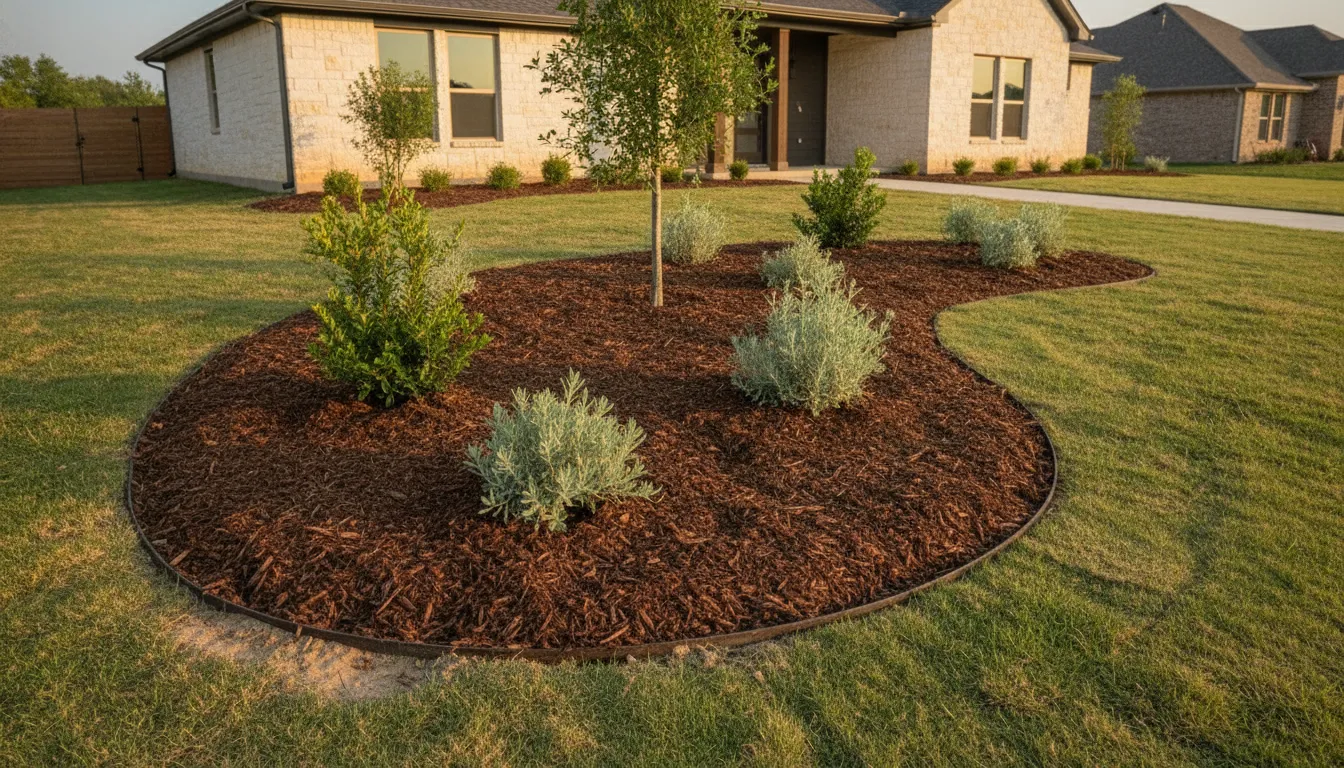
Brown mulch is a practical choice for North Texas beds when you want a natural wood tone, steadier soil moisture, and a finished look that works with brick, stone, siding, and green plantings. The right brown mulch can help shade the soil and protect roots, but the result depends on the material, the depth, the bed conditions, and whether you choose natural or dyed wood. This guide explains the benefits, coverage, replenishment schedule, and buying considerations before you order.
Contact McCraw Landscape Supply for help choosing brown mulch for your North Texas project.
What is brown mulch?
Brown mulch is a wood-based ground cover with a warm brown appearance. It may be natural hardwood whose color comes from the wood itself, or it may be dyed hardwood treated with a colorant for a more consistent finish. The name describes the appearance, not one single texture or recipe, so ask what material is in the load and how it was colored before comparing products.
Natural brown hardwood mulch usually has variation in tone and texture. Sun, rain, and decomposition gradually soften its color. Dyed brown mulch is intended to create a more even color across a bed. It can be a good fit when matching a new installation to an existing landscape matters, but freshly colored material should be handled carefully around light concrete, stone, siding, and other surfaces. Ask the supplier about the product and spread it on a dry day when possible.
McCraw’s mulch category currently lists two products, black mulch and hardwood mulch. The hardwood mulch product page is the natural brown option for shrub beds, flower beds, tree areas, and walkways. There is no separate dyed-brown product page, so confirm that color on a quote if the job calls for it.
Benefits of brown mulch in a North Texas landscape
Mulch works at the soil surface, where North Texas beds face heat, drying winds, heavy rain, foot traffic, and periods of hard, compacted clay. A properly applied layer does not replace good grading, irrigation, or plant selection, but it can make a bed easier to maintain.
It helps conserve soil moisture
A mulch layer shades the surface and slows evaporation. That can give irrigation and rainfall more time to move into the soil instead of leaving immediately from an exposed bed. Brown mulch is especially useful around shrubs, trees, and perennial beds where bare soil heats and dries quickly. Water deeply enough for the plant, then check the soil rather than watering on a fixed schedule just because the mulch looks dry.
It moderates soil temperature
Brown mulch reduces the amount of bare soil exposed to direct sun and can moderate swings between hot daytime conditions and cooler nights. This does not make the air cooler or eliminate summer stress, but it can create a steadier root-zone environment. The shade effect is also one reason mulch can be helpful on sunny beds near foundations, walkways, and south- or west-facing walls.
It limits weeds and soil splash
A continuous layer makes it harder for many weed seeds to reach the light they need to grow. It also reduces soil splash onto siding, plant foliage, and hardscape during heavy rain. Mulch will not stop every weed, especially established perennial weeds, so clear existing weeds before spreading and keep the bed edged where needed.
It improves the finished appearance of a bed
Brown is a flexible landscape color. It creates contrast with green foliage without the sharper contrast of black mulch or the stronger color statement of red mulch. It also connects visually with wood, tan brick, natural stone, and the soil tones common in North Texas. The natural look can be a better fit for a new home landscape, a builder punch-list project, or a refresh where the bed should look finished without becoming the focal point.
It can add organic matter over time
Uncoated organic wood mulch gradually breaks down. As it decomposes, it contributes organic material near the soil surface, although it should not be treated as a substitute for compost or a planting-soil amendment. If you are filling a new planting bed, solve the soil and drainage needs first, then use mulch as a surface layer. McCraw’s guide to mulch types provides a broader comparison when brown mulch is one of several options.
How deep should brown mulch be?
For many North Texas landscape beds, plan on a finished layer of about 2 to 3 inches. That is enough to cover exposed soil and provide the main moisture, temperature, and weed-management benefits without automatically creating an overly deep layer. A tree or shrub bed may be managed within a 2- to 4-inch range depending on the texture, drainage, and plantings. Always follow the needs of the specific landscape rather than assuming that more is better.
Keep mulch away from trunks, stems, and the root flare. Leave a visible gap around the base of a tree instead of building a cone against it. Mulch touching a trunk holds moisture against tissue that should remain exposed and can contribute to decay or pest problems. The Penn State Extension guide to mulching landscape trees recommends a 2- to 4-inch organic layer while warning against overmulching and covering the root flare.
For finely textured or very tightly packed material, a thinner layer may be appropriate because it can restrict air movement more than a coarser mulch. For a sloped bed, choose a texture that will stay in place and use edging or other site controls if runoff regularly moves material downhill.
Brown mulch coverage: how much do you need?
Mulch is sold by volume, usually cubic yards for a bulk order. The basic estimate is:
Cubic yards needed = bed square feet × depth in inches ÷ 324
Measure each section of the bed, add the areas together, and use the intended finished depth. For an existing bed, measure how much mulch is already present and calculate the amount needed to reach the total depth rather than ordering a full new layer automatically. Irregular shapes, sloped areas, settling, and cleanup can justify a modest ordering buffer, but do not use extra material as a reason to build a deeper layer than the plants can handle.
| Bed area. | 2-inch depth. | 3-inch depth. | 4-inch depth. |
|---|---|---|---|
| 100 square feet. | 0.62 cubic yard. | 0.93 cubic yard. | 1.23 cubic yards. |
| 200 square feet. | 1.23 cubic yards. | 1.85 cubic yards. | 2.47 cubic yards. |
| 300 square feet. | 1.85 cubic yards. | 2.78 cubic yards. | 3.70 cubic yards. |
| 500 square feet. | 3.09 cubic yards. | 4.63 cubic yards. | 6.17 cubic yards. |
These are planning estimates, not a guarantee of the exact spread from every load. One cubic yard covers about 162 square feet at 2 inches, 108 square feet at 3 inches, or 81 square feet at 4 inches. For a more detailed calculation, use McCraw’s mulch quantity guide or enter your measurements in the area calculator.
Natural brown mulch or dyed brown mulch?
The best choice depends on whether your priority is a natural, changing appearance or a more uniform color at installation. Neither option is automatically right for every bed.
- Choose natural brown hardwood mulch when you want variation, a softer forest-floor appearance, and a color that can weather naturally into the landscape.
- Choose dyed brown mulch when you want a more consistent tone across a large installation or need the beds to coordinate with a particular home exterior.
- Ask about the material before ordering. Shredded, chipped, and blended wood can spread, knit together, settle, and weather differently.
- Check the surrounding hardscape. Any freshly colored mulch should be kept off light concrete and stone while it settles, especially if rain is expected soon.
- Plan for maintenance. Color fade, wind movement, decomposition, and splash-out can make a refresh necessary even when the mulch still covers the soil.
For a direct color comparison, read McCraw’s article on dyed hardwood mulch colors. Use it as a color and material overview, then confirm current availability and product details before placing an order.
When does brown mulch fit best?
Brown mulch is a strong default when the goal is a natural, broadly compatible finish rather than a high-contrast design statement. It works well in:
- New shrub and foundation beds where the plants and house should remain the focus.
- Tree rings and perennial beds where a wood-toned surface blends with foliage and bark.
- Builder and contractor projects that need a dependable, neutral finish across several properties.
- Older beds where a softer color helps unify different plant varieties and hardscape materials.
- North Texas landscapes where shading exposed soil and slowing moisture loss are part of the maintenance plan.
Brown mulch may not be the best fit if the bed is poorly drained, if the site needs a non-organic ground cover, or if the owner wants a very crisp, high-contrast modern look. In those cases, compare the material and maintenance tradeoffs with decorative rock or another ground cover. The key is to match the surface to the plants, drainage, exposure, and desired upkeep.
How to refresh brown mulch without overdoing it
- Inspect the bed. Look for exposed soil, displaced mulch, weeds, standing water, and mulch touching trunks or stems.
- Measure the existing depth. Check several locations, especially sunny edges and low spots, rather than measuring only the deepest area.
- Clear weeds and spread what is already there. Leveling the existing layer can reduce how much new material you need.
- Calculate the gap. Order enough to reach the planned finished depth, using the formula above.
- Spread evenly and protect plant bases. Pull mulch back from trunks, stems, irrigation heads, drains, and building surfaces.
- Check after rain. Look for runoff paths or places where the mulch has moved, then correct the cause before adding more.
There is no universal calendar date for replacement. Reassess when the bed has thinned, the color no longer meets the project goal, or erosion and decomposition have reduced coverage. McCraw’s North Texas mulch replacement guide can help distinguish a true refill from a cosmetic refresh.
Ordering brown mulch for a North Texas project
Before ordering, have the bed dimensions, target depth, delivery access, and preferred material ready. Confirm whether you want natural hardwood, which is the brown option currently listed, or a dyed brown color that has to be confirmed on the quote. Also confirm whether the load should be delivered or picked up. Bulk delivery can be efficient for several beds, but the driver also needs a safe place to drop the material without blocking a street, drainage path, or neighbor access.
McCraw’s bulk mulch delivery guide explains the basic ordering and delivery process. You can also review the North Texas mulch delivery guide if the project is near McCraw’s service area, including Van Alstyne and Anna. For a smaller local project, the mulch delivery guide for Allen offers another example of the information to confirm before scheduling.
Calculate your brown mulch quantity first, then contact McCraw Landscape Supply to confirm the material and delivery details for your project.
Frequently Asked Questions About Brown Mulch
Does brown mulch help soil stay moist?
Yes, a properly applied layer shades the soil and slows evaporation, which can help conserve moisture. It does not replace irrigation or fix a drainage problem. Check soil moisture under the mulch and water according to the plants and site conditions.
How much brown mulch covers 100 square feet?
At 2 inches, plan for about 0.62 cubic yard. At 3 inches, plan for about 0.93 cubic yard. At 4 inches, plan for about 1.23 cubic yards. The actual spread varies with settling, texture, bed shape, and how evenly the material is installed.
Is dyed brown mulch better than natural brown mulch?
Not automatically. Dyed mulch offers a more uniform appearance, while natural hardwood offers more variation and a softer weathering look. Compare color goals, material texture, maintenance, and the surfaces around the bed before deciding.
Can brown mulch go against a tree trunk?
No. Keep mulch pulled back so the trunk base and root flare remain visible. A mulch volcano can hold moisture against the trunk and create avoidable tree-health problems. Spread mulch wide rather than piling it high.
How often should brown mulch be replaced?
Inspect it at least seasonally and after heavy rain. Replace or refresh it when coverage becomes thin, material has moved, or the appearance no longer meets the project goal. Measure the existing depth first so a refresh does not create an unnecessarily deep layer.
What should I ask before buying brown mulch?
Ask whether it is natural or dyed, what wood or blend it contains, how coarse or fine the texture is, how it is sold, and whether delivery is available to your address. Also confirm current product availability and the best placement for the load.
