When a driveway, pad, or landscape project needs more than a few bags, buying gravel by the cubic yard can lower the material cost and simplify delivery. The best value is not always the lowest advertised price. Material type, quantity, haul distance, and whether the load suits the job all affect what you pay.
Call 903-482-5649 for a cheap gravel delivery near me quote today.
For homeowners and contractors across Van Alstyne, Anna, and surrounding North Texas communities, cheap gravel delivery near me starts with a clear delivered price. Bulk crushed limestone commonly runs about $48 to $65 per cubic yard, while 3/8-inch F-Rock is around $62 to $63 per cubic yard before delivery. Local delivery fees depend on distance, with bulk-order incentives and free-delivery thresholds sometimes available. McCraw offers same-day service for orders placed before 10 AM when availability allows.
Comparing delivered cost, coverage, and the right aggregate for your surface gives you a more useful budget than comparing material prices alone. Start by reviewing the typical price ranges for bulk gravel in North Texas and what those numbers include.
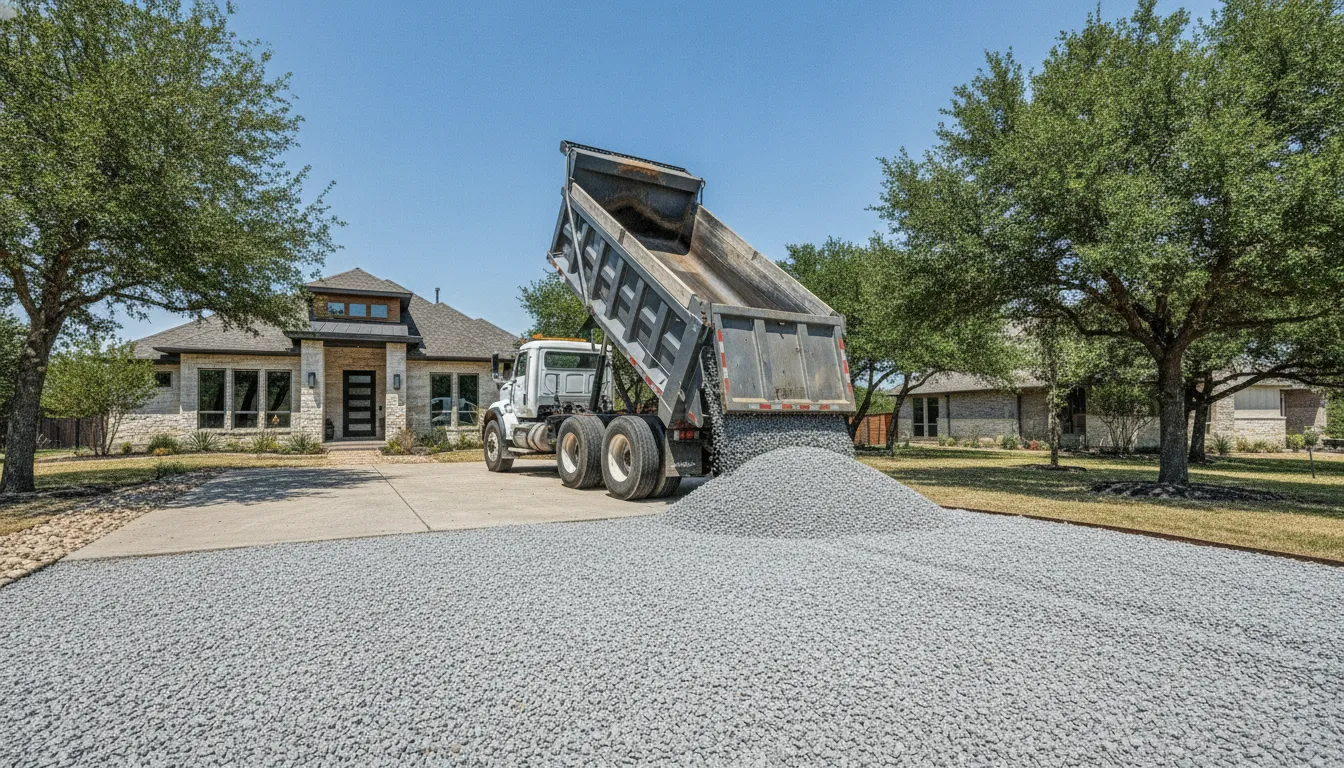
How Much Is Bulk Gravel in North Texas?
Bulk gravel in North Texas is priced by the cubic yard. F-Rock crushed limestone in the 3/8-inch size runs roughly $62 to $63 per cubic yard, 1-inch crushed limestone is about $48 to $65 per cubic yard. And pea gravel or decorative river rock generally starts at $66 or more per cubic yard before delivery.
For most North Texas driveway, access-road, and landscaping projects, the supplier quotes a per-cubic-yard price and then adds delivery based on distance. Current McCraw Landscape Supply pricing gives a practical starting range. The figures below help you compare material options before you calculate delivery and quantity.
Typical bulk gravel prices by material
These material prices help you compare options before delivery and quantity are calculated:
- 1-inch crushed limestone: approximately $48 to $65 per cubic yard. Good for driveways, access areas, and functional surfaces when the size and base are appropriate for the job.
- F-Rock crushed limestone, 3/8-inch: approximately $62 to $63 per cubic yard. Its smaller size suits certain finishing and walking-surface applications.
- Pea gravel and river rock: typically $66 or more per cubic yard. Rounded or decorative stone can cost more because appearance and stone variety are part of the product value.
Prices are not universal across Texas. The EPA notes that gravel cost and quality depend heavily on the region and the local aggregate sources available. A local North Texas supplier can provide a more useful estimate than a national price guide because material availability. Product type, and distance from the source all affect the final number. See the EPA gravel-road guidance for additional context on regional aggregate differences.
How much does a complete gravel project cost?
Start with the material volume. One cubic yard covers approximately 100 to 160 square feet when installed at a depth of 2 to 3 inches. A 500-square-foot area may require roughly 4 to 5 cubic yards depending on the planned depth and the shape of the project. At $48 to $65 per cubic yard for 1-inch crushed limestone, the material portion lands at roughly $192 to $325 before delivery, site preparation, grading, or installation.
A larger driveway or contractor project may require several loads. Bulk delivery is often more economical for larger projects than purchasing the same volume in bags. But the delivered price still depends on the delivery distance and order size. The EPA notes that transportation can become more expensive than the material itself when gravel travels a long distance, so local sourcing and a well-planned load size can matter as much as the price per cubic yard.
For an accurate total, measure the area, choose the right gravel for the intended use, and request a delivered quote. A low material price is not necessarily the lowest project cost if the product is unsuitable or the delivery distance adds significantly to the invoice.
The Most Affordable Gravel Types for Your Project
The lowest material price is not always the lowest project cost. Start by matching the aggregate to its job: a driveway surface needs stone that can interlock and bind, while a trench, access lane, or foundation pad may call for a base or fill material. In North Texas, crushed limestone is usually the first place to look for an affordable, dependable surface. Decorative aggregates can work well for paths and beds, but their appearance and processing can raise the price.
| Gravel type | Typical bulk price range | Best use | Durability and notes |
|---|---|---|---|
| Crushed limestone | $48-$65 per cubic yard for 1-inch crushed; about $62-$63 for 3/8-inch F-Rock | Driveways, parking areas, paths, and general landscape surfaces | Strong, practical, and available in sizes that compact well. Choose the size and blend for the planned use. |
| Pea gravel | Typically $66 or more per cubic yard | Walkways, garden borders, drainage areas, and decorative groundcover | Smooth, rounded pieces are comfortable and attractive, but they do not lock together as firmly as angular crushed stone. |
| River rock (Austin, Brazos, or Llano) | Typically $66-$80 or more per cubic yard | Landscape beds, drainage features, dry creek beds, and visible accents | Durable and highly decorative. The premium appearance usually makes it a better accent material than a large-area driveway surface. |
| Limestone road base or screenings | Ask for a current bulk quote | Subbase, filling low areas, construction access, and compacted foundations | Designed for support and compaction. It may not provide the finished look or surface performance expected from driveway gravel. |
Surface gravel versus base material
Road base and screenings can be a smart way to control costs when you need a stable foundation beneath a finished surface. Base-course gravel generally contains larger stone and less fine material than surface gravel. That structure helps it support loads, but it does not automatically make it the right final driving surface.
A finished gravel surface needs a workable blend of stone, sand, and binding fines so traffic does not displace the aggregate. Using clean, oversized base stone as the top layer can leave a loose surface that shifts under tires. And using a fine surface blend where deep structural support is needed can create a weak foundation. Ask about the material gradation, intended use, and whether a separate surface layer is recommended before ordering.
For a driveway or walking path, compare more than the sticker price, including compaction, maintenance, appearance, and how much material the site needs. Our guide to choosing between limestone and gravel can help you weigh those tradeoffs, and this comparison of gravel vs river rock explains when a decorative option is worth the extra cost.
How Cheap Gravel Delivery Near Me Works in North Texas
Cheap gravel delivery near me works by quoting a per-cubic-yard material price plus a distance-based delivery fee, then scheduling a dump truck to your site. Ordering locally, choosing the right aggregate, and combining your quantity into one load usually produces the lowest delivered total.
For homeowners, contractors, and builders in North Texas, the delivery process starts with matching the material and quantity to the job site. McCraw Landscape Supply delivers bulk landscaping materials throughout Van Alstyne, Anna, and surrounding communities. A local supplier can reduce the uncertainty that comes with ordering from a distant source. And your quote is based on the gravel you need, the amount requested, and the delivery location.
Before ordering, identify where the gravel will be used and how much space the truck can safely access. Driveways, construction entrances, drainage areas, and landscape beds may call for different aggregate sizes or blends. A supplier can confirm the appropriate product and estimate the number of cubic yards. This matters because buying too little can leave a project unfinished, while ordering too much may create an extra stockpile and additional handling.
Scheduling a local delivery
McCraw offers same-day delivery for orders placed before 10 AM, subject to availability. For projects that need more planning, scheduled deliveries use two-hour delivery windows. That gives contractors a more predictable arrival time for coordinating crews, grading, or other site work. And homeowners can plan for access to the driveway or yard instead of waiting through an open-ended delivery period.
When you are comparing reliable gravel delivery options, confirm the delivery window and make sure the unloading area is ready. Remove vehicles and other obstacles, mark soft ground or sensitive areas, and tell the supplier about narrow gates, overhead branches, slopes, or other access limits. A clear unloading plan helps the driver place the material where it will be useful and reduces the need to move it twice.
Understanding truck capacity and delivery fees
Bulk gravel is delivered in dump trucks with an approximate capacity of 5 to 15 cubic yards. The final load size depends on the material, order, truck, and site requirements. Knowing the approximate truck capacity helps you plan a larger driveway or construction project more efficiently, rather than treating every delivery as a small, separate purchase.
Delivery pricing is distance-based, so the cost can vary by location. McCraw also offers bulk delivery incentives and free-delivery thresholds for large orders. Combining enough material into one planned delivery may make more sense than placing several small orders, especially when a project has multiple areas that can use the same product. Ask for the delivered total, not just the per-yard material price, so you can compare options accurately. For larger jobs, review the available bulk gravel delivery services and request a site-specific quote.
Affordable delivery should not mean accepting inconsistent material. McCraw sources premium bulk materials from leading quarries and processes them to exceed industry minimums for consistent quality. That gives the project a better starting point, whether the gravel is headed to a residential drive, a contractor’s work site, or a new development.
What Affects the Price of Gravel Delivered to Your Site
A gravel quote is more than a price for the stone itself. The delivered total reflects the material you choose, how much you need, where the truck is going, and how efficiently the order can be scheduled. That is why two quotes for what sounds like the same gravel may not match.
Delivery distance and local availability
Distance is one of the largest variables. Delivery pricing is typically distance-based, so a nearby supplier may offer a lower delivered total even when another seller lists a lower material price. The U.S. Environmental Protection Agency notes that gravel cost depends on the region and the local aggregate sources available. And over longer distances transporting the material can cost more than the gravel itself. Buying from a local North Texas supplier can therefore reduce the amount of your budget spent on hauling.
Ask whether a quote includes delivery, fuel-related charges, and any minimum order. A low per-yard price can be less attractive after a long trip is added. Local availability can also affect the price of a specific stone: common crushed limestone may be easier to source nearby than a decorative rock hauled from farther away.
Material type and the job it needs to do
Not all gravel serves the same purpose. Crushed limestone used for a driveway, access road, pad, or drainage project may be priced differently from smooth pea gravel or decorative river rock. Decorative materials generally require different processing, sourcing, or hauling, which can raise the material cost. Choose based on the job first, then compare prices among suitable options.
The cheapest material is not always the lowest-cost choice over the life of a project. EPA gravel-road guidance explains that quality depends on the blend and local aggregate source. A material that does not match the application may shift, rut, or require earlier maintenance, so paying for the right aggregate can prevent the false savings of rework.
Order size, delivery thresholds, and seasonal demand
Quantity changes the economics of delivery. Bulk orders can spread the truck trip across more cubic yards, and suppliers may offer bulk incentives or free-delivery thresholds for larger orders. If your project can wait, combine phases or coordinate a contractor’s material needs into one properly sized delivery. Do not order more than you can place and compact correctly, but avoid several small trips when one planned load will do.
Seasonal demand can influence availability and scheduling, especially during busy spring landscaping periods or active construction seasons. Prices may also reflect local supply when quarries or yards are handling heavier demand. Request a quote early, confirm the material and quantity, and ask which delivery threshold applies to your address.
To keep the delivered total under control, compare complete quotes rather than material-only prices. Order locally, select the correct material, calculate the quantity carefully, and ask whether a larger order qualifies for a delivery incentive. Those steps make a cheap gravel delivery quote easier to evaluate and less likely to produce an expensive surprise.
How Much Gravel Do I Need for My Project?
Order roughly 1 cubic yard for every 100 to 160 square feet at a 2 to 3 inch depth. Measure length by width by depth in feet and divide by 27 to find the cubic yards, then add a modest cushion for uneven ground and settling.
Ordering the right amount of gravel starts with a few simple measurements. Too little material can leave thin spots and require a second delivery, while too much can tie up money and leave a pile that does not fit the project. Use the steps below for a practical estimate, then confirm the order with your gravel supplier before delivery.
- Measure the area. Measure the length and width of a rectangular space in feet, then multiply those numbers to find the square footage. For an irregular area, divide it into smaller rectangles or squares, calculate each section, and add the totals. For a driveway or access road, measure each section separately if the width changes.
- Choose the finished depth. Decide how deep the material should be after spreading and compacting. A light surface refresh may require less material than a new driveway, parking area, or base course. The correct depth also depends on whether you are filling low areas, building a base, or placing a finished surface.
- Select the right material for that layer. Base and fill materials are not automatically interchangeable with surface gravel. Base course gravel generally uses larger stone and less fine material, while a traffic-bearing surface needs a blend that can bind together. Tell the supplier exactly where the gravel will be used, because the EPA’s gravel-road guidance explains why material selection matters.
- Convert the measurement to cubic yards. Multiply length in feet by width in feet by depth in feet, then divide by 27. If you are working in inches, convert the depth to feet first by dividing the inch measurement by 12. As a quick check, one cubic yard of bulk material covers roughly 100 to 160 square feet at a 2 to 3 inch depth. Though actual coverage varies with the material, grade, ground conditions, and how evenly it is spread.
- Add a reasonable cushion. Include a modest allowance for uneven ground, settling, spillage, and areas that need a little extra coverage. Avoid adding a large amount without checking first. The best cushion depends on the condition of the site and whether the material will be compacted, so a supplier can help refine the estimate.
- Check the estimate with a supplier. Use McCraw’s online area calculator for a faster estimate, or review this guide to calculating gravel needs for your project. Share the dimensions, intended depth, project type, and delivery location when requesting a quote so the supplier can recommend the appropriate material and load size.
Bulk gravel is commonly delivered in dump trucks holding roughly 5 to 15 cubic yards. If your estimate is close to a truck capacity, ask whether adjusting the quantity would improve the delivery plan or reduce waste. For projects in North Texas, a quick conversation before ordering can also help account for the difference between a stable base and a durable finished surface.
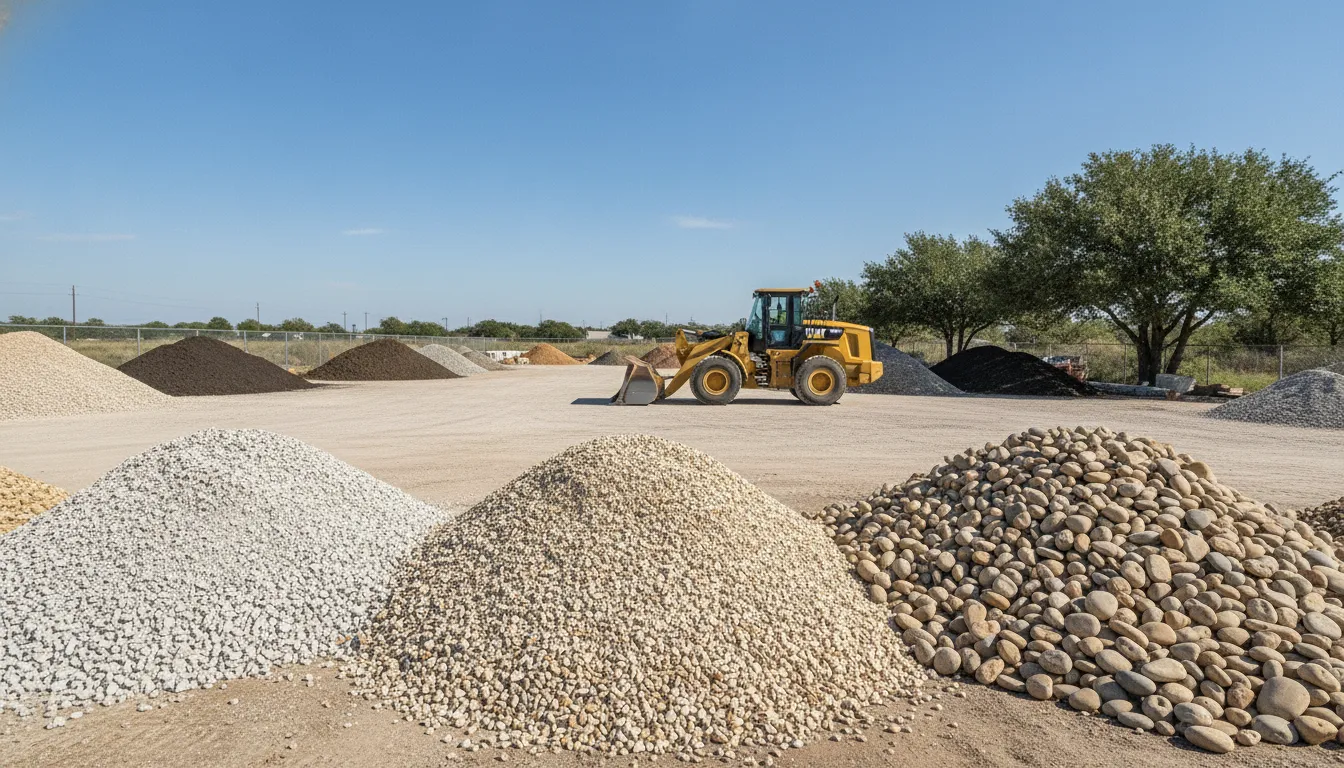
Why Cheap Gravel Delivery Near Me Starts With the Right Supplier
Affordable gravel is not simply the lowest material price on a quote. The better value comes from getting the right aggregate, in the right quantity, delivered when your project needs it. McCraw Landscape Supply combines local North Texas delivery with bulk material knowledge, helping contractors and homeowners avoid the extra cost of poor material selection, missed schedules, or multiple small purchases.
Quality that supports the finished project
McCraw sources premium bulk materials from leading quarries and processes them to exceed industry minimums. That attention to consistency matters whether you are building a driveway, improving a private road, preparing a construction site, or finishing a landscape bed. Material that looks inexpensive at the start can become costly if it spreads unevenly, moves under traffic, or needs frequent correction.
The Environmental Protection Agency’s gravel-road guidance makes the same practical point: it pays to use the best quality material available. A properly selected aggregate blend can perform more reliably than an unverified stockpile with inconsistent stone sizes or fines. Professional delivery also helps maintain consistency from load to load, rather than leaving you to sort through variable quarry material after it arrives. Read the EPA gravel-road guidance for more detail on material quality and surface performance.
Local delivery that works for real schedules
McCraw delivers throughout Van Alstyne, Anna, and surrounding North Texas communities. Local service can reduce the distance-related cost that often makes a material order less affordable while giving you a supplier familiar with the area’s residential. Commercial, and construction needs. Delivery is available for both planned projects and time-sensitive work. Orders placed before 10 AM may qualify for same-day delivery, and scheduled projects can use two-hour delivery windows when available.
For contractors, that reliability helps coordinate crews, equipment, and site access around a predictable material arrival. Dump trucks typically carry about 5 to 15 cubic yards of bulk gravel, making it easier to plan a full order instead of piecing together smaller loads. Contractors comparing options can review this guide to bulk gravel procurement for contractors, and buyers can see the broader range of options in this sand and gravel North Texas buying guide.
Clear help for homeowners and contractors
Homeowners do not have to guess which gravel, depth, or order size fits the project. McCraw can help you think through the application and delivery details before the truck arrives. Contractors get practical guidance on volume, access, scheduling, and material selection while keeping pricing competitive for bulk quantities. The goal is a straightforward order that arrives ready to use, without paying for material that does not match the job.
When you are comparing cheap gravel delivery near me, ask what is included in the value, not just the advertised price per yard. Request a quote from McCraw for the material, quantity, and delivery location your project requires.
Call 903-482-5649 to request a cheap gravel delivery near me quote.
Frequently Asked Questions
Questions below cover delivered load costs, the cheapest buying method and material, and average dump-truck-load pricing for bulk gravel in North Texas.
How much does a load of gravel cost delivered?
The delivered price depends on the gravel type, quantity, and distance to your site. At McCraw, bulk crushed limestone is typically about $48-$65 per cubic yard, while decorative river rock and pea gravel generally start around $66 per cubic yard. Delivery fees are distance-based, and large orders may qualify for a free-delivery threshold.
What is the cheapest way to buy gravel?
For most driveways, access roads, and larger landscape projects, buying bulk gravel by the cubic yard is usually more economical than purchasing bags. Combining the order into a larger delivery can also improve the value because bulk incentives may apply. Confirm the material type and required quantity before ordering so a low unit price does not lead to unsuitable material or a second delivery.
What is the least expensive gravel?
In McCraw’s current bulk pricing guidance, 1-inch crushed limestone is among the lower-cost options at roughly $48-$65 per cubic yard. F-Rock, a 3/8-inch crushed limestone, is about $62-$63 per cubic yard. The least expensive material is not automatically the best choice, so match the stone size and blend to whether you need a base, driveway surface, or decorative finish.
What is the average cost of a dump truck load of gravel?
There is no single average because a dump truck load can contain roughly 5-15 cubic yards, and both material and delivery pricing vary. Ask for a quote based on your exact gravel type, cubic-yard quantity, and delivery address. McCraw provides local delivery throughout Van Alstyne, Anna, and surrounding North Texas communities, with same-day service available for orders placed before 10 AM when scheduling allows.
Ready to Request a Bulk Gravel Delivery Quote?
A clear quote can help you compare material needs, delivery distance, and the right gravel for your North Texas project before you place an order. Whether you are preparing a driveway, landscape area, or contractor job, McCraw Landscape Supply can help you plan the next step. Call 903-482-5649 to request a quote for bulk gravel delivery.
