Choosing between crushed concrete and gravel in North Texas is not simply a matter of picking the lowest delivered price. Blackland Prairie soil, seasonal rain, vehicle loads, drainage, and the finished appearance all affect how an aggregate performs. For many projects, recycled crushed concrete is a practical compacted base, while gravel is often the better visible surface, decorative material, or open-drainage option.
Ask McCraw about aggregate availability and pricing for your project.
Crushed concrete vs gravel usually comes down to placement and purpose. Crushed concrete has angular pieces and fines that can lock together during compaction, making it useful for driveway bases, parking pads, and construction access. Gravel offers varied color and texture for exposed surfaces, paths, and some drainage applications. The right choice depends on subgrade strength, gradation, traffic, slope, drainage, and current local availability.
This guide compares both materials for contractors, builders, and homeowners in Van Alstyne, Anna, and nearby North Texas communities. It also explains why a driveway can use one material below and another material on top.
Choosing Between Crushed Concrete vs Gravel for Your Project
Crushed concrete and gravel are both aggregate materials, but they begin with different sources and behave differently under load. Crushed concrete is recycled aggregate made by processing demolished concrete into usable pieces. Gravel is naturally formed stone that is screened or processed into sizes for driveways, drainage, paths, and landscape work. Neither label alone tells you whether a product fits the job.
How the particles behave
Processed crushed concrete commonly has angular edges and a blend of larger pieces with fines. Those irregular particles can interlock as the material is spread and compacted. That characteristic is useful beneath a driveway or parking area that needs a firm working platform. Fines can fill voids and help the layer tighten, although a mix with excessive fines may allow less water movement than an open-graded product.
Natural gravel generally has more rounded or naturally varied particles, depending on the source and grade. It is available in different sizes and colors, so it often works well when the aggregate remains visible. A loose gravel surface can provide traction and a natural finish, but tires, rain, and turning movements can displace stone if the base, edges, or grade are not prepared well.
Why local conditions matter
North Texas sites can have heavy clay soil, rapid growth and construction, intense summer heat, and periods of heavy rain. A thin layer of attractive stone will not correct a weak subgrade or an unfinished drainage plan. Start with the soil and water conditions, then match the aggregate to the traffic and appearance requirements. McCraw serves both professional contractors and homeowners with a broad range of rock and gravel products.
Review McCraw’s gravel selection to see the types of aggregate commonly used for North Texas projects. Confirm the available grade and intended application before ordering.
Why Is Crushed Concrete Often Used for a Driveway Base?
Recycled crushed concrete is often a practical choice for the compacted base beneath a driveway, parking pad, or construction access route. Its angular pieces can lock together when placed in an even layer and compacted correctly. McCraw’s product guidance describes crushed concrete as a strong, cost-effective alternative that can provide useful drainage when the grade and material selection fit the site.
Material alone does not create a durable driveway. The installer must address soft soil, establish the finished grade, control water, select a suitable gradation, and compact the aggregate with equipment appropriate for the job. Heavy trucks and construction equipment may require a more deliberate section design than a lightly used residential drive.
A practical base preparation sequence
- Evaluate the subgrade. Remove vegetation, organic material, and soft spots. If the soil stays wet or pumps under equipment, correct the foundation problem before placing aggregate.
- Set the grade and drainage path. Decide where rainwater should go. Use a planned slope, swale, outlet, or other drainage feature when the site needs more than a porous surface.
- Choose a consistent grade. Ask about particle size and fines instead of ordering by a generic material name. The best grade depends on whether it will serve as a base, surface, or drainage layer.
- Place and compact in lifts. Spread manageable layers, compact each lift, and correct soft areas before adding more material. A deep uncompactified pile is not a substitute for a prepared base.
- Estimate the order carefully. Measure length, width, and depth, then allow for compaction and minor waste. Use McCraw’s area calculator as a starting point and confirm the quantity with the supplier.
The Federal Highway Administration’s aggregate materials guidance reinforces the importance of both material properties and compaction effort. In practical terms, crushed concrete can be a strong base candidate when the subgrade, drainage plan, gradation, and installation are appropriate.
What Does Crushed Concrete vs Gravel Cost in North Texas?
There is no reliable single price per ton for every North Texas aggregate order. Delivered cost changes with the grade, order size, haul distance, availability, and whether the material is being used as a base or a finished surface. A lower material price can be outweighed by extra deliveries, repeated reshaping, or a base that was not designed for the traffic.
| Factor | Crushed concrete | Natural gravel |
|---|---|---|
| Typical role | Compacted base, parking pad, utility access, or construction route. | Visible driveway surface, path, landscape area, or selected drainage layer. |
| Cost planning | Often cost-effective for base work. | Varies by size, color, source, quantity, and delivery distance. |
| Durability | Can compact firmly and harden as it settles. | Flexible under traffic, but loose stone can shift. |
| Appearance | Functional recycled aggregate look, often gray. | Varied colors, shapes, and textures for exposed areas. |
| Maintenance | May need correction if the subgrade moves. | May need raking or topping off after heavy rain. |
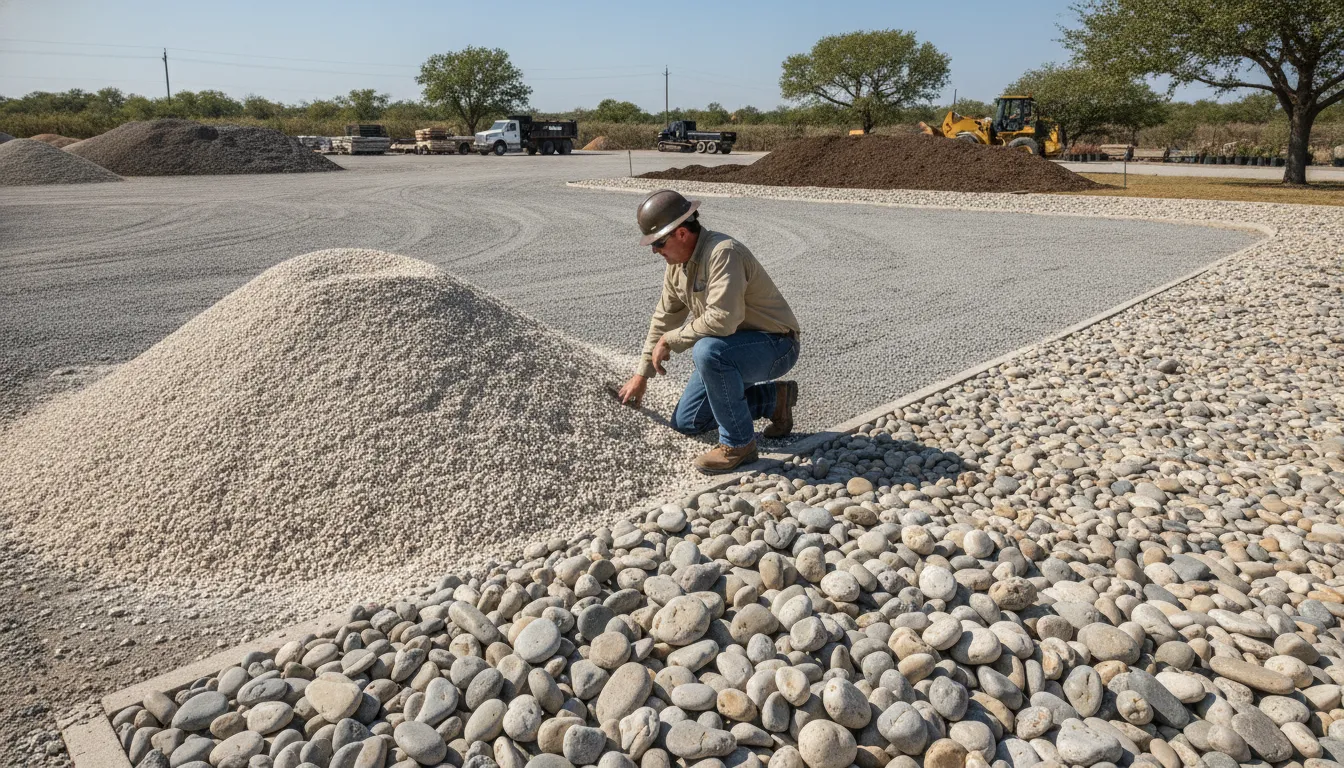
For a complete estimate, calculate the project area and planned depth before comparing delivered prices. McCraw’s team can confirm current availability and help identify whether a base material, surface gravel, or combination makes sense. The most useful comparison is the installed project cost, not only the price shown for one ton.
Delivery access matters, too. Check overhead clearance, gate width, turning room, and the planned drop location before the truck arrives. A small access problem can change the delivery plan even when the material and quantity are correct.
Is Crushed Concrete or Gravel Better for Drainage?
Neither material is automatically the best drainage solution. Open-graded gravel may allow water to move through readily, while crushed concrete can provide useful drainage in many base applications. Performance depends on the subgrade, slope, particle gradation, fines, and any drainage structures included in the design.
Factors that control water movement
- Subgrade: Saturated or weak soil can hold water beneath either aggregate. Prepare a firm foundation before placing stone.
- Slope: A deliberate slope moves surface water away from buildings, gates, and neighboring property. Porous material cannot repair a missing drainage path.
- Gradation: Fines can improve interlock for a base, but too many fines reduce open void space. Ask for the grade that matches the intended use.
- Structures: Swales, edging, underdrains, outlets, or storage areas may be necessary where runoff is concentrated or standing water is persistent.
Penn State Extension’s porous and permeable paving guidance makes the same broader point: water performance comes from the complete subsurface and drainage design, not just the surface material.
For a North Texas driveway or pad, choose crushed concrete when a stable compacted base is the priority and the grade is suitable. Choose gravel when open drainage, traction, or a visible stone finish is more important. Have the installer evaluate the actual soil rather than assuming every property needs the same section.
Where Should Each Material Be Used?
The best choice changes with the role the aggregate must play. A contractor may need a firm working platform for equipment, while a homeowner may care most about a finished driveway that complements the landscape. In many successful projects, crushed concrete supports the system below and gravel provides the exposed surface above.
Driveway bases and construction access
Crushed concrete is often a practical fit beneath a driveway surface, parking area, or temporary construction route. Its angular particles can knit together during compaction and create a firm platform when the material is appropriate for the expected loads. Builders and contractors should account for loaded trucks, turning movements, lift thickness, subgrade conditions, and compaction effort.
Visible driveways, paths, and landscape areas
Gravel is often preferred where color, texture, traction, and a natural finish matter. It can suit an exposed driveway, walking path, landscape border, or decorative drainage area. The tradeoff is maintenance. Rain and traffic can move loose stone, so edging, a stable base, periodic raking, and occasional topping off may be part of the long-term plan.
For a related comparison focused on limestone and gravel, read McCraw’s crushed limestone vs gravel guide. That article covers a different material comparison. This guide focuses on recycled crushed concrete versus natural gravel, so the recommendations are not interchangeable.
How Should North Texas Buyers Plan the Order?
Start with the project function, then confirm the site conditions and order details. Contractors should identify traffic loads and delivery timing. Homeowners should measure accurately, consider the finished appearance, and decide how much maintenance they are willing to handle. Both groups benefit from confirming current inventory before finalizing the material choice.
Use this buyer checklist
- Measure the length and width of the area and identify the planned depth.
- Look for soft spots, standing water, erosion, and low areas before ordering.
- Choose whether the material will serve as a compacted base, exposed surface, or drainage layer.
- Confirm the aggregate grade, estimated quantity, delivery access, and current price.
- Allow for compaction, settling, waste, and any second material used as the finished surface.
McCraw Landscape Supply serves contractors, builders, landscapers, and homeowners across Van Alstyne, Anna, and surrounding North Texas communities. A clear plan for subgrade, drainage, traffic, and finish will make the crushed concrete vs gravel decision much easier.
For contractors, planning the aggregate order early can also reduce jobsite delays. Share the project dimensions, intended use, delivery location, and expected traffic with the supplier. Homeowners can bring the same information when asking for guidance, especially if the project combines a compacted base with a visible gravel finish.
When a project uses two materials, plan the transition before delivery. Shape and firm the crushed concrete base before placing surface gravel. Keep the grade consistent at drive edges, gates, and tie-ins. This prevents water from collecting where the materials meet. Confirm whether the supplier can provide both products on your required schedule.
Frequently Asked Questions
Will crushed concrete harden?
Crushed concrete can compact firmly and may harden as it settles, especially when the material has a suitable blend of angular pieces and fines. The result still depends on the subgrade, moisture, lift placement, and compaction.
What are the disadvantages of using crushed concrete?
Crushed concrete can have an industrial recycled appearance and may contain too many fines for an open-drainage application. It can also perform poorly when placed over weak soil or without proper grading and compaction.
Will water drain through crushed concrete?
It can provide useful drainage, but drainage is not guaranteed by the material name. The grade, fines, slope, subgrade, and drainage structures determine how water moves through and away from the project.
How much does 1 ton of crushed concrete cost?
Pricing varies by grade, quantity, delivery distance, and current availability. Contact McCraw for a current project-specific price rather than relying on a general online estimate.
Is crushed concrete better than gravel for driveways?
Crushed concrete is often a practical compacted base. Gravel is frequently preferred for the visible surface. The best driveway may use both, depending on the soil, traffic, drainage, appearance, and installation plan.
Get Started With the Right Aggregate
Have a driveway, base, drainage, or landscape project in Van Alstyne, Anna, or nearby North Texas? Contact McCraw Landscape Supply to ask about aggregate availability, current pricing, delivery, and the material that fits your site.
