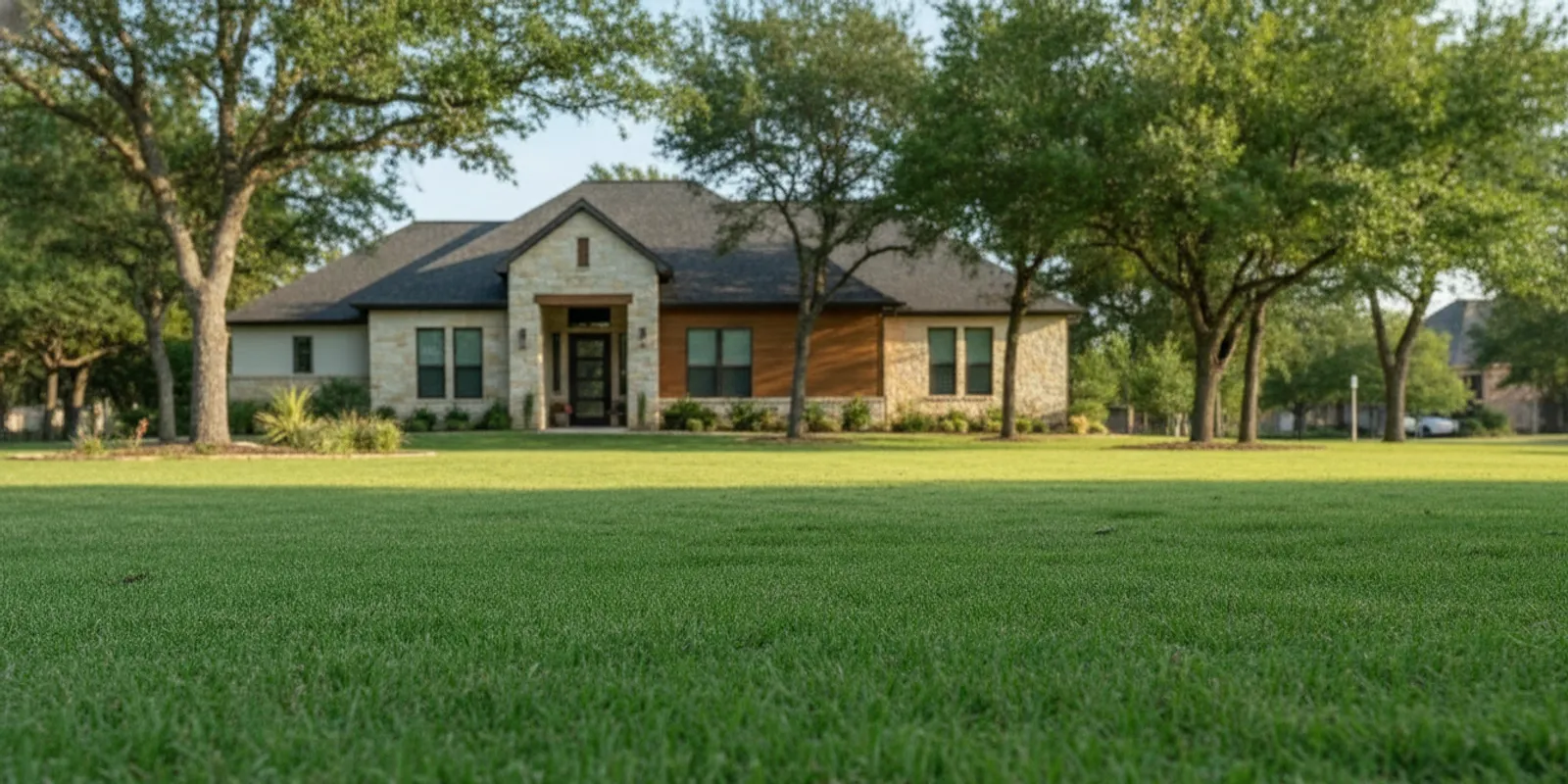
Empire zoysia grass is a warm-season turf option North Texas homeowners may consider when planning a new lawn or replacing a tired one. It can suit some yards, but the right choice depends on sunlight, intended use, maintenance expectations, and how quickly you need the lawn to establish. Use this guide to assess the site and prepare useful questions before ordering sod.
Ask about sod for your project
What is Empire zoysia grass?
Empire is a zoysia cultivar sold as sod, not a seed-based shortcut for establishing a lawn. Zoysia is a warm-season grass: it grows actively in warm weather and slows when temperatures fall. Dense turf can create a neat, finished appearance, but cultivar performance still depends on conditions in the actual yard. Soil, light, drainage, traffic, and care all matter.
Do not assume every zoysia product has identical appearance or performance. Cultivars differ, and a product name alone does not tell you whether the grass will suit a shaded, wet, heavily used, or poorly prepared site. Check the exact variety available and discuss conditions before ordering. McCraw lists zoysia sod among its North Texas sod options.
What should you consider before choosing Empire?
Start with the yard, not the product label. Walk the area at different times of day and identify parts receiving direct sun, filtered light, or deep shade. Note where water stands after rain, where people walk, and where pets or equipment may create wear. A lawn with mixed conditions may need more than one solution.
- Sun: Record hours and quality of direct light. Do not treat tree-filtered exposure as full sun.
- Drainage: Mark low spots and places that stay soft. Correct grading or drainage issues before sod arrives.
- Use: Decide whether the lawn is mostly for appearance, everyday family activity, or repeated heavy traffic.
- Maintenance: Be realistic about mowing, establishment watering, and seasonal care.
- Timing: Choose a period when the site can be prepared and new sod watered promptly.
Repeat the walk-through after rain if possible. A dry-day inspection can hide low places that collect water or reveal traffic routes that become muddy. Sketch sunny, partly shaded, and deeply shaded zones separately; that simple map makes it easier to discuss mixed-use areas and avoid treating the whole yard as one uniform site. These observations also help when comparing grass options for North Texas. If shade is the main concern, compare exposure and expectations carefully rather than assuming any warm-season grass will thrive in deep shade.
How does Empire compare with Bermuda and other choices?
There is no universally best grass for every property. Compare the basic tradeoffs below, then verify cultivar-specific details with a knowledgeable supplier or turf professional. This table is a starting point, not a performance guarantee for a particular lot.
| Consideration | Empire zoysia | Bermuda sod | What to check on site |
|---|---|---|---|
| Growth type | Warm-season zoysia cultivar | Warm-season Bermuda option | Seasonal appearance and local conditions |
| Light | Confirm suitability for actual exposure | Generally evaluated for sunnier areas | Direct sun, tree cover, and shade changes |
| Wear and recovery | Ask how cultivar suits expected use | Compare against traffic and recovery needs | Foot traffic, pets, play, and equipment |
| Establishment | Sod gives ground coverage but needs rooting care | Sod needs preparation and early watering | Water access and installation labor |
| Ongoing care | Plan mowing and seasonal maintenance | Plan mowing and seasonal maintenance | Time, equipment, and desired finish |
McCraw also offers Bermuda sod, worth comparing for a sunny, active yard. A useful comparison includes the exact cultivar and your willingness to maintain it, not just color or initial price. When the site has substantial shade, ask about realistic alternatives rather than forcing a sun-oriented grass into unsuitable conditions.
Think about the lawn in zones. The front yard may be primarily a visual space, while a side passage could take repeated foot traffic and the backyard may include play or pet activity. If those areas differ in sun or use, compare options for each zone instead of letting the most visible section dictate the choice everywhere. Also consider boundaries: sod meeting a bed, walk, or neighboring turf should be planned so the finished edges are manageable.
One practical way to decide is to rank your priorities before talking to a supplier. For example, a homeowner who values a uniform appearance and can follow a consistent care routine may weigh different factors from a household seeking a lawn for frequent play. Write down the conditions you cannot change, such as mature tree shade or a narrow access gate, alongside the preferences you can adjust, such as traffic routes or bed edges. This avoids choosing solely by a photograph or a name that sounds familiar.
How do you measure the area for a sod order?
Measure the area that will actually receive sod. For a rectangle, multiply length by width. Break an irregular yard into smaller rectangles or triangles, calculate each area, and add the areas. Subtract patios, beds, walks, and other spaces that will not be planted. Record dimensions and sketch the shape so the estimate can be checked.
Use McCraw’s landscape material calculator as an estimating aid, and compare the result with your sketch. If the project includes narrow strips, curves, or different grass zones, measure them separately rather than rounding the whole yard into one rectangle. Confirm how sod is packaged and sold when requesting an order; do not rely on a guessed coverage figure.
For a simple rectangle, write down both dimensions and the multiplication rather than keeping only the final number. For an L-shaped lawn, divide it into two rectangles that do not overlap. For a curved island or tree bed, estimate the section separately and subtract it from the planted area. Label the measurements on your sketch, especially when you are estimating a front and back lawn in separate stages. This makes it easier to correct a measurement without starting over.
Check your measurements from a second direction when possible. A common estimating error is measuring the whole property boundary instead of the turf footprint, then forgetting that a driveway, foundation bed, or patio occupies part of that space. Another is counting a strip twice where two rectangles overlap. On your sketch, mark each section with a letter and write its dimensions next to it. Keep the unplanted areas visible, rather than erasing them, so you can see why they were excluded. If a section is irregular, break it into simple pieces and accept a reasonable estimate rather than disguising uncertainty with extra precision. The supplier can help confirm the order quantity once you explain the shape and the way sod is sold.
What should you do before delivery?
Good site preparation helps sod contact soil and reduces avoidable rework. Complete grading and remove existing weeds or unwanted turf before the delivery date. Address compacted areas and drainage problems. Prepare a finished surface that will not leave a large height difference beside walks or driveways.
- Clear the work area and locate irrigation heads, valves, and other features.
- Resolve grading and drainage concerns before covering the ground.
- Prepare a smooth soil surface, removing debris and large clods.
- Arrange help and equipment to place sod promptly.
- Make sure water is available on installation day and during early establishment.
Before the delivery, check access from the unloading point to the lawn. Move vehicles, plan where pallets can be placed without blocking a driveway, and decide how sod will travel around gates, beds, and narrow passages. Confirm that irrigation zones cover the whole project and that no repairs are waiting beneath the new turf. If the site is not ready, discuss timing before the sod is dispatched rather than leaving material waiting while grading is finished.
For a larger project, coordinate delivery with the installer and confirm where a truck can safely unload. McCraw’s ordering workflow can help you understand next steps. If estimating material for a broader landscape job, review available landscape supply products as you plan the work.
Preparation is easier when it is divided into tasks with clear completion checks. Before the old turf is removed, identify sprinkler heads and mark them so equipment does not damage them. After grading, walk the area and look for abrupt dips, ridges, or exposed debris. Before the truck arrives, test the hose or irrigation system and check that water reaches the farthest corner. If you are hiring help, agree in advance who is responsible for these checks. These small steps reduce the chance of discovering a problem after the sod is already on site.
How should you care for new zoysia sod?
New sod needs close attention while roots establish. Water soon after installation, then keep soil and sod from drying during early rooting. Amount and frequency depend on weather, soil, slope, and irrigation coverage, so inspect the lawn rather than following a rigid schedule that ignores conditions. Avoid heavy traffic until the sod is anchored.
After the lawn begins to root, adjust watering gradually and follow sound local turf-care guidance for mowing height and seasonal maintenance. Do not mow before the sod can stay in place underfoot and the surface is dry enough to avoid rutting. If you see lifted edges, dry patches, or persistent standing water, address the cause early.
Check the lawn in several places rather than judging only the easiest-to-reach edge. A corner beside a hot wall, a slope, or a spot under tree cover may dry at a different rate from the center. Look for contact between the sod and soil; gently test an edge instead of repeatedly tugging at every seam. If portions dry faster, adjust irrigation coverage or hose those areas as needed, while avoiding water left standing for long periods. Keep people, pets, and equipment off the turf as much as practical until it is firmly rooted.
A simple inspection routine helps you make measured adjustments. Walk the lawn at a consistent time and note areas that look curled, pale, or unusually soft. Check whether an irrigation head is blocked or whether a slope sheds water before it reaches the soil. Do not respond to every isolated color change by changing the whole schedule; first check the location, soil contact, and recent weather. If a seam lifts, press it back into contact and reduce foot traffic while you investigate why it moved. For questions about treatments, identify the grass and the problem before applying anything. Product labels and cultivar-specific advice matter, so avoid guessing from a symptom alone.
Virginia Tech research describes zoysiagrass as a warm-season turf used for density and visual quality, while examining responses to herbicides. That research is background on the grass type, not a guarantee that a specific cultivar will suit every North Texas yard. See the Virginia Tech zoysiagrass research and seek product-specific guidance before choosing a treatment.
What should you confirm before placing an order?
Before committing, make sure material and logistics match the job. Confirm the exact sod variety, quantity, packaging, delivery timing, unloading access, and remaining preparation. Ask how availability may affect the date and what to do if weather delays installation. Get the estimate based on your measured area and clarify what is included.
- Which zoysia cultivar is being supplied?
- Does the selected grass suit the yard’s sun and use?
- How much area does the measured order cover?
- Is the installation site ready and accessible?
- Can the sod be placed and watered promptly after arrival?
- What care instructions apply to this product and season?
It is also useful to agree on who handles each step. If a contractor is installing the lawn, confirm who will prepare the surface, direct unloading, place the sod, and begin watering. If you are doing the work yourself, make sure the delivery date leaves enough time and help for the area being covered. Ask what information the supplier needs to confirm the order and what changes should be communicated if the measured area or delivery access differs from the original plan.
Look through the sod selection and use the lawn sod planning guide to organize decisions. For material questions or project details, learn about McCraw Landscape Supply or review location information before scheduling. You can also browse the project gallery for examples of completed work, then request a material quote when you have the project details ready.
How should you assess establishment timing and follow-up?
Order timing is not only a question of when sod is available. It is also about whether the site, labor, and water supply are ready at the same time. Before selecting a delivery date, work backward from the day the ground will be prepared. Allow enough time to remove old turf, address grading, settle any irrigation repairs, and verify the measured area. A date that leaves no room for those tasks can turn a straightforward installation into a rushed one.
Make a simple sequence for the project: finish site work, confirm the order and delivery access, place the sod, water it promptly, and check rooting during the first weeks. Assign a person to each task, even on a small do-it-yourself lawn. If a contractor is involved, ask when the crew will be on site and who will be available to direct the driver. If weather changes the plan, contact the supplier early to discuss options rather than assuming the original schedule still works.
Keep a brief note of the installation date, weather, watering adjustments, and any areas that seem slow to root. This record can help you notice patterns, such as one zone drying faster or a seam lifting after traffic. It also gives a useful reference when asking for advice, because you can describe what has happened rather than relying on memory. Avoid making several major changes at once; observe the lawn and adjust a specific issue, such as coverage or foot traffic, before changing the whole care routine.
Follow-up is especially useful when a lawn combines full sun and shade. Treat the lawn as several observation zones: a sunny perimeter, the open center, and areas beneath trees or beside buildings. Make a note of which zones dry first and whether water reaches them evenly. If the sod is installed in stages, record where each stage begins and ends so differences in establishment are not confused with differences in exposure. After rooting, keep the notes for seasonal planning; they can help you decide whether a persistent issue is tied to irrigation, shade, traffic, or site drainage. A thoughtful record is more useful than trying multiple remedies at once without knowing what changed.
Frequently asked questions
Is Empire zoysia available as seed?
This article treats Empire as a sod option. Confirm the specific product and form being offered before ordering, rather than assuming a cultivar is available as seed.
Can zoysia grow in shade?
Light conditions vary, and deep shade can be challenging for turf. Map the actual exposure and ask about the particular cultivar instead of relying on a broad label.
Can I install sod myself?
Some homeowners install sod themselves, but the work requires a ready surface, prompt placement, and early watering. Plan help and delivery access for the area being covered.
How do I know when the sod has rooted?
Test a small edge gently for resistance and look for the turf staying in place. Avoid repeatedly lifting seams or allowing heavy traffic while roots establish.
Contact McCraw about sod availability
Choose sod around the site, not just the name
Empire zoysia may be worth considering when its growing requirements align with your yard and care plan. Measure carefully, prepare the ground, and confirm the cultivar and delivery details before ordering. A little planning helps you choose sod with a clearer understanding of what the lawn will need after it arrives.
