Erosion Control Rock North Texas: Practical Guide
North Texas rains can wash away loose soil on your slopes in just one afternoon. Unchecked runoff creates deep ruts that damage your yard and lower your property value. Choosing the right rock is the first step to keeping your land in place.
Contact McCraw Landscape Supply for help choosing erosion control rock for your North Texas project.
Erosion control rock North Texas projects need the right stone sizes to anchor loose dirt on steep slopes and drainage paths. Most experts use rip rap or surge rock to slow down fast water and prevent soil loss during heavy storms. TxDOT reports that slopes and drainage channels are the areas most likely to face major damage from runoff. Heavy stones create a tough barrier that keeps soil from washing into local streams or clogging your yard drains. This method is vital for the Blackland Prairie soil found in Anna and Van Alstyne because this dirt shifts easily when wet. The right rock size protects your land and saves money on future repairs.
Managing runoff on a hill or slope requires a solid plan and the right supplies. You might wonder how these stones can stop such a strong force of nature. Learning how erosion control rock works in North Texas will help you pick the right stone for your land. Start by matching the stone size and layout to the way water moves through your property.
Erosion Control Rock North Texas: Which rock size fits each erosion problem?
Picking the right rock is not just about looks. In North Texas, our Blackland Prairie soil needs the right weight to stay in place during heavy rain. If you use a stone that is too small, the water will just wash it away. If you pick a stone that is too big, it may look out of place or fail to slow down the flow. Your choice depends on the slope of your yard and how fast the water moves. Picking the right rock is the only way to keep your dirt from washing into the street.
Small stones for sheet flow
Sheet flow happens when water moves across a flat area in a thin layer. For gentle slopes, small river rock or gravel can work well. These stones help slow down the water before it picks up speed. McCraw offers Colorado River Rock in styles like Rainbow, Salt and Pepper, and Mesa Grey. These options provide functional landscaping erosion control while keeping your yard looking great. You can use these rocks to line garden beds or fill in low spots where water pools after a storm.
However, you must be careful with round stones on a hill. If the slope is steeper than a 3:1 ratio, you may need more weight to keep the soil from moving. Round rocks tend to roll down steep banks when the water gets high. For those areas, mixing in some larger stones can help keep the smaller ones in place. The goal is to create a layer that stays put even when the ground gets soft and muddy.
Angular stone for runoff paths
When water gathers into a path, it gains power and speed. For swales, ditches, and runoff paths, angular stone is much better than round river rock. Round rocks can roll, but angular stones have sharp edges that lock together. This locking action creates a stable layer that resists high-speed runoff. Many local pros use 3-inch surge rock for these spots. This rock is heavy enough to stay in place but small enough for a person to spread with a shovel.
The Texas Department of Transportation notes that proper rock lining prevents silt from filling up your local drains. This is vital because silt buildup can lead to floods on your own land. By using angular stone, you help the water soak into the ground while keeping the dirt where it belongs. This keeps your project area clean and saves you money on repairs and cleaning later on.
Heavy riprap for outlet protection
The areas near culverts and pipe outlets face the most stress of all. Water exits these pipes with a lot of force during North Texas storms. To stop the ground from washing out at the point of exit, you need large, heavy stones. This is where erosion control rock solutions like riprap or gabion stone come in. These big stones can handle the weight of fast water without moving an inch. They act as a splash pad that breaks the power of the water flow.
Without this cover, the soil at the end of the pipe will soon turn into a deep hole. This hole can in time cause the pipe itself to shift or break. By placing a bed of large rock at the outlet, you let the water spread out safely over a wider area. Most homeowners use stones that are 6 to 12 inches wide for this job. For very large pipes, contractors might use even bigger stones to ensure the bank stays solid for years to come.
The table below shows how to match rock type to your specific project needs based on the location and flow.
| Rock Type | Best Use | Flow Type | Key Benefit |
|---|---|---|---|
| Native River Gravel | Gentle Slopes | Sheet Flow | Natural Look |
| Angular Surge Stone | Runoff Swales | Medium Flow | Rocks Lock Together |
| Heavy Riprap | Pipe Outlets | High Flow | Breaks Water Force |
| Large Stone Slabs | Steep Banks | Heavy Runoff | Extreme Weight |
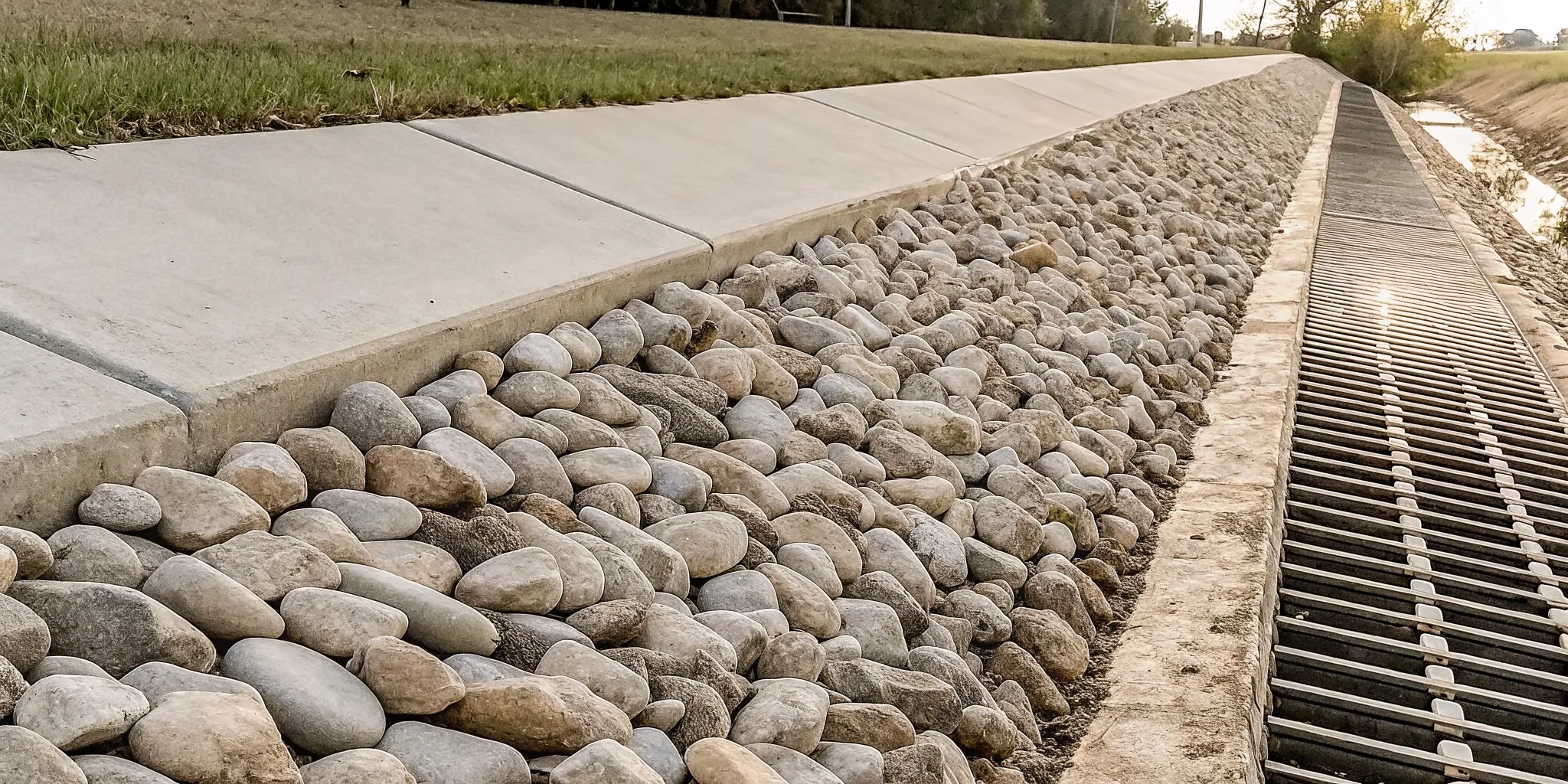
How do you build a rock drainage path?
North Texas yards deal with fast rain and hard soil. Building a path with erosion control rock North Texas yards need is a smart way to stop mud. Using erosion control rock solutions keeps your yard safe from heavy runoff. You can build a dry creek bed or a simple rock path to guide water away from your house. This project takes some hard work but it saves you from big repair bills later. It also adds a nice look to your yard while fixing a tough water problem.
Track the water flow
Before you dig, you must see where the water goes. Go out during a heavy storm and watch the rain. Look for spots where the soil washes away or where water pools. You need to find a clear start point and a safe end point. A good path follows the real dip of your land. It should move water toward a street drain or a low spot far from your house. Finding the route first saves you from digging in the wrong place.
Think about the soil in your yard. North Texas has thick clay that does not soak up water well. This means rain runs off fast but does not sink in. If you have a steep yard, the water will move even faster. You may need to plan for a wide path if you see a lot of water. Make sure your path does not dump water into your neighbor’s yard. A good plan keeps the water on your own land or sends it to a city drain.
Dig and line the trench
Once you have a path, it is time to dig. Use a shovel to make a trench that is about twice as wide as your planned rock bed. The center of the trench should be deeper than the sides. This shape helps catch water and slows it down as it moves. In North Texas, slopes should be as flat as you can make them to stop soil loss. Try to stay away from sharp turns that can cause the water to jump out of the path.
After digging, clear out any big roots or sharp rocks. You want a smooth base for your work. Lay down a layer of heavy fabric made for yards. This fabric keeps weeds from growing up through your rocks. It also keeps the stones from sinking into the soft mud over time. Use pins to hold the fabric in place so it does not move when you add the rock. This step is key for a path that lasts for a long time.
Place the drainage rocks
Choosing the right rock size is the key to a good path. Use larger rocks like rip rap for erosion control in the middle of the path. These big stones stay in place when water moves fast. They act as a base and break up the force of the rain. If you only use small rocks, they will just wash away during the next big storm. You need the weight of the large stones to hold the line.
Place smaller stones and river rocks on top and along the edges of the path. This mix of sizes looks real and helps stop the soil from moving. You can use many colors of rock to make the path look like a real creek bed. Pack the rocks tight so there are no large holes. If the flow is very strong, you may need to add more large rocks at the turns. Check the path after the first big rain to see if you need to make any changes.
- Watch how rain moves through your yard during a storm to find the best route for the water.
- Use spray paint or a garden hose to mark the path from the start to a safe end point.
- Dig a shallow trench with a deep center and sloped sides to hold the water in place.
- Clean out the trench and cover the bare soil with a good yard fabric to block weeds.
- Lay down large rocks first in the middle of the path to act as a strong base for the flow.
- Add smaller stones and river rocks to fill in the gaps and hide the edges of the fabric.
- Check the path during the next big rain to see if you need to add more rock or change the route.
Rock layouts for slopes and swales
Dealing with water on a hill or in a low spot is key to a solid yard. In North Texas, heavy rains can wash away dirt in minutes. This is why erosion control rock North Texas projects use stone to slow down runoff. Proper layouts help keep the earth in place while letting water flow in a safe way.
Designing for slope solid ground
When you work on a hill, you must think about how water moves. One good way to stop soil from moving is to use erosion control rock solutions like contour bands. These are rows of stone that run across the face of the hill. They act as small speed bumps for rain.
For steep hills, you should also add base guards. This means placing large rocks at the very bottom of the slope. These rocks keep the base from sliding out. The Texas DOT says a mix of plants and stone is often the best long-term fix for slopes. The roots hold the dirt while the rocks guard the top layer.
Common failure points to avoid
Many people make the mistake of using small, loose gravel on a steep hill. This stone will wash downhill during the first big storm. You need heavy stone that can lock as one to stay in place. If the rocks are too light, they cannot stop the push of fast water.
One more issue is when water finds a way to go around your rocks. If your layout is too thin, the water will cut a path right next to it. This can lead to deep ruts and more harm than before. You must make sure your rock paths are wide enough to catch all the rain from the high ground.
Using check dams and swale liners
In a swale or ditch, you can use check dams to control the flow. These are small walls made of rip rap for erosion control. They create small pools that catch silt and slow the water. This gives the water time to soak into the ground instead of cutting a deep trench.
For the best luck, line the bottom of the ditch with a cloth before you add the stone. This keeps the rock from sinking into the soft North Texas mud. Using large rip rap will give you a heavy liner that stays in place. This setup protects the soil and keeps your yard looking great year after year.
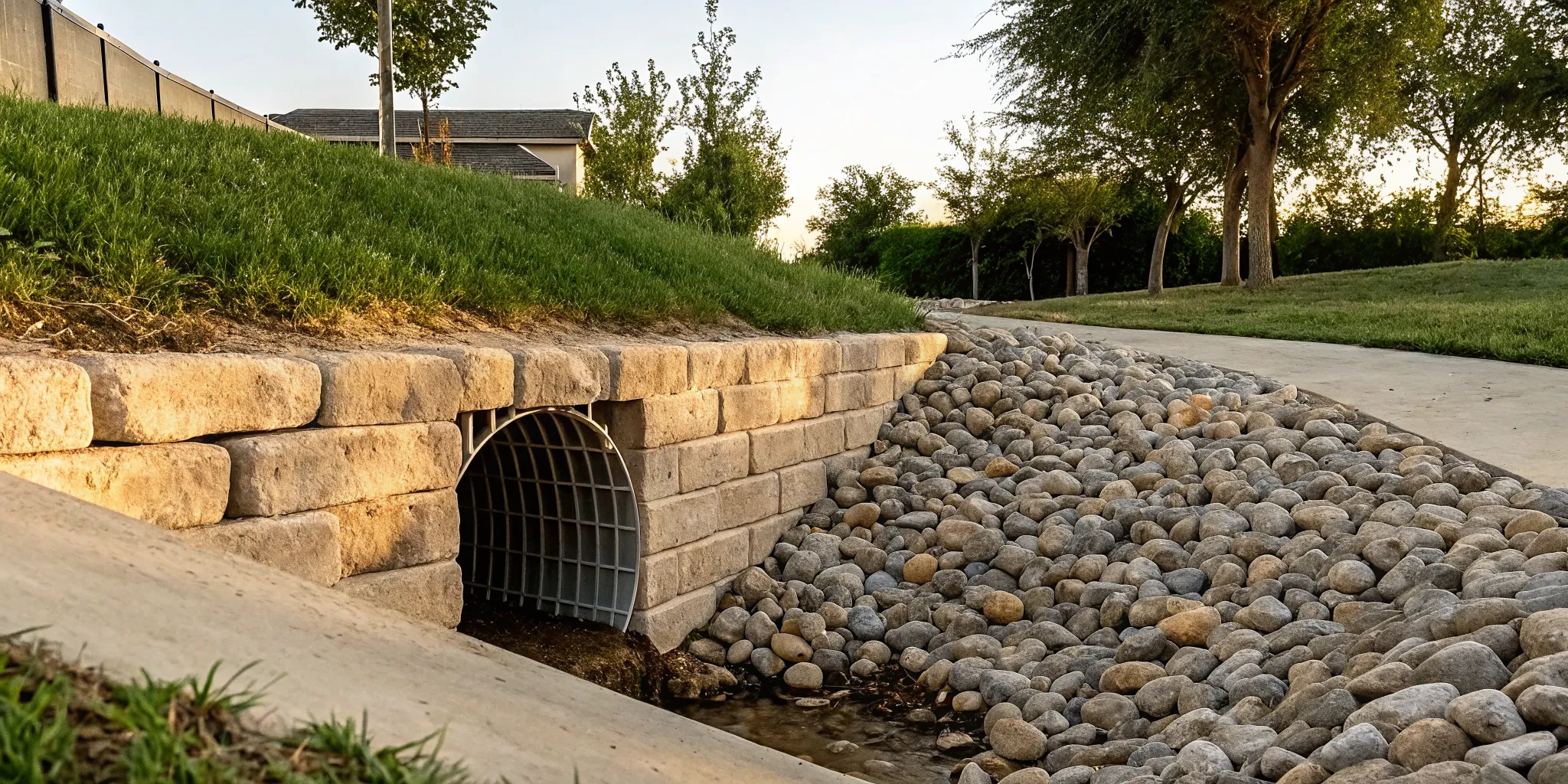
Why outlet protection needs special attention
Water moves fast when it leaves a pipe or a culvert. This fast flow can quickly wash away soil and create deep holes. In North Texas, our heavy rain and hard soil make this a big risk. Using the right erosion control rock solutions helps slow the water down before it hits open ground. Without these rocks, the force of the water will damage your land over time.
Proper rock placement stops the ground from washing out. If you leave the soil bare, the water will dig a trench. This trench can grow larger with every rain. Soon, it may reach the pipe or the base of a slope. Protecting these exit points is a vital part of any land care plan.
The risk of outlet scour
When water pours out of a small space, it has a lot of force. This force hits the ground and causes outlet scour. Scour is when water digs into the dirt and moves it away. This can weaken pipes or cause banks to fall in. Areas that get concentrated runoff from pavement or roofs see this most often. These spots need extra care to stay stable during a storm.
To stop scour, you must use large stones where the water comes out. Heavy rocks stay in place even when the flow is strong. Small gravel or sand will just wash away in the flood. Well-placed riprap creates a hard bed that the water cannot break. This protects the pipe and the dirt around it from the rush of the rain.
Check the size of the rock you use. If the stones are too light, they will move. Once the first few rocks go, the rest will follow. Using big, heavy stone keeps the system in place for years. It is a simple way to avoid big repairs later on.
Building a stable rock apron
A rock apron is a flat bed of stone at the end of a pipe. It acts like a floor for the rushing water. The stones in the apron spread the water out wide. This lowers the speed and the power of the flow. For many North Texas yards, rip rap for erosion control is the best choice for these pads. It handles the heavy rain we often see in the spring.
It is vital to avoid sharp edges at the end of the apron. You should blend the rock into the grass or soil in a slow way. This path keeps the water from digging a new hole where the rock ends. Large stones should be set into the ground so they do not sit too high. This helps the water move smoothly over the top of the bed. If the rocks stick up too far, they can cause new spray and more wear.
Upkeep and local drainage
Good drainage should never cause a problem for the people next door. When you set up rock for erosion control, make sure you do not send water onto a neighbor’s land. This is a key rule for any work in our local area. You want to manage the water on your own site. Do not solve your drainage issue by giving it to someone else. This keeps the peace and follows local best practices.
Rock aprons need a quick check to stay useful. After a big storm, look for stones that moved or new holes in the dirt. If you see soil through the rock, you should add more stone to the pile. Keeping the area clear of leaves and trash also helps the water move. Often checking the site means you do less work to keep it in good shape over the long haul.
Compare McCraw’s rock options before planning your drainage layout.
When should you call a drainage professional?
Many yard projects are perfect for a weekend DIY plan. But some water issues need a trained eye to fix the right way. If you see signs of deep soil loss or water sitting near your home, it might be time to call in an expert. Small leaks can turn into big costs if you do not handle them fast. Getting the right help early can save your yard and your budget.
Signs your home base or walls are at risk
Water that pools next to your home is a major red flag. If your soil stays wet for days after a rain, it can put stress on your slab. You may also see cracks in your brick or siding that show the ground is shifting. A pro can help find the best erosion control rock solutions to move water away from your home. This keeps your base dry and strong for a long time.
Retaining walls also need a careful watch. If a wall starts to lean or bulge, water may be trapped behind it. This builds up weight that the wall was not made to hold. A pro can set up new drains and use heavy stone to fix the area. Without this work, the wall could fail and cause a lot of damage to your yard.
Handling major runoff and soil loss
Severe soil loss often happens in areas with steep slopes or fast water. According to the Texas Department of Transportation, embankments and drainage channels are the spots most likely to wash away. If you see deep gullies forming after every storm, simple grass seed will not be enough. You likely need a plan that uses graded paths and large rocks to slow the flow.
Large drainage areas can also send too much water onto your land at once. This is common if your lot is at the bottom of a hill or near a new build site. In these cases, you must think about how the water leaves your site too. If your yard work causes flooding for a neighbor, you could be at fault. A pro can design a system that handles the flow without hurting other people’s property.
Utility lines and local rules
Before you start any big dig, you must know where your utility lines are. Buried power, gas, and water lines can be dangerous if you hit them. Most pros will handle the “call before you dig” step for you. They also know the local North Texas rules for moving water. Some cities have strict laws about how and where you can drain your yard. Working with a pro helps ensure you do not break these local codes.
Permits may also be needed for work near public roads or creeks. If your project touches public land, the city will want to see a plan. Using the right erosion control rock North Texas teams trust will help your project pass checks. Expert help makes the permit process much smoother and faster. It gives you peace of mind that your drainage fix is safe and legal.
How to maintain rock erosion control after storms
North Texas downpours can test any erosion control system. After a big storm, you should check your landscape for signs of wear. Heavy runoff from paved surfaces can lead to serious erosion problems if you do not handle it well. Look at your drainage paths to see how the water moved. Fast water can push rock out of place or carve new paths through your soil. Early checks help you find small issues before they become big repairs.
Checking for damage
Walk along your slopes and channels to find undercut edges. This is where water has washed away the soil beneath your rock or fabric. If you see bare landscape fabric, it means the top layer of stone has shifted. You should also check for “bypass paths” where water has found a new way around your rocks. These areas need quick attention to stop more soil loss. North Texas homeowners often need erosion control rock solutions to fix these gaps.
The swelling Blackland Prairie soil in our area can be tricky. It grows when wet and shrinks when dry. This movement can loosen the rocks that protect your yard. Check the base of your hills to see if dirt has built up. Too much dirt can block the flow and cause water to back up. If you see pools of water that do not drain, you may need to clear out the mud. Keeping these paths clear helps prevent more damage during the next heavy rain.
Fixing displaced rock
Fast water can move even large stones. If you find stone piles at the bottom of a slope, you must move them back up. For tough jobs, heavy duty erosion control materials like surge rock provide the weight needed to stay in place. Fill any holes where rocks were lost. If the same stones keep moving, you may need a larger rock size to keep them firm. Firmly pack the rocks to close gaps that water might exploit during the next storm. Using larger stones like rip rap can help in areas with the most flow.
When you fix a spot, try to match the original layout. Small gaps allow water to seep through, but large gaps invite erosion. If you notice that water is still carving new channels, you may need to adjust the shape of your rock bed. You can use rocks to steer water away from soft soil. This simple change can protect your yard from future storms.
Clearing sediment and debris
Storms often carry dirt and leaves into your rock beds. This dirt can fill the small gaps, or voids, between your stones. When these voids clog, water can no longer flow through the rock layer. Instead, it runs over the top, which can lead to more surface erosion. Remove any build-up of dirt or debris by hand or with a leaf blower. Keeping your rocks clean ensures they can still slow down water and protect your soil. Clear voids also help new plants grow back in areas that were washed out.
Check your gutters and downspouts too. If they dump water right onto a rock bed, the force may be too much. You can add a splash block or use larger river rock to break up the flow. This helps spread the water out over a wider area. By watching how your yard handles a storm, you can make better choices for your landscape. Regular care keeps your erosion control system strong and saves you money on major repairs.
Frequently Asked Questions
What is the best rock for erosion control?
The best rock depends on the water flow and slope angle. For heavy needs, many North Texas pros use riprap or large surge rock. According to McCraw Landscape Supply, 3-inch surge rock is a top choice for drainage. These heavy stones stay in place when rain falls hard. Smaller rocks might wash away in a big storm. If the area has fast water, you need large stones to lock together and slow the flow down.
How to prevent soil erosion on a slope in North Texas?
North Texas has unique issues like Blackland Prairie soil and heavy rain runoff. To stop soil loss on a slope, you must slow the water down. You can use large rocks like riprap to shield the dirt from rain. According to TxDOT, you should design slopes to be as flat as possible. Using a mix of stone and plants is often the best path. This setup helps the soil stay put during hot Texas summers and wet springs.
What do you put under riprap?
When you use riprap for erosion, you often need a liner under it. This layer stops soil from washing out through the gaps in the large stones. According to the TxDOT manual, areas that wash away easily may need permanent liners to stay stable. These liners act like a filter. They let water through but keep the dirt in place. This step is vital for long-term success on steep hills or in fast drainage paths across North Texas yards.
Is river rock effective for erosion control?
River rock is a great choice for areas with light to medium water flow. It works well because the rounded shapes help water move without pulling the soil along. McCraw Landscape Supply offers Colorado River Rock in sizes like Rainbow and Mesa Grey. For very steep slopes with fast runoff, you might need larger, heavier stones. However, for most home yards in North Texas, river rock provides a clean look while keeping your soil right where it belongs.
Ready to stop erosion on your North Texas land?
Contact McCraw Landscape Supply to discuss the right rock for your drainage project.
Leaving a steep slope bare is a risk that gets worse with every heavy rain. If you wait to fix your drainage paths, the runoff will cut deep ruts into your land and wash away your topsoil. This damage is hard to fix once it starts, but you can stop it now by putting the right rock in place. Taking action today means you will be ready when the next big North Texas storm hits, keeping your yard safe and dry. It is much cheaper to stop soil loss now than to pay for a much larger hill repair project later on. You should act fast to keep your land stable for many years to come.
Contact McCraw Landscape Supply to choose rock for your drainage project.
