Fall garden plants can add color and fresh growth to North Texas landscapes as summer heat eases. The best results start with a bed that drains well, has suitable soil, and is prepared for the plants you want to grow—not with a last-minute layer of mulch. Use this guide to choose a direction and prepare your planting area.
Ask about materials for your fall garden
Which fall garden plants work well in North Texas?
Fall planting can mean different things: a bed of seasonal flowers, cool-season vegetables, or new perennials and shrubs. Start by matching plants to the site’s light, drainage, and water needs. A sunny vegetable bed is not the same as a shaded entry border, and a plant that tolerates cool weather still needs suitable growing conditions.
Texas A&M AgriLife Extension’s Fall Vegetable Gardening Guide for Texas lists several frost-tolerant vegetables, including beet, broccoli, cabbage, carrot, chard, collard, garlic, kale, lettuce, mustard, and onion. That list is a useful starting point for a food garden, but it is not a guarantee that every crop will thrive in every yard. Check each plant’s requirements and local planting guidance. You can make the decision more manageable by choosing a small group of crops with compatible light and water needs instead of trying to plant everything at once. Note mature size as well as spacing: crowded plants compete for room and make it harder to reach the bed for watering or harvest. If you are new to fall vegetables, begin with a few rows or containers and observe how the site performs through the season before expanding the bed next year.
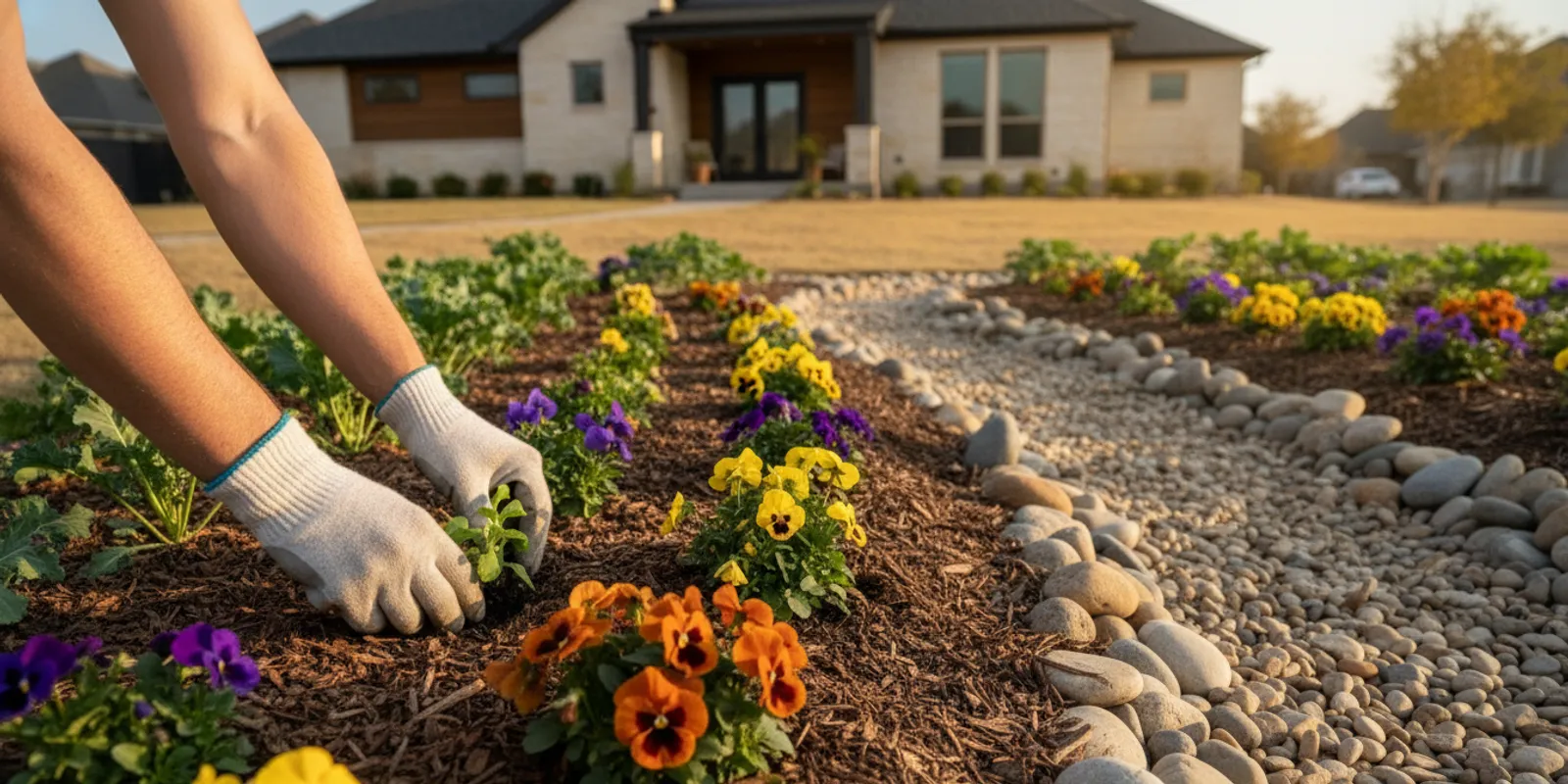
For seasonal flower color, the Collin County Master Gardeners’ Fall Planting in North Texas highlights options such as pansies, violas, dianthus, snapdragons, and ornamental kale or cabbage. Think about where the color will be seen, how much sun the space gets, and how much watering you can provide while plants establish. Before buying, compare the plant’s mature size with the available bed area and avoid packing a small bed with too many specimens. A simple design often works well: place taller plants where they will not shade shorter ones, repeat a few colors or forms, and leave room to reach the bed. If combining flowers with vegetables, keep the edible planting area accessible for routine watering and harvest rather than treating it as a decorative edge that is difficult to maintain.
Perennials, shrubs, and trees can also be part of a fall landscape plan. They need enough time and suitable conditions to establish, so choose plants for the site rather than buying based only on seasonal appearance. For inspiration on how materials and planting areas can work together, browse the North Texas project gallery.
What should you check before preparing a bed?
Walk the planting area before ordering soil or mulch. A short inspection can prevent common problems such as burying plants too deeply, covering a drainage path, or adding material where it will wash onto a walkway.
- Sun and shade: Note whether the bed receives full sun, partial shade, or mostly shade. Observe it at different times of day if you are unsure.
- Drainage: Look for spots where water stands after rain or flows through the bed. Do not assume that adding more soil on top will solve a drainage issue.
- Existing plants: Mark stems, shallow roots, and the crowns of perennials. Keep added soil and mulch from smothering them.
- Soil texture: Notice whether the soil is compacted, very sandy, or heavy and sticky when wet. These observations help you decide whether a soil amendment may be useful.
- Bed edges: Identify sidewalks, foundations, lawn edges, and low points. Plan to keep loose materials contained.
Look at the bed after a rain if possible. Does water soak in, run toward a low edge, or remain in a shallow pool? Also check whether the ground is compacted where people walk or equipment passes. These clues help separate a surface issue from a deeper drainage concern. Avoid adding a new layer until you know where the finished grade should sit in relation to paths, edging, and nearby plants. If you already have a healthy established bed, preserve its structure and amend selectively rather than excavating or replacing all of its soil without a clear reason.
It can help to sketch the area before you start. Mark the house, paths, drains, existing shrubs, and the spots that receive the most sun. Then draw the proposed planting zones and label the plants or crop groups planned for each one. This small step reveals practical conflicts: for example, a mature shrub may shade a row of vegetables, or a convenient mulch pile may block the only route to a gate. Keep a few feet of working access where you will need to water, weed, or harvest. A sketch also gives you separate measurements for each bed, instead of one rough estimate for the entire yard.
If the bed is new, decide whether you are creating a raised planting area or improving existing ground. Those are different jobs: a raised bed needs enough suitable growing medium throughout, while an established bed may need only targeted amendment. See McCraw’s bulk topsoil and garden soil options when comparing materials for a planting project.
How do you prepare North Texas soil for fall planting?
Prepare the soil based on what is already there and what you plan to plant. Avoid treating every bed with the same mix. A vegetable plot, a flower border, and a tree planting area may have different needs, and plants can struggle if roots sit in compacted or poorly drained soil.
- Clear the surface. Remove weeds, spent annuals, and debris. Keep healthy plants that you intend to retain, and avoid damaging their roots while clearing.
- Loosen compacted ground carefully. Work only when the soil is not saturated. Loosen the planting zone without turning it into fine powder or breaking up the root systems of established plants.
- Choose an amendment for a reason. Compost can add organic matter to a bed. It is not a substitute for diagnosing persistent drainage or other site problems. If you need compost for a project, review the compost product information.
- Blend rather than bury. Incorporate amendments into the intended root zone according to the plants and material directions. Avoid making a sharp, isolated layer that roots must cross.
- Shape the bed for water movement. Keep soil from blocking drains or directing water toward structures. Leave the plant crowns and trunks at their appropriate finished grade.
- Water and settle the bed. Lightly water prepared soil if conditions call for it, then check the grade again before planting. Add or remove material as needed without burying existing plants.
For a bed that needs more than compost, compare the intended use before selecting a soil product. A planting mix, topsoil, and fill material are not interchangeable in every application. McCraw’s guide to bedding soil and its black dirt product page can help you review available material descriptions. Ask for clarification if you are unsure which material fits the project.
When the bed is next to an established lawn, take care not to create a sharp ridge that holds water or makes mowing difficult. Use a rake to feather the transition across a short distance, while keeping the planting area’s finished grade below thresholds, siding, and other surfaces that must remain clear. For a vegetable bed, keep paths distinct from the growing rows so you do not repeatedly compact the soil you just loosened. If you are planting in containers, use a growing medium intended for containers rather than filling pots with dense material from the yard; containers and in-ground beds drain differently.
How much soil or compost should you plan for?
Measure the area before ordering bulk material. For a simple rectangular bed, multiply length by width to get square feet, then multiply by the planned depth in feet to get cubic feet. Divide by 27 to convert cubic feet to cubic yards. For example, a 10-by-6-foot bed with a 3-inch layer is 60 square feet multiplied by 0.25 feet, or 15 cubic feet—about 0.56 cubic yard.
That example is a volume estimate, not a recommendation to add three inches of soil to every bed. Decide on the depth based on whether you are topping up, amending, or building a new planting area. Measure separate sections independently, and add their volumes together. For an irregular bed, divide it into smaller rectangles or other simple shapes, estimate each section, and total the results.
McCraw’s landscape material calculator can assist with estimating material volume. Use your measurements and intended depth, then check the result against the material and project requirements before placing an order.
For a bed with different depths, do not average them by eye. Measure each zone separately. For instance, if one 40-square-foot section needs a 2-inch top-up and another 20-square-foot section needs a 4-inch build-up, calculate each volume using its own depth and add the results. Convert inches to feet before multiplying: 2 inches is 2/12 of a foot, and 4 inches is 4/12 of a foot. Keep a written record of dimensions and units. Mixing inches and feet in the same calculation is a common source of a much larger or smaller estimate than intended.
Also distinguish between loose volume and the final bed surface. Material may settle after placement, and a lumpy or uneven area can make measurements less exact. Avoid assuming that extra material will correct an underlying slope or drainage problem. Estimate the area you truly intend to cover, review the product’s intended use, and ask about ordering increments or delivery arrangements before you finalize the quantity.
Should you mulch a fall garden bed?
Mulch can help cover bare soil, reduce exposure to drying conditions, and give a bed a finished appearance. It is not a replacement for soil preparation, and it should not be piled against plant stems or tree trunks. Keep mulch in a controlled layer, leaving space around crowns and stems so those areas are not buried.
Choose a mulch type and amount based on the bed’s use and the look you want. McCraw offers bulk mulch varieties, including natural and dyed options, and you can review the hardwood mulch details as one material example. A fresh layer can tidy a bed, but adding material on top of old mulch every season without checking depth can gradually raise the grade around plants and hard edges.
Keep these practical points in mind:
- Pull mulch away from plant stems, crowns, and tree trunks rather than creating a mound.
- Keep it out of drains, walkways, and areas where runoff could carry it away.
- Check the existing mulch layer before ordering more; remove or redistribute excess where needed.
- Use a consistent finish across the bed, but do not cover leaves or low-growing plants that need to remain exposed.
For a new planting, finish with mulch only after you have positioned and watered the plants. That order makes it easier to see the root ball and check that each crown sits at the right level. Spread the surface layer evenly, then pull it back by hand around plant bases rather than relying on a rake to leave a gap. Along a border, use edging or a shallow, clean edge where appropriate to keep loose mulch from spilling onto a walk. After a heavy rain or a windy spell, inspect low points and redistribute material that has shifted. These quick checks help maintain a tidy surface without continually adding more.
How do soil and mulch choices compare?
The table below is a planning aid, not a substitute for checking a product’s intended use. Soil and compost support the planting area; mulch is generally a surface layer. Avoid selecting materials solely by appearance.
| Material | Typical role in a fall bed | What to confirm |
|---|---|---|
| Topsoil or garden soil | Builds or replenishes the planting area, depending on the product and project | Whether it suits the plants and whether the bed needs a new growing layer or a small top-up |
| Compost | Adds organic matter when used appropriately as an amendment | How it should be incorporated and whether the existing soil or drainage issue needs another solution |
| Mulch | Covers the soil surface and provides a finished bed appearance | Material type, area, planned depth, and clearance around stems and crowns |
Keep bulk material quantities separate in your notes. For example, calculate the volume of soil needed to build the bed and the mulch volume for its surface as two different lines. This makes it easier to check your assumptions and prevents accidentally applying a soil depth to the mulch estimate. If a bed has a tree or other large area that will not be covered, subtract that space from the surface measurement where practical. Rounding an estimate modestly can help account for uneven ground and settling, but avoid adding a large allowance without a reason; the right order depends on the accuracy of your measurements and the project.
Use the table to frame questions rather than to treat the material names as interchangeable. If the project is a new garden, ask which product is intended for a growing area and whether it is appropriate to use throughout the bed. If you are refreshing an existing border, determine whether the soil actually needs improvement before buying a full replacement volume. If the goal is to cover the surface, compare mulch options and calculate only the area that will receive it. A written plan with one line per material helps keep the order, delivery pile, and intended use aligned.
When should you plant and order materials?
Use local planting guidance and the requirements for each plant to plan your timing. Fall conditions vary, and the best window depends on the species, weather, and whether the plant is a vegetable, annual, perennial, shrub, or tree. Read labels and extension guidance rather than relying on one calendar date for every garden.
Prepare the bed and estimate material before bringing plants home. If you are ordering bulk soil or mulch, confirm the quantity, product, delivery timing, and where the material can be placed. A clear drop location should be accessible to the delivery vehicle and should not block a driveway, sidewalk, drain, or work area.
A simple sequence can make the work easier. First, check the forecast and the planting guidance for the species. Next, clear and prepare the bed, then place any soil or compost and let the grade settle enough to recheck it. Once the area is ready, bring in the plants and set them out in their intended positions before digging. This dry layout lets you adjust spacing and color placement while plants are still easy to move. Plant, water as directed for the species and conditions, then apply mulch if it is part of the plan. Avoid buying a large number of plants before confirming that the bed is ready and the delivery or pickup timing is workable.
For local product availability and delivery questions, use the Anna landscape supply page or the Van Alstyne location page. Service details can depend on the order and destination, so confirm arrangements before scheduling work around an expected delivery.
What should you confirm before placing a bulk order?
A little preparation helps avoid ordering too much, too little, or the wrong material. Before you contact a supplier, have the key project details ready.
- Write down the bed’s length and width, or break an irregular bed into measurable sections.
- Decide whether you need soil for a new planting area, compost for amendment, mulch for a surface layer, or more than one material.
- Estimate the depth for each purpose separately; do not use one depth for soil and mulch by default.
- Note access restrictions and the preferred drop location, including gates, slopes, overhead obstacles, and nearby finished surfaces.
- Ask whether the selected product is appropriate for the planned use and confirm delivery details for your address.
Before requesting a quote, take a few practical photos of the bed and the possible delivery spot. Include the path from the street to the drop area, any narrow gate or low branch, and the nearby surfaces that must stay clear. Photos do not replace measurements, but they can help explain access and shape when the area is difficult to describe. Label your notes by material so the supplier can tell whether a depth applies to soil, compost, or mulch. If you are comparing several beds, keep separate totals for each one and state whether you expect materials to be delivered together or at different stages.
McCraw serves homeowners and contractors with landscape and construction materials and offers project planning assistance. If you need help turning measurements and a material list into a clear request, request a bulk material quote with the project details.
Frequently asked questions
Can I use the same soil for flowers and vegetables?
Not automatically. Start with the soil conditions and growing requirements for the specific plants. Check product descriptions and local gardening guidance, especially if you are establishing a new bed or correcting a drainage problem.
Does adding compost fix heavy or poorly draining soil?
Compost can add organic matter, but it should not be treated as a guaranteed fix for standing water or a site drainage issue. Observe how water moves through the area, and choose amendments and bed design with the actual problem in mind.
Can mulch touch plant stems?
Keep mulch pulled back from stems, crowns, and tree trunks. Piling it against plants can cover parts that should remain exposed and make it harder to inspect the base of the plant.
How do I estimate mulch or soil for an oddly shaped bed?
Divide the space into simple sections, measure each one, calculate the volume using the intended depth, and add the section totals. Use the area calculator as an additional check, then confirm that your measurements and units are consistent.
Contact McCraw about your fall garden material list
Prepare the bed before planting
Choose plants for the conditions in your yard, improve the bed only where needed, and keep mulch clear of stems and drainage paths. With measurements and a material plan in hand, you can prepare a fall garden that is easier to plant and maintain.
