How much is a yard of mulch delivered in North Texas? There is no single delivered price for every order. The total depends on the mulch material, the number of yards, the delivery distance, truck access, and seasonal demand. A useful estimate starts with the material you need and the delivery details a supplier must plan.
Contact McCraw Landscape Supply for a delivery quote based on your project.
That answer matters for both homeowners refreshing planting beds and contractors coordinating a jobsite. A quote for one yard dropped at an easy-access driveway is not planned the same way as a larger load delivered to a busy construction site. This guide explains the moving parts so you can compare quotes fairly and avoid an unexpected second trip.
What Does a Delivered Yard of Mulch Cost in North Texas?
Short answer: A delivered yard of mulch includes more than the material itself. The final quote reflects the selected mulch, total volume, delivery distance, truck routing, drop-zone access, and timing. McCraw Landscape Supply can confirm the current total after reviewing your material choice, quantity, location, and delivery requirements.
Landscape suppliers sell bulk mulch by the cubic yard. One cubic yard contains 27 cubic feet, but the delivered order is not just a volume calculation. It is a material-and-logistics decision.
For planning purposes, separate the quote into these parts:
- Material: The base cost of the black mulch or hardwood mulch you select.
- Quantity: The number of cubic yards needed for the beds or jobsite.
- Delivery: The truck trip required to move the order from the supply yard to the property.
- Route and access: The distance, road conditions, driveway approach, and drop location.
- Timing: Whether the order is placed during a busy seasonal period or with more scheduling flexibility.
Do not compare a material-only price from one supplier with a delivered total from another. Ask each supplier whether the number includes delivery, then confirm the amount of mulch, type, and intended drop zone.
How the Mulch Material Changes the Delivered Price
Short answer: Mulch type changes the material portion of a delivered quote because different products have different sourcing, processing, color, texture, and availability. McCraw Landscape Supply offers black mulch and hardwood mulch, so start by choosing the appearance and performance you want before comparing delivery totals.
Black mulch and hardwood mulch can serve different design goals. Black mulch creates strong contrast around green plants and light-colored homes. Hardwood mulch offers a more natural look and fits many residential beds, tree areas, and larger landscape projects. The right choice depends on the property, the surrounding materials, and how you want the beds to look as the mulch weathers.
Review McCraw Landscape Supply’s bulk mulch options before requesting delivery so your quote names the material you actually want.
Material selection can affect planning in several ways:
- Product availability: A readily available material may be easier to schedule than a product that needs special coordination.
- Processing and color: Dyed or specially processed mulch can be priced differently from a standard hardwood product.
- Project appearance: A color selected for curb appeal may be worth the difference when the beds are prominent from the street.
- Application area: A residential refresh, new planting bed, and contractor installation may call for different products.
- Future maintenance: Consider how quickly the appearance may change in full sun, heavy rain, or high-traffic areas.
Avoid choosing a mulch only because it has the lowest material line item. A product that fits the site can reduce rework and help the finished landscape look intentional. If you are unsure, describe the bed location, sun exposure, plantings, and desired color when requesting a quote.
How Quantity and Load Size Affect Delivery Cost
Short answer: The number of cubic yards affects both the material total and how efficiently the delivery can be scheduled. Measure the beds first, calculate the volume, and ask for the delivered total for the complete order. A correct quantity helps prevent a costly second delivery or unused excess.
For a rectangular bed, multiply length by width to find square footage. Then multiply by the planned depth in inches and divide by 324:
(Length in feet x Width in feet x Depth in inches) / 324 = cubic yards needed
For example, a 20-foot by 5-foot bed at a 3-inch depth requires about 0.93 cubic yards before rounding for the order. Curved beds can be divided into smaller rectangles or sections, then added together. If several beds have different depths, calculate each area separately.
Quantity affects a delivered order in more than one way:
| Planning factor | Why it matters | What to confirm |
|---|---|---|
| Total cubic yards | Determines the material volume and delivery load. | Whether the supplier recommends rounding up or adjusting the order. |
| Bed depth | Changes the volume needed for the same square footage. | The target depth for new beds, refreshes, and tree rings. |
| Multiple delivery areas | May change the route and drop instructions. | Whether one drop location can serve the full project. |
| Contractor job size | Can affect scheduling, staging, and site coordination. | Jobsite timing, access windows, and the person receiving the load. |
McCraw’s area calculator can help you organize the measurements before you request a quote. Treat the result as a planning starting point, then review unusual shapes, existing mulch depth, and the drop area with the supplier.
How Far Does the Delivery Need to Travel?
Short answer: Delivery distance affects the truck time, route planning, and scheduling required for your order. A property near McCraw Landscape Supply in Van Alstyne or Anna may be planned differently from a jobsite farther across North Texas. Give the supplier the complete delivery address before comparing totals.
Distance is measured from the supply yard to the delivery location, not simply from the edge of town. A short-looking route can still require extra travel when roads, construction, traffic, or a specific truck approach affect the trip.
When you request a quote, provide:
- The full delivery address, including the city and ZIP code.
- The preferred delivery date or the range of dates that will work.
- The total cubic yards and mulch type you want.
- Whether the address is a residence, active construction site, commercial property, or rental property.
- Any gate, road, bridge, or neighborhood restrictions that could affect a loaded truck.
North Texas growth also means that active construction, new subdivisions, and seasonal landscaping demand can change route timing. The most useful question is not simply, “What is delivery?” Ask what is included for your exact address and order size.
What Site Access Details Should You Plan?
Short answer: The drop zone can affect whether a delivery is straightforward or needs extra planning. A clear, firm driveway or staging area is easier to serve than a narrow gate, soft lawn, steep approach, or crowded jobsite. Send photos or clear directions when the truck cannot use the obvious driveway.
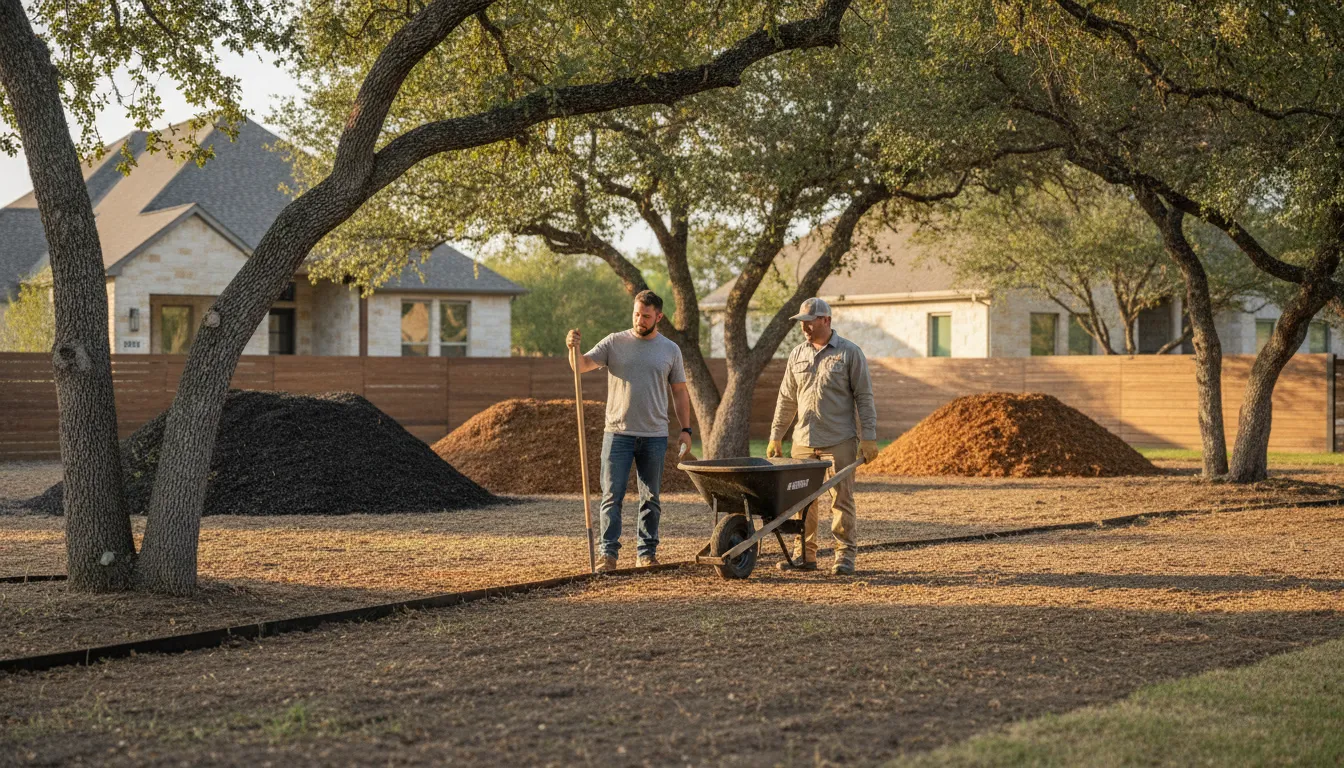
Bulk mulch is delivered as a loose material, so the drop location matters. Before the truck arrives, decide where the pile can sit without blocking garage access, storm drains, sidewalks, fire lanes, or neighboring property.
Check these details before scheduling:
- Surface: Is the drop area firm enough for a loaded delivery truck?
- Width: Can the truck enter and turn without striking fences, posts, trees, or parked vehicles?
- Overhead clearance: Are there low branches, wires, carports, or other obstructions?
- Grade: Is the approach steep, soft, narrow, or difficult to reverse?
- Staging: Can the crew place the pile close enough for efficient spreading without damaging the property?
- Site activity: Will equipment, trades, residents, or customers be moving through the delivery area?
For a contractor, access notes should be part of the job packet, not a last-minute phone call. For a homeowner, a quick photo of the driveway and intended drop zone can help the supplier give more useful guidance.
How Do Season and Timing Affect Mulch Delivery?
Short answer: Seasonal demand can affect available delivery windows even when the material and address stay the same. Spring landscaping, summer bed refreshes, and contractor project starts can create tighter schedules. Ordering before the bed is ready can also create storage problems, so coordinate delivery with the work.
Mulch demand often rises when homeowners are preparing beds and contractors are starting landscape installations. North Texas weather adds another planning variable. Heavy rain can make a soft drop area unusable, while hot weather can make same-day spreading more important for a homeowner or crew.
Choose timing that matches the project:
- For a homeowner refresh: Measure first, clear the bed, and arrange a place to spread the pile.
- For a new planting project: Coordinate mulch after grading, irrigation work, edging, and planting access are complete.
- For a contractor: Confirm the crew, equipment, access window, and material quantity before setting delivery.
- For weather-sensitive work: Keep a backup date in mind if rain affects the driveway or jobsite.
Ask about the current delivery window rather than assuming that a past order or another supplier’s schedule will be the same. A clear delivery plan protects the material, the property, and the labor already assigned to the project. McCraw’s North Texas mulch delivery guide covers additional preparation questions for homeowners planning a drop.
How to Prepare for an Accurate Mulch Delivery Quote
Short answer: The fastest way to get a useful delivered quote is to send the supplier the product, quantity, address, timing, and access information together. This gives McCraw Landscape Supply enough context to discuss the right material and delivery plan without guessing at your project.
Use this checklist before contacting the yard:
- Measure each bed and note its length, width, shape, and planned depth.
- Estimate the total cubic yards with the area calculator or your own measurements.
- Choose black mulch or hardwood mulch based on the look and use of the space.
- Confirm the delivery address, including the city and ZIP code.
- Identify a firm, clear drop zone and note gates, branches, wires, slopes, or restrictions.
- Share your preferred date and whether the material will be spread the same day.
- Ask whether the delivered total includes all delivery-related charges for that order.
- Confirm the order quantity and material before scheduling the truck.
Contractors can also include the job name, crew start time, equipment needs, and a site contact. Homeowners can send a simple sketch or photos when the beds are irregular. Specific information produces a more useful conversation than asking for a generic price per yard.
Is Delivered Bulk Mulch Right for Your Project?
Short answer: Delivered bulk mulch is often practical when a project needs enough material to justify a truck drop and has a safe place for the pile. Smaller touch-ups may call for a different purchasing approach. The best choice depends on volume, labor, access, storage, and how quickly you plan to spread it.
Bulk delivery can make sense when:
- You are refreshing several landscape beds at once.
- A contractor is preparing a full property or multiple job areas.
- You want loose material placed at the property instead of hauling many individual bags.
- You have a clear drop zone and a crew or plan to spread the mulch.
A smaller order may be easier to manage when you only need a narrow border, a few replacement areas, or a quick touch-up. Do not order more bulk material than you can protect and spread. If you are deciding between options, explain the project size and timing to the McCraw team.
Frequently Asked Questions About Delivered Mulch
Quick answers: Delivered mulch pricing depends on the material and logistics of the order, not just the number of yards. The questions below cover the planning details that most often change a delivered total, including volume, distance, access, timing, and product selection.
How much is a yard of mulch delivered in North Texas?
There is no universal delivered total. The price depends on the mulch type, number of yards, delivery address, truck access, and current scheduling conditions. Contact McCraw Landscape Supply with those details for a quote tied to your project.
Does one yard of mulch equal 27 cubic feet?
Yes. One cubic yard equals 27 cubic feet. To estimate the number of yards, multiply the bed length by width and depth in inches, then divide by 324. Irregular beds should be divided into smaller sections before adding the results.
Does delivery cost more for a small mulch order?
A small order can have different delivery economics because the truck still has to be routed to the property. Ask for the delivered total for the complete order instead of assuming that a material-only price represents the final cost.
Can McCraw Landscape Supply deliver black mulch and hardwood mulch?
McCraw Landscape Supply sells black mulch and hardwood mulch. Tell the team where the mulch will be used and what appearance you want so they can help you plan the material and delivery details.
What should I do before the mulch truck arrives?
Clear the planned drop zone, move vehicles and obstacles, confirm gates and overhead clearance, and make sure the surface is suitable for the truck. If access is unusual, provide directions or photos before the delivery is scheduled.
