A bulk material order can save hours on a North Texas project, but only when the product, quantity, truck access, and drop location are settled before the load leaves the yard. For homeowners and contractors comparing pickup with landscape material delivery North Texas service, the right choice depends on the total cost of hauling, unloading, staging, and keeping the crew productive.
Request a bulk material quote from McCraw Landscape Supply before scheduling equipment or labor.
Delivery is usually practical for heavy, high-volume orders or palletized sod. Pickup can be efficient for smaller quantities when the customer already has a properly rated truck or trailer and a safe unloading plan. This guide explains how to make that decision, estimate material, prepare the site, and give McCraw Landscape Supply the details needed to plan the order.
Landscape material delivery North Texas: pickup or delivery?
Choose delivery when the order is too heavy, bulky, or time-sensitive for your available hauling equipment. Choose pickup when the load is manageable, the vehicle is properly rated, and yard trips will not disrupt the work schedule. Compare the complete logistics plan, not only the delivery charge.
| Planning factor | Pickup | Delivery |
|---|---|---|
| Best fit | Small or phased material needs | Bulk loose material, pallets, or scheduled production |
| Equipment | Customer supplies a rated truck or trailer | Supplier coordinates an appropriate delivery vehicle |
| Labor impact | Crew time may be used for travel and unloading | Crew can focus on grading, installation, or spreading |
| Site planning | Requires safe unloading after every trip | Requires confirmed access and a prepared drop zone |
| Schedule risk | Extra trips can interrupt production | Site delays can occur if the truck cannot reach the planned drop |
When delivery usually makes sense
Delivery is often the better operational choice for gravel, crushed limestone, sand, soil, mulch, rock, stone, and palletized sod. These products become heavy quickly, even when the project footprint looks modest. One organized delivery can also keep a contractor’s towing vehicle and crew on the job instead of sending them back and forth for material.
Delivery is especially useful when a project has a defined installation window. Sod should be staged near the prepared area so installation can move efficiently. Aggregate and soil should arrive after excavation and grading are ready, but before the crew needs the material. Browse McCraw’s landscape and construction material products while building the order list.
When pickup can be the efficient choice
Pickup works well for a small repair, a test area, or a project that needs material in phases. It can also help a contractor who is already traveling past a McCraw Landscape Supply location and has suitable hauling and unloading equipment. Before choosing pickup, verify the vehicle and trailer payload ratings, securement needs, and safe unloading method.
Do not estimate safe hauling capacity by how much space remains in a truck bed. Dense material can reach the vehicle’s payload limit before the bed looks full. Ask the yard team about the expected order weight and loading approach, then compare that information with the manufacturer’s ratings for the vehicle and trailer. Commercial operators can also review the Federal Motor Carrier Safety Administration cargo securement rules when applicable.
Estimate the bulk material quantity before ordering
An accurate quantity starts with measured area, planned depth, and a clear installation detail. Ordering too little creates another trip or delivery. Ordering too much consumes staging space and leaves material that must be moved, stored, or removed after the project.
Measure sod by square footage
Measure the length and width of each lawn section, calculate the square footage, and add the sections together. Subtract large areas that will not receive sod, such as patios or buildings. McCraw Landscape Supply uses 594 square feet as the correct sod pallet size, so divide the final planned coverage by 594 to estimate pallets. Irregular edges, cuts, and installation conditions may affect the amount needed.
Walk the site after measuring it on paper. Curves, utility pads, tree wells, and narrow strips can change the usable area. A contractor should compare the material count with the plan set. A homeowner should keep measurements organized by lawn section so the McCraw team can understand how the estimate was built.
Measure loose material by volume
Soil, mulch, sand, and many aggregates are planned by volume. Measure the installation area and determine the finished depth required by the project design. Depth matters because a thin mulch refresh and a new deep bed may cover the same footprint but require very different quantities. Use the McCraw area calculator as a planning tool, then confirm the result when requesting a quote.
Break irregular projects into rectangles or other simple shapes, calculate each section, and add the results. Keep product types separate. Base material, decorative rock, and planting soil can share a project footprint, but each layer needs its own depth and quantity estimate.
Account for compaction and site conditions
Loose fill and base material can settle or compact after placement. Existing grade, drainage, excavation depth, and the desired finished elevation all influence the order. Contractors should confirm the installation specification before ordering. Homeowners who are unsure about depth should share measurements, photos, and the project goal with the McCraw team instead of guessing.
Soil condition matters too. The Texas A&M AgriLife Extension soil preparation guide explains that soil should be tested before amendments are added. That is a useful reminder for planting projects: identify the existing condition and intended use before selecting a soil product or quantity.
How do you prepare a North Texas jobsite for delivery?
Prepare a firm access route and a clearly marked drop zone before the truck arrives. Check width, overhead clearance, turning room, ground conditions, slopes, gates, parked vehicles, and nearby utilities. A good staging plan protects the property and lets the installation crew work efficiently.
- Choose the drop zone. Select a firm, level area close enough to the work zone to reduce handling but far enough away to keep access open.
- Inspect the approach. Check gates, driveways, turns, low branches, overhead wires, soft shoulders, septic areas, irrigation components, and recent excavation.
- Clear people and equipment. Move vehicles, trailers, tools, pets, and crew members away from the truck route and drop area.
- Protect finished surfaces. Decide how material will be contained and how the crew will avoid tracking it across completed areas.
- Assign a site contact. Make sure one informed person is available to confirm placement when the truck arrives.
North Texas clay can become soft and difficult to traverse after rain. A route that handled passenger vehicles may not be suitable for a loaded delivery truck. If access is questionable, disclose it during quote preparation. Choose a conservative staging area that does not require the truck to cross soft ground.
Look up as well as down. Low branches and overhead lines can restrict a route even when the driveway is wide. Mark irrigation heads, utility covers, edging, and other features that are easy to miss from a truck cab. Keep children, pets, and people who are not involved in the delivery away from the active route.
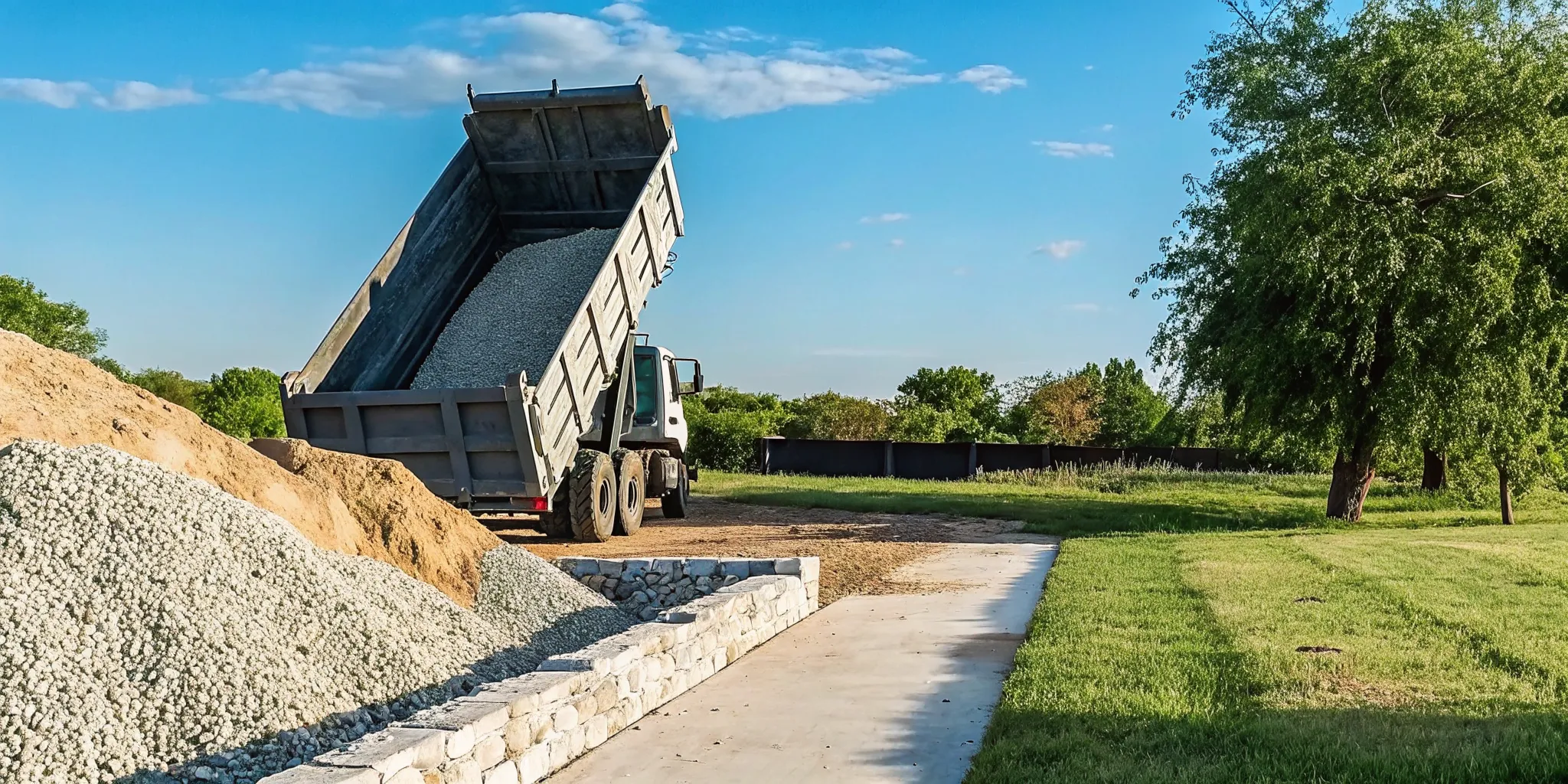
Match the staging plan to the material
Different products need different handling after they reach the site. Plan where the load will go and how it will move from staging to installation before ordering. That decision affects truck access, labor, equipment, and the sequence of work.
Sod
Stage sod close to the prepared installation area without blocking the crew’s route. Complete grading, irrigation checks, and soil preparation before arrival whenever possible. Confirm the variety and pallet count on the quote, and organize labor so installation can begin promptly.
Leave enough room around each pallet for the crew to work. A pallet placed too far from the lawn adds repeated handling. A pallet placed in the only access path can slow every other part of the job. Plan the placement with the installation direction and crew movement in mind.
Soil, sand, and mulch
Choose a contained staging area where loose material will not wash into the street, cover drains, or mix with existing soil. Keep the pile accessible to wheelbarrows or loading equipment. If multiple loose products are arriving, assign separate, clearly identified spaces so they do not become mixed.
Consider cleanup before selecting the spot. A staging area near the work can reduce handling, but it still needs enough space for safe movement. If rain is possible, keep loose material away from drainage paths and finished areas where runoff could create extra work.
Gravel, crushed limestone, rock, and stone
Dense aggregate needs a firm drop zone and a realistic movement plan. Confirm that the base preparation is complete before bringing in material. Keep the load away from areas where it could obstruct traffic, damage finished surfaces, or require unnecessary double handling. McCraw’s rock products can help narrow the material selection before a quote.
For a driveway, path, or hardscape project, think through every layer before the first load arrives. Separate base material from decorative finish material. Leave room for the equipment that will spread and compact the load. A clear sequence reduces the risk of moving the same material twice.
Schedule delivery around the project sequence
The best delivery time is when the site is ready to receive and use the material. Bringing a load too early can block access and expose material to weather. Bringing it too late can leave labor and equipment idle. Build arrival into the production plan rather than treating it as a separate errand.
For a sod project, finish removal, grading, and irrigation preparation before the pallet arrives. For a gravel path or driveway, complete excavation, edging, and base preparation first. For mulch or soil, identify the staging area and clear the route before delivery day. Contractors coordinating several trades should confirm that another crew will not occupy the drop zone.
Work backward from the installation start. Confirm when the crew, spreading equipment, and site contact will be available. Then plan the material arrival so it supports that schedule. Homeowners should avoid booking helpers until the delivery plan and site access have been discussed.
Weather can change the plan. Rain affects soft access routes, exposed soil, and the ability to spread or compact material. If conditions change after an order is scheduled, contact McCraw Landscape Supply promptly to discuss the safest practical next step.
What information makes a bulk order quote more accurate?
A useful quote request identifies the product, quantity, destination, access conditions, timing, and unloading expectations. Clear information helps McCraw Landscape Supply recommend the appropriate next step and reduces surprises when the material arrives.
- Product: Name the sod variety, soil, mulch, sand, gravel, rock, or stone being considered.
- Quantity: Provide square footage, pallet count, area dimensions, depth, or estimated volume.
- Destination: Include the delivery address and the part of the property where the material should be staged.
- Access: Describe gate widths, surface conditions, slopes, overhead clearance, turns, and known obstacles.
- Schedule: Share the preferred date and the installation sequence that depends on the load.
- Site contact: Provide the name and phone number of the person who can confirm placement.
Photos can help explain a narrow gate, a long driveway, or a proposed drop area, but they do not replace an accurate description. If the order contains several products, list each quantity and staging location separately. Use the McCraw locations page to plan a yard visit, or use the quote request page to start the conversation.
For contractor orders, note which crew or trade will receive each load and whether the site has equipment available to move the material. For homeowner projects, describe the finished goal and any access concern that could affect placement. These details make the quote conversation more productive and help prevent avoidable schedule changes.
Also identify decisions that are not final. If you are comparing two products or still confirming depth, say so. The quote conversation can then focus on the open questions instead of treating an early estimate as a final order.
A clear request also makes product comparisons more useful. Explain whether the material will support drainage, a driveway base, a planting bed, new turf, or a decorative finish. Include the finished look and function you want. That context helps the conversation stay focused on products that fit the actual job instead of a name or photo alone.
A practical order-day checklist
Before pickup or delivery, confirm the order, route, receiving person, unloading plan, and next work step. A five-minute review can prevent a wrong product, blocked drop zone, missed handoff, or idle crew.
- Confirm the order details: Review product names, quantities, and any pallet counts.
- Confirm the timing: Make sure the site contact and receiving crew know the plan.
- Check the route: Remove vehicles and inspect for weather-related changes.
- Mark the drop zone: Make the intended placement easy to identify.
- Prepare handling equipment: Position wheelbarrows, loaders, rakes, or other tools before material arrives.
- Protect the work area: Keep drains, utilities, finished surfaces, and traffic paths clear.
- Review the next step: Know who will spread, install, compact, or water the material after receipt.
Contractors can use the checklist during a morning job briefing. Homeowners can use it the evening before delivery. In both cases, the goal is the same: make sure the material can move directly from the truck or trailer into a productive installation sequence.
Frequently asked questions
Is pickup or delivery better for a small landscaping project?
Pickup may be efficient when the quantity is small, the vehicle is properly rated, and the material can be unloaded safely. Delivery may still be better when the product is dense, unloading equipment is limited, or a pickup trip would interrupt the work schedule.
How many square feet are on a sod pallet from McCraw Landscape Supply?
Use 594 square feet as the correct sod pallet size when planning a McCraw Landscape Supply order. Measure the installation area carefully and account for the project’s cuts and irregular sections before confirming the pallet count.
Where should bulk landscape material be dropped?
Choose a firm, level, accessible area that keeps the material close to the work without blocking traffic or covering utilities and drains. The route and drop zone should have adequate clearance and should not require a loaded truck to cross soft or questionable ground.
What should I include in a landscape material delivery quote request?
Include the product, estimated quantity, delivery address, desired timing, access limitations, proposed drop location, and site-contact information. Measurements and photos of access constraints can help clarify the plan.
Plan your North Texas bulk material order
Pickup and delivery can both work when the choice matches the quantity, hauling equipment, site conditions, and project schedule. Measure first, prepare a safe staging area, and discuss access before the material is loaded.
McCraw Landscape Supply serves homeowners, contractors, and builders in Van Alstyne, Anna, and surrounding North Texas communities with sod, sand, rock, gravel, mulch, soil, stone, and accessories. Bring clear measurements and site details to the conversation so the team can help you plan the next step.
Ready to plan your bulk material order?
