Planning a boulder project takes more than comparing the price of one rock. In North Texas, your total can change with the boulder’s size, stone type, weight, and source. Delivery distance, access, and placement method matter too. This guide explains the main cost drivers so homeowners can build a useful budget before ordering.
Contact McCraw Landscape Supply for a project quote.
Landscaping boulders price commonly falls around $120 to $350 per ton in broad market references. Smaller material may be sold by pound, pallet, cubic yard, or piece. In North Texas, your final budget also depends on stone type, quantity, delivery distance, access, equipment, and whether placement is included.
The most reliable estimate separates the boulder itself from delivery, site preparation, equipment, placement, and follow-up work. Once those categories are clear, you can compare options fairly and give a supplier the details needed for a useful North Texas quote.
How Does Landscaping Boulders Price Vary by Project?
Typical landscaping boulders price depends on the selling unit and stone selected. For early planning, broad market references run about $120 to $350 per ton. Smaller McCraw planning ranges may be around $250 to $350 per pallet, while large pieces may be priced by ton or piece. Confirm current availability, delivery, and placement before relying on a final number.
Landscape boulders often cost about $120 to $350 per ton, based on broad market references. Some suppliers use a range of roughly $50 to $160 per cubic yard. Smaller decorative boulders may be sold by the pound, pallet, or individual piece. These numbers are useful for early planning, but they are not a fixed McCraw price. Your actual total depends on the stone, quantity, availability, address, access, and placement requirements.
For McCraw planning purposes, smaller boulders are commonly listed around $250 to $350 per pallet. Large boulders may be priced around $250 per ton or by the individual piece. Decorative boulders may start at $0.25 per pound. Confirm the current material, size, availability, and selling unit before you rely on any range. A quote should also show whether loading, delivery, unloading, or placement is included.
HomeGuide provides broad market context for landscape boulder costs, including per-ton and per-cubic-yard ranges. Use that information as a comparison point rather than a promise of local pricing. Review the published landscape boulder cost ranges, then request a local quote based on your project details.
Why the same project can have different totals
A per-pound price does not tell you how many pounds your design requires. A small accent boulder may be easy for a crew to move, while a feature stone can require mechanical loading and careful placement. A single selected piece may also have a different price structure from a group of similar stones sold by weight.
Delivery creates another difference. Distance, load size, driveway width, side-yard access, slopes, soft ground, and unloading conditions all affect logistics. A truck may reach the driveway but not the final landscape bed. Share photos and measurements before scheduling. That makes equipment and access needs part of the quote.
Are Landscaping Boulders Priced by the Pound, Ton, or Piece?
Smaller decorative boulders are often sold by the pound or pallet, while larger boulders are commonly priced by the ton or individual piece. Ask how the material is weighed, whether the selection is uniform, and whether loading, delivery, unloading, equipment, or placement are separate charges. That comparison prevents a low unit price from hiding costs.
The pricing unit depends on the boulder’s size, material, and how it is selected. Smaller decorative boulders may be priced by the pound or pallet. Larger boulders are often priced by the ton or by the individual piece. A supplier may use cubic yards for loose material, but irregular boulders do not convert to a predictable number of pieces.
Compare each selling unit with the full handling scope.
| Pricing unit. | Often useful for. | What to confirm. |
|---|---|---|
| Per pound | Decorative boulders and smaller variable-size stone. | Minimum charge, actual weight, and selection terms. |
| Per ton | Large boulders and bulk orders. | Weight, piece count, delivery, and equipment. |
| Per pallet | Groups of smaller boulders. | Coverage, size range, and whether pieces are uniform. |
| Per piece | Feature boulders selected for a specific location. | Dimensions, approximate weight, loading, and placement. |
Published supplier examples can help you compare units. Landscape Shoppe lists boulder examples by the pound. Local availability and delivery can change the final cost in North Texas. See an example of per-pound boulder pricing. Then compare the complete delivered scope, not just the material line.
Do not assume that a lower per-pound or per-ton figure is automatically the better deal. Ask how the material is weighed, whether the quote is based on an estimate or actual weight, and whether loading and delivery are separate. If you are choosing individual pieces for a front entry or retaining edge, ask for dimensions and approximate weight for each selection.
Which Factors Change the Price of Landscape Boulders?
Size, weight, stone type, appearance, quantity, source, season, and access all influence the final landscaping boulders price. Two stones can look similar in a photo but require different handling or have different availability. Describe the material and the job site together when you request pricing.
Size and weight
Small boulders may weigh about 50 to 200 pounds and can sometimes be handled by a small crew using safe methods. Medium boulders from roughly 200 to 500 pounds often benefit from a dolly, skid steer, or other equipment. Large boulders weighing 500 to 2,000 pounds or more generally require mechanical loading, delivery, and placement. The heavier the material, the more important it is to price handling separately from the rock.
Stone type and appearance
Natural boulders vary in color, shape, texture, and availability. Texas Moss Boulders, selected decorative pieces, and stones with a specific face or accent color may not share the same price structure. Premium sourcing can make sense when a boulder is a focal point, but confirm the visual standard before ordering. Ask whether the price covers an approximate material type or individually selected pieces.
Quantity and source
A group of similar boulders may load more efficiently than one special-order piece. Quarry location, current inventory, processing, and distance to North Texas also affect availability. Review McCraw’s rock product category for related material options. Then ask the team to confirm what is currently available.
Season and jobsite access
Spring demand can move popular sizes and colors quickly. Narrow gates, steep drives, overhead lines, retaining walls, soft ground, or a long carry from the truck to the planting area can add labor and equipment needs. Include gate widths, photos, slopes, and the intended placement area in your request.
For related stone choices, browse McCraw’s stone product category. This keeps the comparison focused on materials that are actually relevant to a North Texas landscape instead of using an unrelated gravel-delivery page as a boulder reference.
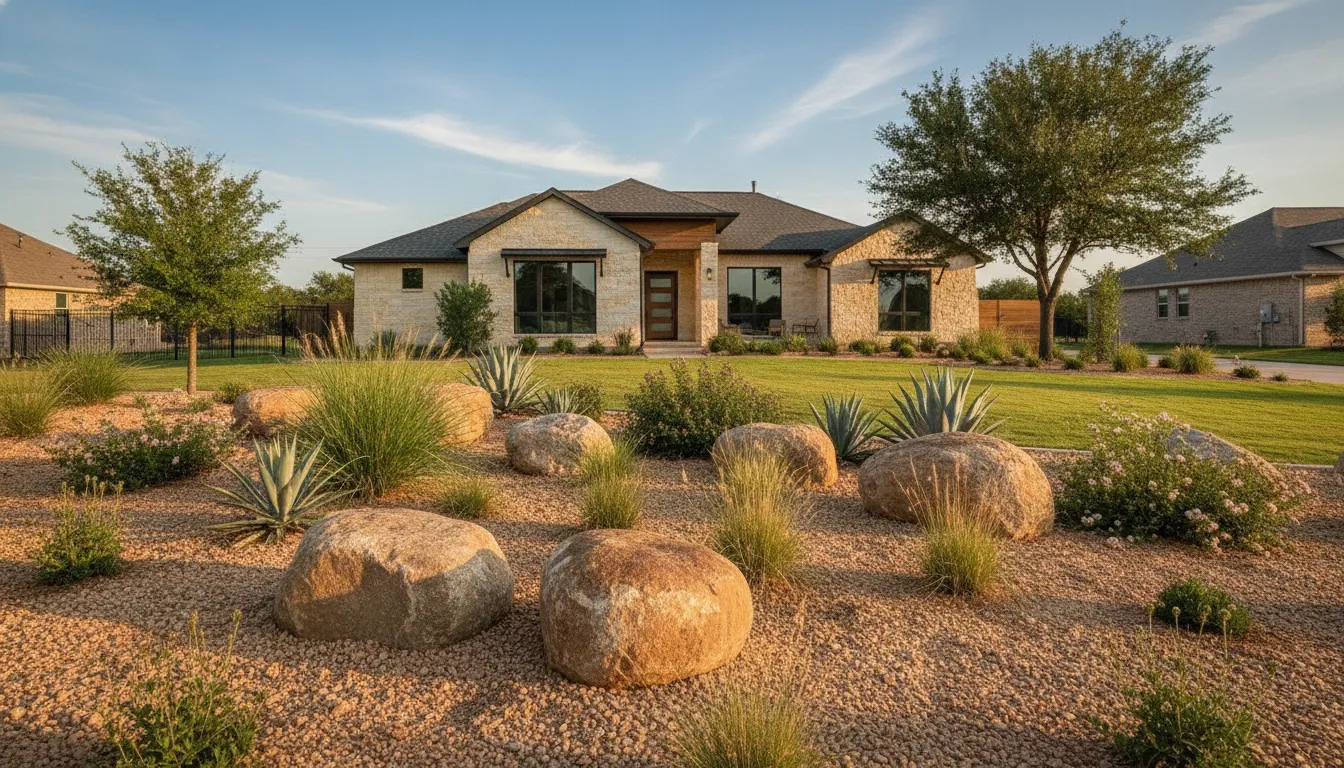

How Much Should You Budget for Boulder Delivery and Placement?
Budget for the stone itself, delivery, site preparation, equipment, unloading, placement, and finishing work as separate line items. A boulder dropped at the driveway has a different scope from one moved across the property and set into a prepared bed. Ask the supplier to identify each included service before comparing totals.
A realistic project budget separates material from the work required to move, prepare, and set each stone. Use the process below before requesting a quote. It keeps a low material price from hiding a delivery or placement cost.
-
Price the boulder
List the stone type, approximate size, quantity, and selling unit. Smaller boulders may be sold by pallet, large boulders by ton or piece, and decorative boulders by the pound. Use the McCraw ranges as planning points only, then confirm the exact material and availability.
-
Add delivery
Give the supplier the delivery address and describe driveway access, gate width, slopes, soft ground, and the unloading location. Internal planning may use $150 as an example boulder delivery fee, but that is not a universal or guaranteed current rate. Ask whether delivery, unloading, and any equipment charge are separate.
-
Estimate preparation
Include clearing vegetation, moving existing rock, excavating, grading, and preparing a stable base. Blackland Prairie soil and North Texas weather can affect drainage and how a boulder settles. DIY work still has a time, tool, or rental-equipment cost.
-
Identify equipment
Ask who supplies the loader, skid steer, forks, straps, or other equipment. Medium and large stones can require mechanical movement even when the final installation is small.
-
Separate unloading from placement
Dropping a boulder at the edge of a driveway is different from carrying it across a property, setting its face, burying part of its base, and checking stability. Confirm exactly what the quote includes.
-
Allow for finishing work
Reserve room for final grading, soil or mulch around the stone, drainage adjustments, cleanup, and possible repositioning. A complete quote should list material, delivery, preparation, equipment, placement, and follow-up separately.
How Can North Texas Homeowners Get a More Accurate Boulder Quote?
A more accurate quote includes the stone type, dimensions, quantity, delivery address, access conditions, photos, timing, and exact placement scope. Gate width, slopes, overhead lines, soft ground, and distance from the truck can change equipment needs. Sharing those details helps the supplier price the full project instead of only the rock.
The best quote starts with a project description, not a guess based on one rock. Gather the information below before contacting a supplier so the material, delivery, and placement needs can be evaluated together.
Measure the area and estimate quantity
Record the approximate length and width of the bed. Note how many boulders you expect to use, the spacing, and whether the stones will form a border, anchor a planting bed, define an edge, or serve as individual focal points. McCraw’s area calculator can help organize a basic material estimate, although individual boulder projects still require judgment about size and layout.
Identify the stone you want
Tell the supplier whether you are considering Texas Moss Boulders, decorative boulders, or another available stone. If color and surface character matter, share a photo or visit the yard. The desired material determines whether your estimate is based on a pallet, pound, ton, or piece.
Explain access and timing
Share photos of the driveway, gate, side yard, retaining wall, and final placement area. Mention branches, slopes, steps, overhead lines, and soft ground. Include the distance from unloading to placement and your desired timing. Local availability can change during spring demand.
What should the quote include?
- Material type, size range, quantity, and pricing unit.
- Delivery distance, unloading method, and access limits.
- Equipment, preparation, installation, and final placement.
- Current availability, expected timing, and quote expiration
Contact McCraw Landscape Supply for a boulder quote. Include your measurements, preferred stone, access details, photos, and desired timing.
How Do Boulders Compare With Other Landscape Materials?
Boulders suit durable focal points, natural edges, drainage details, and visual weight. River rock or gravel may cover more area, mulch is easier to refresh, and flagstone supports walking surfaces. Compare the material’s role, preparation, delivery, maintenance, and installation needs so the lowest purchase price does not become the highest finished cost.
Choose boulders for durable focal points, natural-looking edges, drainage details, and visual weight. River rock and gravel can cover more area, mulch is easier to refresh, and flagstone is better for a walkable surface. The right choice depends on the job, the handling requirements, and the complete installed budget.
| Material. | Best role. | Main budget question. |
|---|---|---|
| Boulders | Accent features, edges, drainage details, and focal points | How much will size, delivery, equipment, and placement add? |
| River rock | Dry creek beds, drainage paths, borders, and ground cover | How much area and depth must be covered? |
| Mulch | Garden beds and softer organic finishes | How often will the material need to be refreshed? |
| Gravel | Driveways, paths, drainage, and broad coverage | What depth, edging, and delivery volume are required? |
For a broader landscape cost review, Utah State University Extension recommends considering preparation, materials, installation, maintenance, and replacement rather than evaluating only the initial material price. Review its landscape value guidance as you compare a boulder feature with other materials.
Frequently Asked Questions
How much do landscape boulders cost?
Broad market references place landscape boulders around $120 to $350 per ton, with some suppliers using per-cubic-yard pricing. McCraw planning ranges include smaller boulders around $250 to $350 per pallet, large boulders around $250 per ton or by piece, and decorative boulders at $0.25 per pound and up. Confirm current material, availability, delivery, and placement before relying on a final number.
Are landscape boulders priced per pound or per ton?
Both methods are common. Smaller decorative boulders may be priced by the pound or pallet. Larger boulders are often sold by the ton or piece. Ask which unit applies, how weight is estimated, and whether loading, delivery, unloading, and placement are included.
What factors influence the price of landscaping boulders?
Size, weight, stone type, appearance, quantity, quarry source, season, delivery distance, access, and equipment needs all matter. Provide measurements, photos, and site conditions so the supplier can price the full scope rather than only the rock.
How do I estimate the weight of boulders for a project?
List the number of stones and their approximate dimensions, then ask the supplier to estimate pounds or tons for the selected material. Individual weights are estimates until pieces are selected and weighed. The area calculator can help with related bulk materials, but it does not replace boulder selection guidance.
Are there extra costs for installing landscape boulders?
Often, yes. Budget separately for preparation, delivery, labor, equipment, placement, final grading, and cleanup. A quote should state whether the crew will only unload the material or also move and set each boulder in its final position.
Get Started With a Boulder Quote
A project-specific quote helps you plan the right boulder size, stone type, quantity, delivery, and placement scope for your North Texas landscape. Share your measurements, access conditions, photos, and desired timing with McCraw Landscape Supply.
Request a landscaping boulders price quote from McCraw Landscape Supply
