A paver project is easier to price when you measure the space before you shop for materials. Record the square footage, choose the planned depth, and keep bedding sand separate from the compacted aggregate base. That simple distinction prevents a small patio from turning into a short order or an expensive excess.
Contact McCraw to order paver base materials
For a reliable starting point, a McCraw Area Calculator can help organize the quantity estimate.
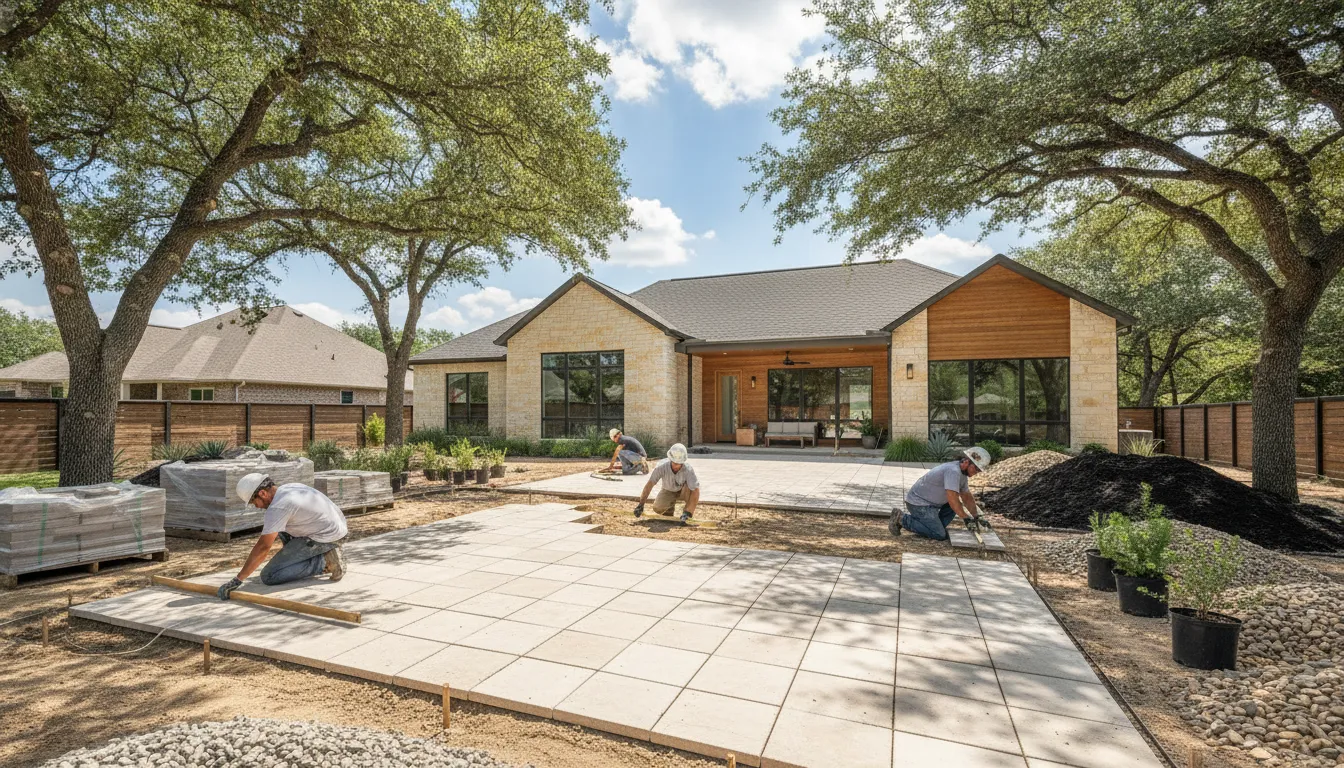
A paver base sand calculator uses your project area and sand depth to estimate volume in cubic feet and cubic yards. Then converts that volume into an approximate tonnage for ordering. The result is a planning estimate, not a substitute for confirming material type, site conditions, and supplier guidance.
North Texas projects often involve clay-heavy soil, irregular layouts, and practical delivery constraints. Start by understanding how the measurement and depth inputs work, then apply the right conversion before choosing sand and planning the order.
How Does a Paver Base Sand Calculator Work?
Answer summary: A paver base sand calculator estimates volume by multiplying the project area in square feet by the planned sand depth in feet. Divide that result by 27 to convert cubic feet to cubic yards.
The calculation has three parts: measure the surface area, convert the bedding layer from inches to feet, and calculate the volume. Area is the length multiplied by the width for a rectangular patio or walkway. For an irregular shape, divide the project into smaller rectangles or squares, calculate each area, and add the results.
1. Measure the area
Start with the surface that will receive the sand. If a patio is 20 feet long and 10 feet wide, its area is 200 square feet. Keep measurements in feet so the units stay consistent. For a circular or curved area, use the appropriate geometric formula or break the shape into sections that are easier to measure.
2. Convert the sand depth
Sand depth is often written in inches, but the volume formula needs feet. Divide the planned depth by 12. A 1-inch bedding layer becomes 1/12 foot, or about 0.0833 foot. A 2-inch layer becomes 2/12 foot, or about 0.1667 foot. Use the installation plan or the guidance of your installer to choose the intended layer. Do not use the depth of the aggregate base as the bedding-sand depth.
3. Calculate cubic feet and cubic yards
Multiply square feet by depth in feet to find cubic feet. The cubic-yard formula is area in square feet multiplied by depth in feet, then divided by 27. One cubic yard equals 27 cubic feet.
Formula: square feet x depth in feet = cubic feet
cubic feet / 27 = cubic yards
Worked example: 200 square feet at 1 inch
For a 200-square-foot patio with a planned 1-inch bedding layer:
- Convert depth: 1 inch / 12 = 0.0833 foot.
- Find cubic feet: 200 square feet x 0.0833 foot = about 16.7 cubic feet.
- Convert to cubic yards: 16.7 cubic feet / 27 = about 0.62 cubic yard.
This result is an estimate for the specified area and layer depth. Uneven excavation, edges, waste, and site conditions can affect the amount needed, so confirm the final quantity before ordering. McCraw’s Area Calculator can help organize the measurements, but the calculator does not replace a site-specific installation plan.
What Depth Should You Use for Paver Base Sand?
Short answer: Do not treat every layer beneath a paver as sand. The bedding, or setting-bed, sand is a thin leveling layer directly below the pavers. The thicker structural base is usually compacted aggregate. Your final depth depends on soil, drainage, paver use, and site conditions, so use these ranges as planning guidance rather than a universal installation prescription.
Separate the bedding sand from the aggregate base
Bedding sand helps create a consistent surface for setting pavers and correcting small variations. It is not a substitute for the compacted aggregate that carries the load. A properly prepared base supports stability and drainage, which helps reduce shifting over time.
That distinction matters when using a paver base sand calculator. Enter the intended depth for each material separately. If you combine the aggregate base and bedding layer into one sand depth, the resulting order can be misleading and the installation may lack the support it needs. For product-specific context, see McCraw’s guide to paver setting beds.
Let soil and drainage guide the base depth
North Texas sites can include heavy, clay-rich soil. Clay tends to drain slowly, and water management becomes especially important when planning a patio, walkway, or other paved surface. The USDA Natural Resources Conservation Service notes that clay soils with poor drainage may call for a 4-to-6-inch compacted aggregate base for structural support. Treat that range as a starting point for site planning, not an automatic answer for every project. The recommendation appears in the NRCS clay soil management guidance.
Consider the finished elevation, nearby drainage paths, expected traffic, and whether the existing soil is firm or disturbed. A contractor may recommend a deeper or differently specified base where the subgrade is weak, wet, or exposed to heavier loads. Homeowners should resolve those conditions before ordering material rather than relying on a calculator alone.
Plan for compaction, not just loose depth
Aggregate base should be placed and compacted in manageable layers. A 2-inch lift is a useful planning reference for achieving consistent compaction during aggregate-base installation. In practice, that means spreading a lift, compacting it, and repeating the process until the planned base depth is reached.
Measure the area and calculate aggregate and bedding sand as separate quantities. Then confirm the material types, site conditions, and order with a qualified installer or supplier before scheduling delivery.
Which Sand Is Best Under Pavers?
Short answer: For many paver projects, masonry sand is a practical starting point, while 2NS sand, also called screenings, can work well for paver base and leveling. The right choice depends on whether you are building the structural base, creating a leveling layer, or filling another part of the project. A supplier can help match the material to your paver system, site conditions, and installation plan.
| Material | Likely role | Texture or gradation consideration | When to ask the supplier |
|---|---|---|---|
| Masonry sand | Paver base installation and related setting-bed work | Confirm that the available blend fits the intended bedding application | When you need a commonly used sand for a paver project or want to confirm the appropriate depth and use |
| 2NS sand or screenings | Paver base and leveling | Ask how its gradation fits the base or leveling layer in your installation | When your plan calls for screenings, or when base and leveling needs overlap |
| Fill sand | Confirm the intended fill application before substituting it under pavers | Do not assume its texture or gradation provides the same performance as a bedding material | When fill sand is already on your material list and you are considering it for a paver layer |
| Concrete sand | Confirm whether it suits the specific paver layer and installation method | Review the blend and particle size rather than choosing by name alone | When a contractor, plan, or supplier recommends concrete sand for the project |
Particle shape matters in a bedding layer. Coarse, angular sand can interlock better than rounded sand. A sand that looks similar in a pile may not perform the same way beneath pavers. Ask what the local product is intended to support before ordering.
Do not use the calculator label as a substitute for material selection. First separate the aggregate base, bedding layer, and joint material in your plan. Then use the sand products available for your project and confirm the correct option with McCraw. Once the material and layer depth are clear, the McCraw Area Calculator can help translate measurements into an order quantity.
How Do You Convert Sand From Cubic Yards to Tons?
Quick answer: Convert the project volume to cubic yards, then multiply that figure by an estimated 1.4 to 1.5 tons per cubic yard. Sand weight changes with moisture, so use the result for planning and confirm the final tonnage with your supplier.
A paver base sand calculator can show volume, but cubic yards and tons measure different things. Cubic yards measure space. Tons estimate weight. Use the following sequence after you have calculated the surface area and selected the intended depth.
-
Convert the depth to feet
Divide the planned depth in inches by 12. For example, a 2-inch layer is 2 / 12, or 0.167 feet. Keep the units consistent before calculating volume. If your measurement is already in feet, you can use it as written.
-
Calculate cubic feet
Multiply the project area in square feet by the depth in feet:
Square feet x depth in feet = cubic feet
For example, 300 square feet at 0.167 feet deep equals about 50.1 cubic feet.
-
Convert cubic feet to cubic yards
Divide cubic feet by 27, because one cubic yard contains 27 cubic feet:
Cubic feet / 27 = cubic yards
Using the example above, 50.1 cubic feet / 27 equals about 1.86 cubic yards. This area-and-depth method follows standard landscape material calculation practice.
-
Estimate tons from cubic yards
Multiply the cubic-yard result by the estimated weight range:
Cubic yards x 1.4 to 1.5 = estimated tons
At 1.86 cubic yards, the estimate is approximately 2.60 to 2.79 tons. The USDA Natural Resources Conservation Service notes that sand density averages about 2,800 to 3,000 pounds per cubic yard, depending on moisture levels. Review its soil engineering guidance for the source context.
-
Round for practical ordering
Do not treat the calculated result as a guaranteed load weight. Round your order to the supplier’s available unit, while considering your measurement accuracy, the final installed depth, and how the material will be handled on site. Ask the supplier to confirm the appropriate quantity and unit before ordering, especially when the sand is wet or conditions differ from your estimate.
For a reliable estimate, calculate the area and depth separately for each material. Bedding sand, aggregate base, and joint sand should not be combined into one tonnage figure.
How Can North Texas Homeowners and Contractors Plan the Order?
Answer: Measure each surface, separate the compacted aggregate base from the thinner bedding sand. Confirm the material type, then plan access, delivery or pickup, and the installation schedule before ordering.
Good ordering starts with a useful measurement, not a guess from the project sketch. For a rectangular patio or walkway, multiply length by width to get square feet. For an irregular area, divide the space into smaller rectangles or other simple shapes, calculate each area, and add the results. Measure curves or angled sections as practical rectangles, then note where the estimate may be slightly generous. The McCraw Area Calculator can help turn those measurements and planned depths into a material quantity.
Separate the base from the bedding layer
Do not combine the aggregate base and sand into one line on the order. The aggregate base provides the structural foundation beneath the pavers. The bedding layer is a separate, more controlled layer used to set the pavers. If the base is specified in inches and the bedding sand in a different depth, calculate each material independently. This prevents a common mistake: ordering enough total volume but not enough of the correct product.
North Texas sites may include heavy or clay-rich soil, so the required base depth depends on the site, drainage, intended use, and installation plan. A driveway, walkway, and lightly used patio should not automatically receive the same material design. Confirm the aggregate specification and compaction plan with the installer. For the bedding layer, review the available sand products and verify whether masonry sand, screenings, or another material matches the project instructions.
Check access before choosing delivery or pickup
Walk the route from the street or unloading point to the work area. Note narrow gates, overhead branches, soft ground, steep grades, parked vehicles, and any surface that could be damaged by equipment or concentrated weight. Contractors should confirm the delivery location and unloading instructions with the supplier before the material is dispatched. Homeowners using pickup should check vehicle capacity and plan how the material will be moved from the vehicle to the project area.
Coordinate the material and labor schedule
Order timing should follow the contractor’s sequence, not just the date the project was first discussed. Confirm when excavation, base preparation, compaction, and paver installation will occur. Aggregate should arrive when the crew can place and compact it, while bedding sand should be available after the base is ready. Recheck final measurements and material types with the installer before placing the order, especially when the project has multiple areas or phased construction.
What Mistakes Throw Off a Paver Sand Estimate?
Short answer: Most errors come from mixing measurement units, using the wrong depth, or treating bedding sand, aggregate base, and joint sand as the same material. A reliable estimate uses one consistent unit system, measures the full installation area, allows for the effects of compaction, and confirms the material and site access before ordering.
Mixing units in the formula
Record the surface area in square feet and the depth in inches, then convert the depth to feet before calculating volume. The standard cubic-yard formula is square feet multiplied by depth in feet, divided by 27. Do not multiply square feet by an inch measurement and treat the result as cubic feet. That small unit mismatch can produce a large ordering error.
Using the wrong depth
A paver project has more than one material layer. The aggregate base provides structural support, while bedding sand creates the setting bed directly below the pavers. Joint sand fills the spaces between installed pavers, so it should not be included in the bedding-sand estimate. In clay-heavy North Texas soils, site conditions may call for a deeper, compacted aggregate base. USDA guidance describes 4 to 6 inches as planning guidance for poorly draining clay soils, not as a universal prescription. A properly prepared base supports stability and drainage.
Ignoring compaction and settling
Loose material does not occupy the same finished volume after installation. Compact the aggregate base in manageable lifts, such as 2-inch layers, and follow the installation plan. Confirm the planned finished depth and installation method before ordering, rather than assuming an uncompacted pile will match the completed base.
Measuring only the center of an irregular area
For curves, jogs, or angled patios, divide the layout into rectangles, triangles, or other simple shapes. Measure each section, calculate its area, and add the results. Measuring only the widest or central portion can understate the material needed around edges.
Ordering before checking logistics
Before placing an order, confirm whether you need bedding sand, aggregate base, or both. Also check truck access, gate width, overhead clearance, unloading space, and whether the material can be placed near the work area. McCraw’s paver setting beds guide can help with material context, while the supplier can confirm the appropriate product and delivery plan for your site.
Contact McCraw to confirm your paver material order
Frequently Asked Questions
How do I calculate the amount of sand needed for pavers?
Measure the project area in square feet, convert the planned depth to feet, and multiply those values to find cubic feet. Divide cubic feet by 27 to convert the result to cubic yards. This is the standard landscape-material formula used for volume estimates. Calculate bedding sand separately from the compacted aggregate base so each material is ordered for its actual use.
How deep should paver base sand be?
Use the depth specified for your installation design, and do not treat bedding sand as a substitute for structural base material. North Texas clay soils may need a 4-to-6-inch compacted aggregate base for support, but that range is planning guidance rather than a universal prescription. Review drainage, soil conditions, traffic, and the paver manufacturer’s instructions before finalizing the excavation depth. The USDA Natural Resources Conservation Service discusses clay-soil considerations in its soil management guidance.
What type of sand should I use under pavers?
Choose a coarse, angular material intended for the role it will perform. Angular particles can interlock more effectively than rounded sand in a bedding application. McCraw’s product guidance identifies masonry sand for paver applications and 2NS sand, also called screenings, for paver base and leveling. Confirm the best fit for your project conditions before ordering.
How many tons of sand are in a cubic yard?
Use tonnage as an estimate, not an exact conversion. Sand weight changes with moisture, and a common planning range is 1.4 to 1.5 tons per cubic yard. The USDA Natural Resources Conservation Service notes that sand density varies with moisture in its soil engineering guidance. Ask the supplier to confirm the expected load weight, then account for site access and the separate quantities needed for aggregate base and bedding sand.
Get started with your paver material order
A careful estimate helps you separate bedding sand from the aggregate base and plan the right quantity for your project. Use the McCraw Area Calculator for your measurements, then contact McCraw Landscape Supply to order paver base materials and get help confirming the quantity and delivery plan.
