Building a durable retaining wall in North Texas requires more than just choosing an attractive product from a catalog. Whether you are a professional hardscaping contractor preparing for a commercial installation in Anna or a homeowner looking to level out a sloped backyard in Van Alstyne, your choice of retaining wall materials will determine if your structure stands for decades or collapses under the pressure of our native soils. To protect your investment and ensure your landscape remains secure, you must select materials that can withstand our unique regional environment. Contact McCraw Landscape Supply today for a free quote on premium stone, gravel, and sand for your retaining wall project.
The Core Answer: For long-term durability in North Texas, segmental concrete blocks and chopped natural stone are the superior retaining wall materials because they offer the strength and flexibility needed to withstand expansive clay soils. Pressure-treated timber is a cost-effective choice for low, non-structural garden borders but lacks the lifespan required for structural retaining walls in this region.
What Are the Most Common Retaining Wall Materials for North Texas?
When you plan a retaining wall project on your property in Anna, Van Alstyne, or the surrounding North Texas communities, you typically choose between three main material groups: segmental concrete blocks, natural stone, and wood timber. Each material offers distinct benefits in physical characteristics, lifespan, aesthetics, and price. Making the right choice is a critical engineering decision that determines how your wall handles physical forces over time.
Segmental concrete blocks are factory-engineered specifically for soil retention. They interlock using built-in pins, lips, or channels, allowing for straightforward mortarless construction. Natural stone, such as chopped limestone, sandstone, and builders stone, represents the premium tier of hardscaping with unmatched weight and a classic, rustic appearance that complements upscale North Texas estates. Wood timber, typically pressure-treated pine posts or recycled railroad ties, remains common on older properties but has declined due to its vulnerability to decay.
Segmental concrete blocks and natural stone are the most durable and reliable materials for Collin County and Grayson County properties. Pressure-treated timber is inexpensive upfront but degrades rapidly in our hot, humid climate and expansive soils. Selecting the right material depends on wall height, soil pressure, aesthetic goals, and project budget. Request a quote today for premium retaining wall materials and our team will help you compare options for your specific project.
How Does North Texas Clay Soil Affect Your Material Choice?
To understand why retaining wall material selection is critical in Collin County and Grayson County, you must look beneath the surface. North Texas sits on the Texas Blackland Prairie, characterized by heavy, expansive clay soils that behave like a giant sponge. During wet winter months or after heavy spring thunderstorms, the clay absorbs water and swells, expanding by 10 percent or more in volume. This expansion exerts immense lateral pressure against the back of any retaining structure. In the hot, dry Texas summer, the clay shrinks and pulls away, creating large fissures and gaps.
Our regional Blackland Prairie clay soil expands up to 10 percent or more when wet, creating immense lateral pressure that rigid walls cannot handle. Rigid, mortared walls are prone to cracking in clay, making flexible, dry-stacked, or interlocking systems much safer. Wood timber accelerates failure in clay because the tight, wet clay holds moisture directly against the wood, causing rapid rot and attracting subterranean termites. Talk to our material experts about clay-soil solutions before you begin excavation.
Interlocking segmental blocks and dry-stacked natural stone are highly successful in North Texas because they are flexible. Installed without mortar, individual units shift slightly to accommodate soil movement without compromising structural integrity. Timber walls fare the worst in this environment. The tight, dense clay retains moisture against the wood, triggering rapid rot and creating an ideal nesting ground for native subterranean termites that often destroy wood walls in as little as 5 to 10 years.
What Are the Pros and Cons of Segmental Concrete Blocks?
Segmental retaining wall blocks have become the industry standard for residential and commercial hardscaping across North Texas. These blocks are manufactured under intense pressure, resulting in densely compressed concrete that resists water absorption and freeze-thaw cycles. They form a complete system where each block interlocks with the ones below and behind it, distributing soil loads evenly across the entire wall surface rather than relying on a single joint.
Interlocking block systems are highly flexible, durable, and engineered specifically for soil retention. Built-in alignment lips or pins automatically create the correct backward lean (batter) into the soil at a rate of 1 inch for every 12 inches of vertical height. These walls do not require mortar, so they manage drainage naturally as water seeps through the tight joints between blocks, relieving pressure behind the wall. Segmental walls can easily last 50 years or more with virtually zero maintenance when installed over a solid gravel base.
The main drawback for some homeowners is appearance. While manufacturers offer various textures, colors, and split-face finishes, concrete blocks look more modern and industrial than natural stone. If you are planning to build a segmental block wall, use our free Area Calculator to estimate the square footage of your wall and determine how many blocks and base materials you need. Contact us for a personalized quote on segmental blocks and base materials delivered to your job site.
Why Choose Natural Stone for Your North Texas Retaining Wall?
For property owners seeking a timeless, natural look that enhances curb appeal and increases property value, natural stone is the premier choice. Unlike manufactured concrete blocks, natural stone features unique variations in color, texture, and mineral patterns. In North Texas, natural stone retaining walls are highly prized in high-end residential developments and public spaces, conveying a sense of permanence and craftsmanship that manufactured materials cannot replicate.
Natural stone provides a premium, upscale look with natural variations in texture and earth tones. Chopped stone and builders stone are extremely heavy, providing massive gravity resistance against clay soil movement. At McCraw Landscape Supply, we carry premium stone products including chopped limestone and sandstone machine-chopped into consistent heights of 4, 6, or 8 inches with variable lengths, and builders stone ideal for rustic mortared walls. The sheer weight of thick, dry-stacked stone acts as a gravity barrier that resists clay soil movement. The trade-off is cost and labor. Natural stone is more expensive than concrete block or timber, and installation requires skilled craftsmanship. Get a quote on premium chopped stone and builders stone for your retaining wall project today.
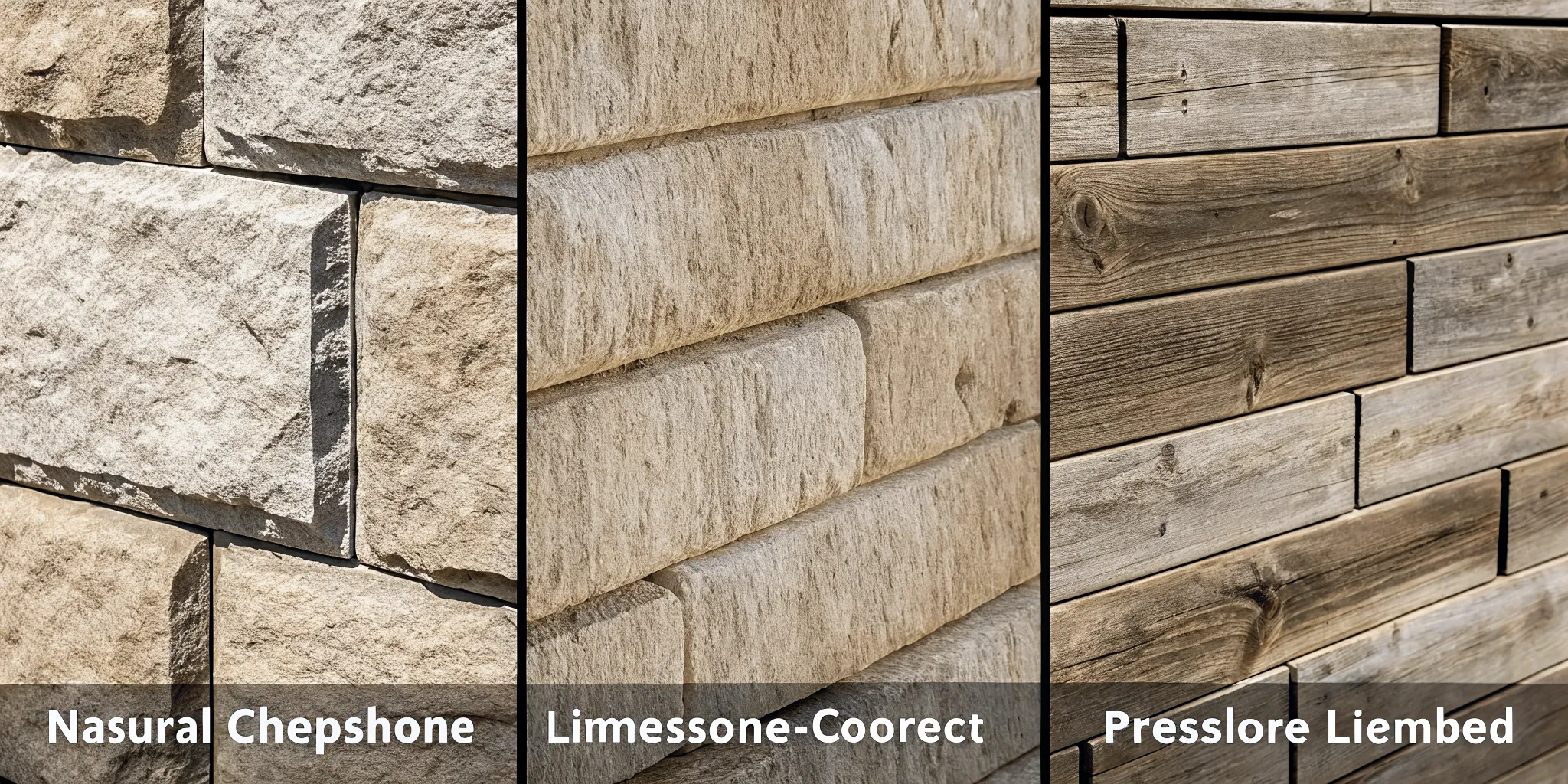
Natural stone, segmental concrete blocks, and timber offer different benefits for North Texas retaining walls. Stone provides the best durability while timber offers the lowest upfront cost.
Is Timber a Reliable Option for North Texas Retaining Walls?
Historically, wood timber retaining walls were common for North Texas homeowners. Using 6×6 pressure-treated pine posts or heavy railroad ties, these walls are relatively easy to construct with few specialized tools. The low upfront cost of wood makes it appealing for quick repairs or small, low garden borders. However, for serious structural soil retention, timber is not a reliable long-term choice in our region.
Timber has the lowest upfront material and labor cost, making it popular for tight budgets. However, in North Texas clay and humidity, timber walls have a short lifespan of only 5 to 10 years. Wood is highly vulnerable to subterranean termites, wood rot, and physical warping from moisture. When clay soil remains saturated, it traps moisture against the wood fibers, breaking down chemical preservatives. Meanwhile, active colonies of subterranean termites infest the structure once the protective treatment degrades, causing sudden structural failure. If you are dealing with a failing timber wall, we recommend replacing it with a permanent solution. Read our guide on the best base material for retaining wall projects to understand how replacing wood with stone or block on a gravel foundation prevents future failures.
Why Is Proper Drainage More Important Than the Material Itself?
You can purchase the most expensive concrete blocks or the heaviest chopped limestone available, but if you do not design proper drainage, your retaining wall will eventually lean, bow, or collapse. Industry data from the National Concrete Masonry Association reveals that over 80 percent of retaining wall failures are directly caused by poor drainage. When rainwater seeps into the soil behind your wall with no escape route, it accumulates and turns the soil into a heavy, semi-liquid slurry that creates immense hydrostatic pressure.
Every structural wall must include a perforated drain pipe and a 12-inch gravel drainage zone behind it. Geotextile fabric is required to prevent clay soil from washing into and clogging your drainage gravel. To prevent hydrostatic pressure, excavate a trench at the base and install a perforated drain pipe with the holes facing downward, sloping to an open exit point. Fill a 12-inch wide zone behind the wall with clean, washed gravel or crushed limestone from McCraw Landscape Supply. Place geotextile filter fabric between the gravel zone and the native clay soil to keep fine particles from clogging the drainage system. For walls taller than 3 to 4 feet, contractors also use geogrid to anchor the wall deep into the soil behind it. Source premium crushed limestone and drainage gravel from McCraw Landscape Supply for your project.
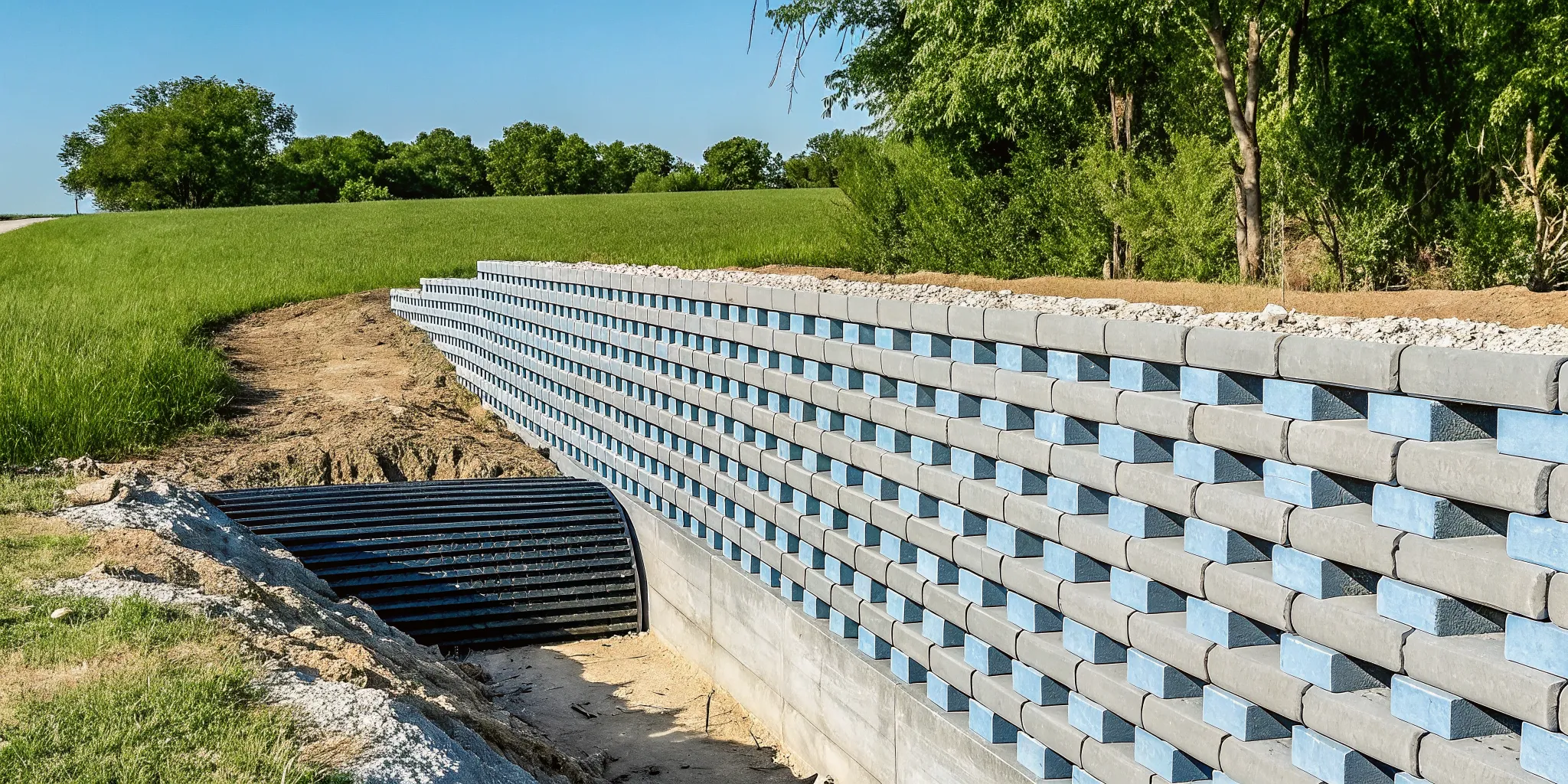
A properly designed drainage system with gravel backfill, perforated pipe, and geotextile fabric prevents over 80 percent of retaining wall failures in North Texas clay soils.
What Are the Permitting and Engineering Rules in North Texas?
Before you purchase materials or hire a contractor, understand the local municipal building codes in your area. Across most of North Texas, including Van Alstyne, Anna, and McKinney, any retaining wall that is 4 feet or taller is considered a structural hazard if it fails. Municipalities require a formal building permit, a detailed site plan, and structural calculations stamped by a licensed Professional Engineer before construction can begin.
Most North Texas cities require a building permit and a stamped engineering plan for walls 4 feet or taller. Some Collin County municipalities enforce these requirements for walls starting at 3 feet. Failing to secure a permit can result in heavy fines, stop-work orders, and mandatory removal of the wall. If your wall is built on a slope, near a property line, or supports a surcharge load such as a driveway or fence, some building departments require an engineering stamp even for walls under 4 feet. Never bypass these regulations. If a contractor suggests building a 5-foot wall without a permit, find a different contractor. To understand how height limits affect different materials, read our article on railroad ties for landscaping.
How Do You Calculate the Materials Needed for Your Retaining Wall?
Proper planning keeps your hardscaping project on schedule and within budget. Running out of stone, gravel, or sand mid-construction can halt work for days and require multiple delivery fees. Ordering too much wastes money and leaves heavy bulk piles that are difficult to move. Accurate material calculation prevents project delays and reduces expensive shipping fees. Remember to calculate the buried foundation course, which typically requires burying 10 percent of the wall’s height.
First, calculate your wall’s total surface area by multiplying length by planned height, including the buried foundation course. To resist lateral sliding, bury the bottom course in a trench equal to 10 percent of the wall’s total height, or at least 6 inches. Second, calculate base material needs. A proper foundation requires a 6-inch deep trench filled with compacted base material such as our premium concrete sand or crushed limestone screenings. Third, calculate drainage backfill by multiplying wall length by wall height by the 1-foot-wide drainage zone. Use our free Area Calculator to instantly convert your measurements into the exact cubic yards or tons you need. Contact McCraw Landscape Supply for bulk delivery of sand, gravel, and stone to keep your project running smoothly.
Frequently Asked Questions About Retaining Wall Materials
Do I need a footing for a 2 foot retaining wall?
Yes, even a low 2-foot retaining wall requires a proper gravel base footing to prevent shifting and settling over time. You do not need a poured concrete footing, but you should excavate a trench that is 6 inches deep and twice as wide as your block or stone. Fill this trench with 4 to 6 inches of crushed limestone screenings or coarse concrete sand, compact it thoroughly with a hand tamper, and lay your first course on this compacted base. This gravel footing allows the wall to drain and move naturally with the expansion of Collin and Grayson County clay soils.
What is the 1/3 rule for retaining walls?
The 1/3 rule refers to the structural requirement for burying a portion of a gravity retaining wall to ensure stability against sliding and overturning. In general, at least 10 percent of the wall’s total height, or one full course of blocks, should be buried below ground level. On sloped ground or in clay soils, burying up to 1/3 of the wall’s height may be necessary to resist soil pressure at the base. This buried portion, called the embedment depth, prevents the bottom of the wall from kicking outward under the lateral load of the hill behind it.
What is the cheapest retaining wall material to build?
The cheapest retaining wall material to build in terms of upfront material and labor costs is pressure-treated timber or railroad ties. However, timber is often the most expensive option over a 20-year period because it rots, warps, and attracts termites in North Texas clay soils, requiring complete replacement in 5 to 10 years. For long-term value, segmental concrete blocks are the most cost-effective choice. They cost slightly more than wood upfront but last for decades with virtually no maintenance, saving you thousands in replacement costs.
Can I build a retaining wall myself or do I need a contractor?
Whether you can build a wall yourself depends on the height and complexity of the project. A low, non-structural garden border or terraced planter under 2 feet tall is an excellent DIY project for a homeowner over a weekend. These lower walls do not require heavy equipment, permits, or complex engineering. However, for any wall that is 3 feet or taller, or any wall that supports a significant load like a driveway or sloped lawn, we strongly recommend hiring an experienced, insured professional contractor. Tall walls are incredibly heavy and require precise excavation, compaction, and drainage installation to prevent catastrophic failure.
Choose McCraw Landscape Supply for Your Retaining Wall Materials
Building a retaining wall is a major investment in your property’s structure, safety, and visual appeal. Do not compromise on the quality of your materials. At McCraw Landscape Supply, we help our neighbors in Anna, Van Alstyne, and surrounding North Texas communities build beautiful, durable hardscapes that stand the test of time. From premium chopped limestone and builders stone to construction-grade concrete sand and crushed limestone drainage gravel, we stock the complete range of materials for a successful installation.
Whether you are a seasoned contractor running a crew or a homeowner tackling a backyard project, we provide honest, knowledgeable advice and reliable bulk delivery directly to your job site. Contact us today to discuss your project dimensions, get expert material recommendations, and request a personalized quote for your landscaping needs.
