One storm can carve a failed outlet into a callback, washout, and repair bill. In North Texas clay, drainage stone must hold grade where concentrated runoff leaves the pipe.
Request a bulk quote for rip rap drainage stone and plan your delivery with McCraw.
Rip rap drainage stone North Texas contractors install is angular, heavy stone placed where runoff can scour outlets, channels, slopes, and banks. It slows water, shields exposed soil, and remains permeable, while gabion stone is packed in wire baskets where a defined wall or reinforced bank is needed. Angular stone interlocks better than rounded rock, an important choice around culverts, detention features, rural ditches, and jobsite discharge points. The USDA Natural Resources Conservation Service specifies permanent, erosion-resistant linings where concentrated runoff, pipe flow, steep grades, seepage, or erosive soils make vegetation alone unreliable. Contractors should match stone and installation to flow, slope, soil movement, access, and specified design requirements before scheduling bulk loads.
The job question is not simply which rock is available, but which protection fits the water, grade, and maintenance risk on the site. Next, Rip rap drainage stone North Texas projects rely on explains the material choice before takeoffs and delivery planning begin. Here’s how.
Rip rap drainage stone North Texas projects rely on
Contractors use rip rap drainage stone on North Texas projects where water gathers and starts cutting soil. The USDA lined waterway standard defines erosion-resistant protection for runoff routes. It applies where concentrated runoff or erosive soil makes lining necessary.
That need is easy to spot near culvert ends, drainage swales, detention outlets, and sloped rural drives. North Texas clay can shed stormwater toward low spots, leaving an exposed outlet at risk of washout. A stone lining gives moving water a harder path across the soil.
Why angular stone holds
Rip rap is not decorative gravel placed beside a wet area. It is heavy, rough stone used where runoff needs to cross a stable surface. A stone supplier describes angular rip rap as locking together and breaking up energy from flowing water.
For a contractor, that difference matters during the next hard rain. Smooth loose rock can be a poor fit where a concentrated discharge strikes the ground. An interlocked rock layer helps slow damage and guards the soil below from direct impact.
Common drainage placements
Rip rap fits a project when water has a known route and a clear point of damage. It is often placed at an outlet, through an erosion-prone channel, or at the base of a slope. The goal is not to stop drainage, but to protect the route drainage takes.
- At culvert outlets, protect the discharge zone where water first meets bare soil.
- In swales and ditches, cover areas with repeat scour, rills, or small gully cuts.
- At slope toes, protect graded soil below drives, pads, and working access routes.
Before material is placed, check the flow path after a storm if the site is safe to inspect. Look for fresh sediment, undercut edges, or a channel that has widened. These signs help define where protection should begin and end.
Planning a working stone layer
Stone choice should follow water force, slope, outlet shape, and the soil that must remain protected. A small surface repair may not solve an active scour point. Where drainage supports roads, pads, or structures, design needs may call for a qualified review.
For local supply planning, McCraw’s rip rap product page identifies a stone option for drainage and construction work. Contractors can measure the covered area and needed depth before arranging bulk material for the site.
Where does rip rap work best on a drainage site?
Rip rap works best where moving water cuts soil, scours a discharge point, or weakens an exposed bank. On North Texas sites, contractors should select rip rap drainage stone by water path, grade, equipment access, and service needs.
Culvert inlets and outlets
Culvert outlets are a first place to check because pipe flow reaches bare soil with force. A stable stone apron can protect the discharge area and direct flow into the next drainage path. The NRCS includes stone in its lined waterway and outlet guidance for erosion control.
At an inlet, look for washed shoulders, exposed pipe ends, or a channel forming upstream. Stone should protect the soil without choking the opening or catching debris. Measure apron width, length, and depth before ordering material. Also note whether a mower, skid steer, or excavator must cross nearby.
Channels, creek beds, and slope toes
A drainage channel needs stone where runoff stays focused, turns sharply, or drops in elevation. Creek beds need more care, since repeated flow can move soil along the banks. Place protection at active scour points, not across stable areas without a clear purpose.
At a slope toe, rip rap can shield the point where runoff begins to undercut the bank. It also helps where a swale meets a drive crossing or field entrance. Contractors can review McCraw’s gabion stone supply option when matching material to a drainage layout.
Read the flow pattern before choosing the treatment. A shallow grassed route may only need repair at one outlet. A steep cut or channel with repeat scour calls for closer sizing and base review.
Retaining edges and rural acreage
Retaining edges often need protection at the base, near an outlet, or below a long slope drain. On large rural acreage, start with the few places carrying the most water. Culverts, pond overflows, ditch turns, and low crossings show where stone may earn its keep.
Use a simple field check before selecting placement:
- Trace runoff from the high side to its discharge point.
- Mark scour, bare banks, pipe ends, steep drops, and soft edges.
- Confirm equipment access and room for a shaped stone apron.
- Check plans for fabric, a prepared base, grading, or other stabilization.
Rip rap protects exposed soil from erosion, but it does not fix poor grade or an undersized drainage route. Creek banks, retaining structures, and high-flow sites may need an engineered design. NRCS stream restoration guidance notes that stone protection design depends on site limits and suitable methods.
Rip rap vs. gabion stone: choosing the right system
Quick choice: Use loose rip rap for broad erosion armoring at outlets, swales, and slopes. Use gabion stone in baskets where a contained, shaped edge must remain in place. Confirm the flow path, base preparation, and design details before ordering material.
Loose rip rap and stone-filled gabion baskets can both help manage erosion, but they solve different site problems. On North Texas drainage work, the choice begins with water path, slope, access, and the shape the finished edge must hold. The NRCS lined waterway standard lists permanent stone lining where runoff or site limits call for erosion-resistant protection.
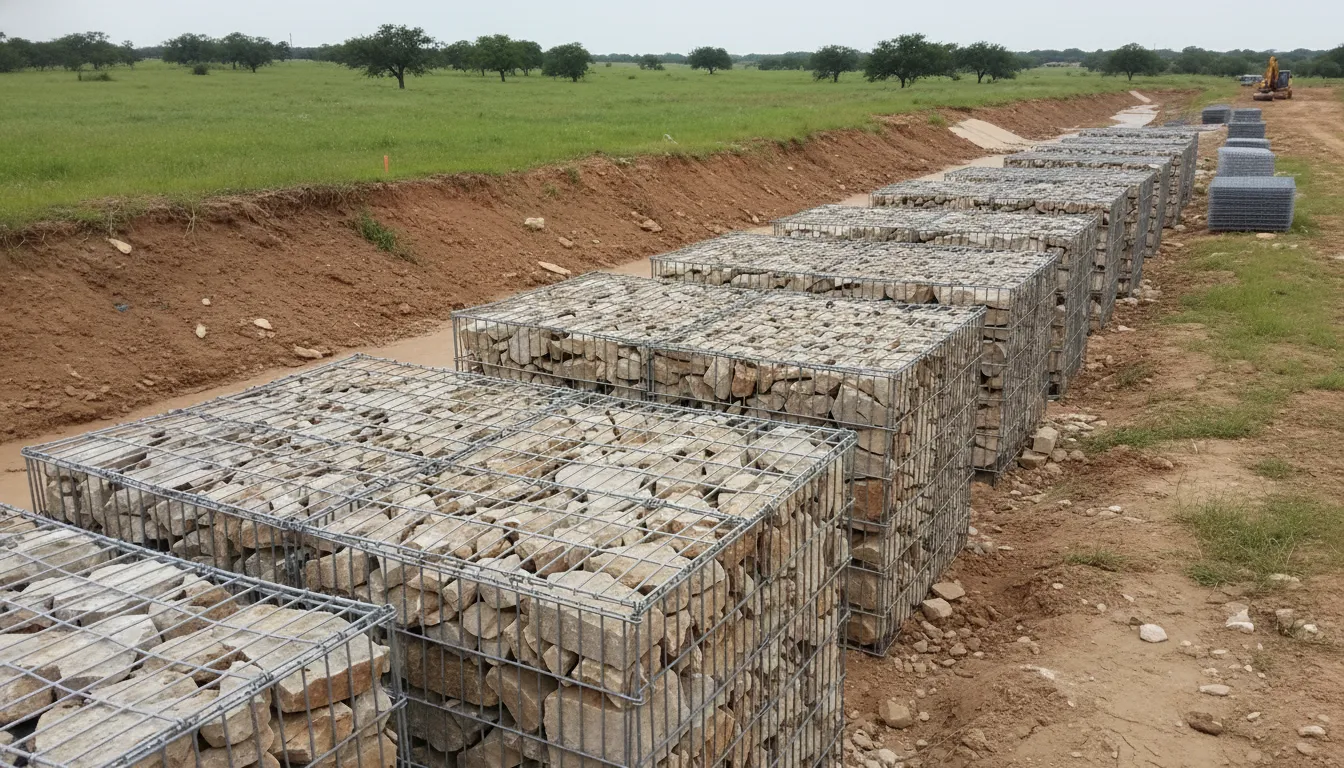
Loose armor or contained stone
Rip rap is loose stone placed over a prepared area, such as an outlet, bank, or flow path. It fits work where a broad stone surface can slow erosion without building a formed wall. Contractors should plan the base, edge tie-ins, equipment reach, and safe discharge point before stone is delivered.
Gabion stone fills wire baskets that create a defined face or stepped feature. This can suit a site where loose stone would spread beyond the planned line. The basket, foundation, drainage details, and fill stone must work as one system. Wall-like applications need qualified design review.
Side-by-side planning guide
| Planning point. | Loose rip rap. | Gabion stone in baskets. |
|---|---|---|
| Common use. | Armor an outlet, swale, bank, or culvert approach. | Build a defined edge, terrace, or protected bank face. |
| Site constraint. | Allow room for stone spread and stable transitions. | Allow room for baskets, base preparation, and assembly. |
| Water handling. | Cover exposed soil along a flow path. | Contain stone within a shaped protection system. |
| Contractor planning. | Confirm grade, placement access, coverage area, and delivery route. | Confirm layout, basket details, foundation needs, access, and fill plan. |
This comparison is a starting point, not a substitute for site design. Concentrated runoff, steep grades, or signs of scour call for close review before choosing stone placement. Where a project protects a bank or structure, the contractor may need engineering input and local permit guidance.
Choosing material for the job
Start by mapping where water enters, flows, and leaves the site after heavy rain. Then note any tight boundaries, steep changes, soft edges, or structures near the work zone. These observations help separate a loose armor application from a contained basket application.
For bank protection, first decide if the work is loose armoring or a designed structure. NRCS guidance identifies both dumped rock riprap and wire mesh gabions as stone protection techniques. It also says stream restoration design needs the right training to match a method with site conditions.
For sourcing discussions, McCraw lists bulk stone options for rip rap and gabions for landscaping and construction projects. Bring measured site dimensions, delivery access notes, and any project drawings when asking about rip rap drainage stone in North Texas.
What size rip rap should you choose for drainage?
Short answer: Select rip rap according to expected water force, slope, outlet scour, layer depth, and specified gradation. A steeper channel or concentrated culvert discharge generally requires closer sizing review than a shallow, slow swale.
The right rip rap size starts with the force of moving water, not a stone size chart. For rip rap drainage stone North Texas projects, note the slope, flow path, and places where runoff drops or turns. Those details show where stone may need to resist washout.
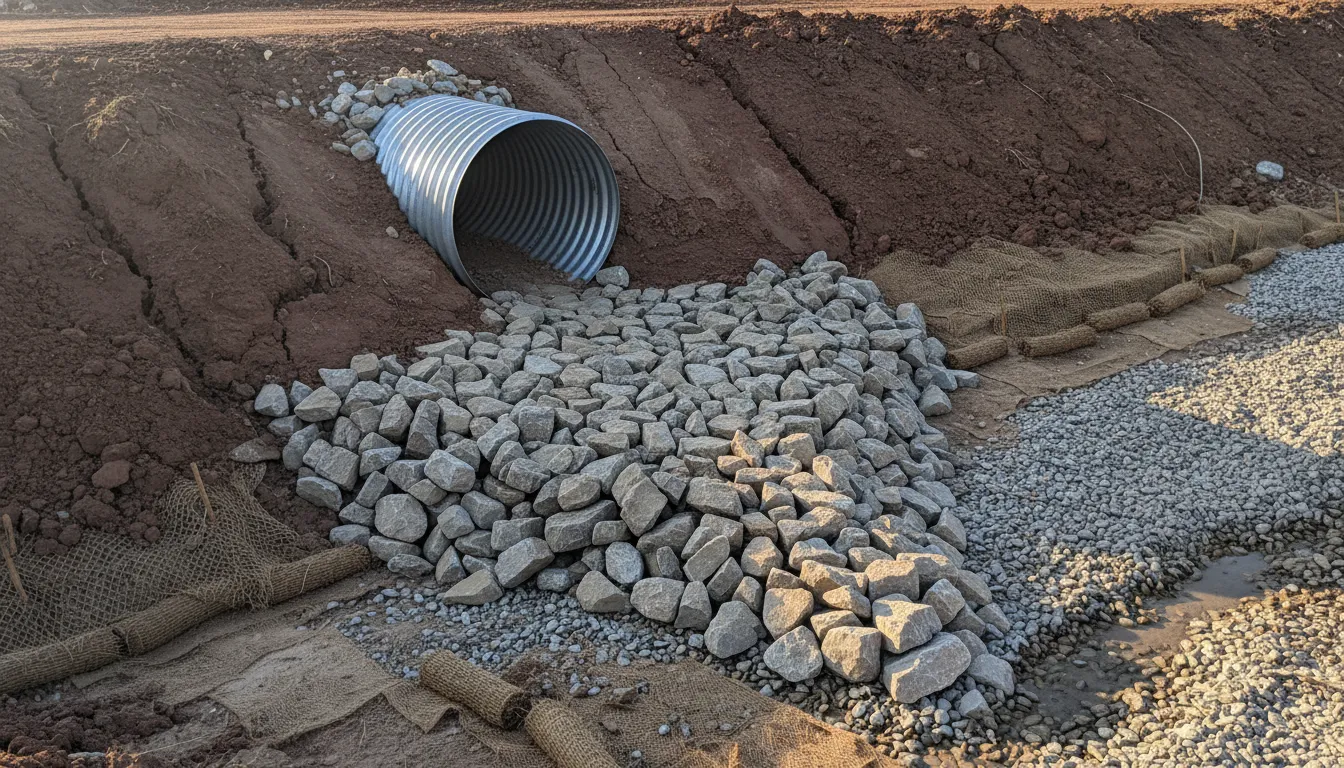
Flow, slope, and outlet scour
A shallow swale with slow, spread-out runoff does not face the same stress as a steep ditch or pipe outlet. The USDA NRCS lining standard lists concentrated runoff, pipe flow, and steep grades as reasons an erosion-resistant lining may be needed.
Check the slope length, channel width, and the low point below a culvert or downspout. Water can focus at a narrow crossing or drop, so the outlet and scour area need close review. Record whether water spreads across a broad ditch or enters one tight path.
Limited outlet width can also affect a lining decision when design water speed is high. On specified work, use the plan or engineer’s requirements instead of choosing rock by appearance. A site visit after rainfall can also reveal fresh soil loss and the real flow path.
Ranges and stone shape
Supplier examples may sort smaller and larger stone by expected flow or slope. As context, one Texas supplier describes small and large rip rap sizes for different drainage demands. These ranges are a starting point only; the job specification governs the stone size and placement.
Stone shape belongs in the same review. Ask whether the specified product calls for angular stone that can fit tightly with nearby pieces. Also confirm layer depth, stone grading, and any fabric or base details shown in the plan.
A straight drainage channel may have different demands than a culvert outlet with a sharp drop. Steeper banks, tight turns, and active washout zones should be flagged before material is ordered. This helps prevent a simple product range from standing in for site design.
Measurements before ordering
Before requesting stone, measure the channel length and width, planned cover depth, side slopes, and outlet area. Note every pipe outlet, bend, drop, bank edge, or place where soil is already cutting away. Photos and plan notes help explain site conditions clearly.
McCraw can review your dimensions alongside its drainage stone selection options. For a culvert, steep bank, or active scour point, share plan requirements and site measurements before arranging material. That discussion can support quantity and size selection, without making an engineering guarantee.
Review drainage stone options for your measured site before scheduling bulk delivery.
Plan installation and delivery before stone arrives
A load of rip rap drainage stone in North Texas is easier to place when the site is ready first. Before ordering, confirm the repair limits, truck path, unload point, and crew plan on the ground.
Site and material checks
Rip rap protects soil where concentrated water flow can cause erosion. For planning basics, review the EPA guidance for riprap placement, then use project plans and local requirements for final decisions.
-
Verify the work area. Walk the channel, slope, outlet, or washout before the load is sent. Mark limits, note soft areas, and flag utilities or obstacles that affect access.
-
Prepare the subgrade and separation layer. Remove loose debris and shape the receiving area as the project calls for. The EPA notes that filter fabric, geotextile, or smaller gravel can keep soil from moving through rip rap.
-
Confirm truck access and the dump location. Check gate width, turning room, overhead clearance, firm travel surface, and any low branches. Choose a safe stockpile point that keeps heavy stone close to placement, but clear of runoff paths.
-
Match placement to the site. Plan how the crew will move and set stone without damaging prepared fabric or channel edges. For high-flow sites, steep ground, or designed structures, follow the project professional’s specifications.
-
Set quantity and delivery timing. Measure the planned cover area and depth, then allow for field variation and handling. Use the area calculator tool as an estimating aid before confirming tons and delivery windows.
Delivery sequence and field control
Schedule the load after the access route and receiving area are ready. A staged delivery can help on tight sites, long rural drives, or work that must stay open for other trades.
Before dispatch, confirm stone type, estimated quantity, drop location, contact person, and weather or site limits. If the work also needs base or transition material, check available rural property drainage gravel while planning the order.
Inspect the first placed area before moving through the full run. Confirm that stone stays in the planned footprint and that access remains firm for later loads.
How do contractors order bulk drainage stone efficiently?
Takeoff before the quote
Start a bulk order with a marked coverage area and a planned stone depth. Measure each ditch, outfall apron, swale, or culvert outlet separately, then total the sections. McCraw’s area calculator tool helps turn those field dimensions into a useful quantity estimate before a quote request.
Do not choose rip rap drainage stone in North Texas by tonnage alone. Confirm the water path, bank condition, and expected use with the project plan. The EPA states that riprap protects soil in high or focused water flow. Its riprap guidance also ties stone size to the stress of expected flow.
Haul access and staging
Rural jobs often lose time at the gate, not in the channel. Before dispatch, give the supplier a delivery entrance, gate width, turning space, surface condition, overhead clearance, and any low-water crossing limits. Tell the crew where trucks can dump without blocking excavators, skid steers, or loaded trailers.
Stage fabric, smaller gravel, and stone before water-control work begins. If a ditch must stay open, set a placement sequence that keeps flow paths clear. Separate loads by placement area when the job has several culverts or long ranch roads, so operators do not move large stone twice.
- Mark the dump point and travel path on the site plan.
- Confirm whether wet ground can carry a loaded truck.
- Plan a safe turnaround or controlled backing route.
- Keep the first work zone clear before the truck arrives.
Material confirmation and delivery timing
Before ordering, confirm the product, estimated volume, placement depth, haul route, and delivery window in one call. Name the application, such as a culvert outlet, ditch lining, or slope toe. That detail helps prevent a load intended for general drainage from reaching a site that needs design review.
Schedule delivery close to the placement crew’s start time, but leave room for weather and access changes. A loaded truck waiting beside soft rural ground creates delay and risk. For a bulk quote or delivery plan, use McCraw’s contact page with your measured area, depth, site access notes, and target work date.
Frequently Asked Questions
What size rip rap should I choose for drainage?
Choose rip rap from the expected water force, slope, and outlet conditions, not appearance alone. The EPA riprap guidance notes that design engineers size stone for site-specific flow stress. Its typical median stone diameters range from 9.5 to 23 inches. For a culvert outlet or major channel, confirm the gradation and thickness against project plans before ordering.
How much rip rap do I need for my drainage project?
Measure the protected surface area, then multiply by the specified stone layer thickness to estimate volume. Convert that volume to tons using the supplier’s material weight and add allowance for irregular grade lines. Quantity also depends on filter layer requirements and placement limits. For engineered drainage work, base the order on approved sections and field dimensions, not a general yardage guess.
Can I use rounded river rock instead of angular stone for structural drainage?
Rounded river rock may suit decorative areas with little flow, but it is not a sound substitute for structural gabion fill. Angular stone interlocks inside the basket and resists shifting under pressure. Guidance on gabion rock selection notes that rounded stones can shift and cause baskets to bulge. Use the specified angular, durable stone for retaining or channel structures.
What is the best type of stone for North Texas erosion control?
The right stone depends on flow, slope, and whether the work is loose rip rap or basketed gabion construction. For rip rap, select durable, angular, well-graded quarry stone that resists breakdown. The EPA recommends angular, variably sized stone that withstands freeze and thaw cycles. In North Texas drainage channels, sound stone and proper sizing matter more than color.
Does rip rap need filter fabric underneath it?
Many rip rap installations require a separating filter layer beneath the stone. Without it, water can pull fine soil through open rock voids, which may weaken the protected bank or outlet. The EPA installation guidance calls for filter fabric, geotextile material, or a gravel filter layer to prevent underlying soil movement. Follow the project detail for overlap, preparation, and stone placement.
Ready to Protect Your North Texas Project Site?
Waiting to source erosion-control stone can leave your crew solving material shortages while drainage work sits off schedule. Starting your material request now gives your team time to confirm quantities, coordinate delivery needs, and plan installation steps. That early planning helps you protect job timing and move from takeoff to placement with fewer last-minute changes.
Ready to keep your erosion-control work moving? Request a bulk quote for rip rap and gabion stone to discuss materials and delivery needs for your job. Share your estimated coverage, access details, and schedule so the team can prepare a quote that fits your next steps. Contact McCraw before procurement delays narrow your options for staging stone and keeping field work on track.
