North Texas runoff turns the wrong river rock size into displaced stone and repeat labor. The right choice protects drainage work, keeps beds clean, and makes bulk orders easier to plan.
Request McCraw Landscape Supply delivery guidance for your river rock order.
River rock sizes for landscaping should match the job’s water flow, foot traffic, finished appearance, installation effort, and delivery plan. In North Texas, use 1-inch native river rock for decorative beds, defined edging, and low-flow areas where a stable, finished surface matters across visible spaces. Choose 2-4-inch river rock for dry creek beds and drainage swales, where heavier stone helps manage runoff and reduce washout. For contractors, rock size affects installation pace, touch-up risk, and how smoothly a bulk load moves from delivery point to placement on schedule. For homeowners, selecting by use before estimating coverage prevents a clean border from being mistaken for a working drainage channel after rain.
The real question is not which stone looks better, but which size fits the flow, finish, and load plan. River rock sizes for landscaping: quick North Texas guide starts with the practical comparison contractors and homeowners need before ordering. Here’s how.
River rock sizes for landscaping: quick North Texas guide
McCraw Landscape Supply recommends choosing river rock sizes for landscaping by the job the stone must do. In Van Alstyne and Anna, beds, walkways, and drainage paths need different stone sizes. Size affects how rock looks, shifts underfoot, and handles water.
The short answer
Use 1-inch native river gravel where people will see or cross the surface often. It gives planting beds and borders a finer, more even look. Its smaller stones are easier to walk across than large river rock.
Use 2-4-inch river rock in dry creek beds, swales, and visible drainage paths. Larger pieces stand out in the landscape and suit spots that carry runoff. Stormwater can erode topsoil and damage sites, as noted by the University of Georgia Extension.
Where 1-inch gravel fits
One-inch native river gravel works well beside a patio, around foundation beds, or along a light-use garden path. The small scale does not compete with shrubs or edging. It also leaves a smoother surface for shoes, wheelbarrows, and routine bed care.
- Choose it for decorative borders that need a clean, finished surface.
- Use it for low-traffic paths where walkability is important.
- Consider it in beds where a large stone would hide smaller plants.
Small river gravel is not the first choice for a channel that takes fast water. In a drainage route, lighter pieces can move and scatter beyond the planned edge. Check the flow path before choosing a decorative size for a working drainage feature.
Where larger river rock fits
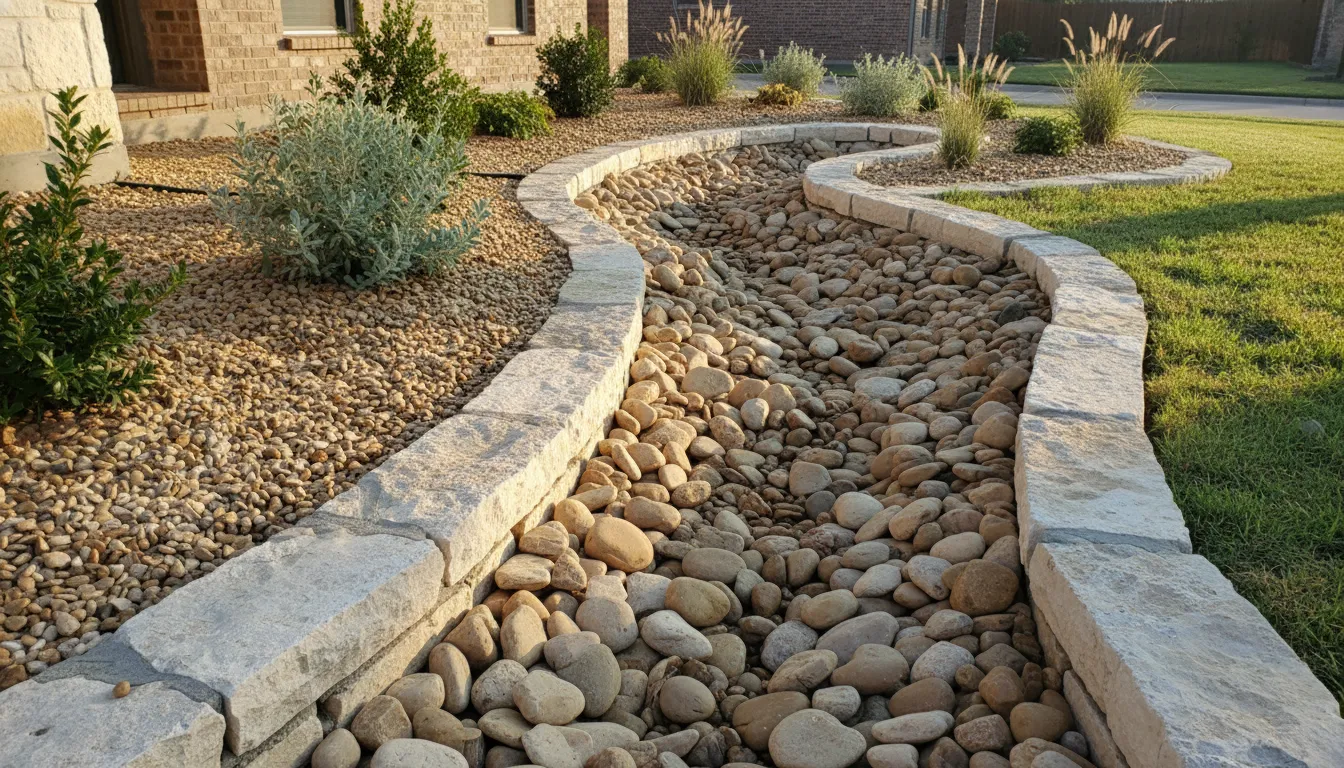
Two-to-four-inch stone has more visual weight and a rougher walking surface. That makes it a better fit for a dry creek bed than for a path. McCraw’s 2-4 inch native river rock is a practical size for these drainage-focused designs.
For a North Texas yard, first decide whether the area is for foot travel or water flow. Choose 1-inch gravel for stable, easy-to-view surfaces near daily activity. Choose 2-4-inch rock where drainage, visibility, and resistance to shifting matter more than walkability.
When should you use 1-inch native river rock?
McCraw Landscape Supply recommends 1-inch native river rock for places people see up close and use often. Its rounded look gives beds a clean finish without making the stone feel oversized. It works well in North Texas landscapes that need a neat surface around plants, turf, and paved areas.
Best uses for smaller river rock
Use 1-inch native river rock in decorative beds where the rock should frame plants, not hide them. It also suits narrow side-yard borders, mailbox beds, and bands along a patio or driveway. The smaller scale helps these tight spaces look finished rather than crowded.
This size is a sound choice for edging and light-use walkway areas. Small river rock is often selected for paths because it provides a more even walking surface than large stone. An extension resource on landscape runoff and material choice also supports saving larger stone for areas that carry more water.
One-inch rock can make a clear transition from turf to hardscape. A border between a lawn and a walkway helps define where grass ends and the built surface begins. Around shrubs or ornamental grasses, the smooth stone adds contrast while keeping the planting bed simple to maintain.
North Texas placement needs
In Van Alstyne and Anna, a rock bed should fit the site, not just the color plan. Blackland Prairie soil can call for careful attention to drainage. Use 1-inch native river rock for decorative cover or gentle transitions where water is not moving fast.
Stone also avoids the worn look that can occur when thin ground cover struggles in exposed planting strips. In beds near pavement, its rounded shape creates a softer visual edge. Contractors can use it to keep repeated borders consistent across a front landscape or multi-bed install.
Before ordering material for a bed or border, measure the surface area and set the planned depth. McCraw’s rock selection can help you compare native stone options for the intended look and use. Start with the site’s 1-inch native river rock when planning decorative placements.
Where 1-inch rock has limits
Do not choose 1-inch rock as the main material for a drainage swale or a dry creek bed. Flowing stormwater can shift smaller pieces and expose the soil beneath. Larger stone provides a better fit when the project must slow runoff and hold its shape through rain.
For channels, low points, or runoff routes, compare 2-4 inch native river rock instead. For planting beds, borders, and smoother transitions, 1-inch native river rock keeps the scale practical and the finished surface tidy.
When does 2-4-inch river rock make more sense?
McCraw Landscape Supply recommends matching river rock sizes for landscaping to the job first. Two-to-four-inch rock is a strong fit where water moves, soil washes, or the stone must form a bold feature. Smaller stone can suit tight borders or walking areas, while larger stone gives dry channels and exposed edges more visual weight.
Drainage swales and dry creek beds
Dry creek beds and drainage swales are built to accept water during rain. In those areas, larger stone gives the channel a more solid surface than small decorative rock. McCraw lists 2-4 inch native river rock for projects where a larger size is the right fit.
That choice matters where runoff moves across a site. Stormwater runoff can erode topsoil and damage roads and property. This risk is described in University of Georgia Extension stormwater guidance. A rock-lined swale does not replace sound grading or site planning. It gives moving water a set path where stone is part of the drainage design.
In a dry creek bed, large rock can define the route and blend with mixed stone sizes. In a swale, use it in the zone meant to carry runoff. Do not treat stone as a fix for an unknown drainage issue. For a steep or severe washout problem, get site guidance before placing material.
Curb appeal and erosion-prone edges
Larger rounded rock also works when a planting bed needs one clear visual feature. Use it as an accent near an entry, around a dry creek curve, or along an edge exposed to runoff. The scale reads clearly from the street. A small planned area can stand out without covering the whole bed.
For an erosion-prone edge, function should come first. Choose the larger size where water tends to cut across soil or shift lighter surface material. Keep walking paths and areas that need an even foot surface in mind. Large rounded pieces are not a smooth walking layer.
Scale also affects upkeep. A set accent of large rock is simple to separate from mulch or turf, and it can frame planting areas. Think about leaves and sediment when setting rock beneath trees or at a channel low point.
Choosing the larger size
Before ordering, watch the site during or after a hard rain if it is safe to do so. Look for washed soil, bare channels, and low areas that carry water. If the project is a swale, creek bed, or exposed accent, 2-4-inch rock often fits better than small border stone.
Estimate the coverage area before ordering bulk material, then plan access for placement. The right choice keeps the look in line with the work the rock needs to do. For a large install, plan both the rock size and the amount needed before material arrives.
How do 1-inch and 2-4-inch river rock compare?
McCraw Landscape Supply recommends matching river rock sizes for landscaping to the job, not just the color or look. One-inch rock creates a neat surface for borders and low-traffic paths. Larger 2-4-inch stone adds weight where flowing water may move smaller material.
That choice matters in North Texas, where drainage is often part of the design. Stormwater can erode topsoil and damage property, according to the University of Georgia Extension. A dry creek bed and a decorative border ask the stone to do different work.
Size comparison by project need.
| Project factor. | 1-inch river rock. | 2-4-inch river rock. |
|---|---|---|
| Best uses. | Borders, bed accents, and walkways. | Dry creek beds and drainage swales. |
| Drainage performance. | Fits light decorative drainage areas. | Better fit where water flow is a main concern. |
| Appearance. | Finer, more even stone cover. | Bold, natural creek-bed texture. |
| Walkability. | More stable under foot for paths. | Less suited to regular foot traffic. |
| Installation effort. | Easier to spread in narrow beds. | Heavier pieces need planned placement. |
| Maintenance. | May need raking back into place. | Stays visually defined in water features. |
| Ordering note. | Plan coverage for an even layer. | Confirm depth and volume for the channel. |
Where smaller stone works best
Choose 1-inch rock when the surface will be seen up close or crossed on foot. Its smaller size settles into borders, planting beds, and short walking areas with a tidy finish. It can also frame patios or foundation beds without becoming the main visual feature.
For a homeowner, that often means easier spreading around a finished bed. For a contractor, it means a steady finish along long edges or repeated home sites. Define the area first, then use McCraw’s area calculator to plan the order.
If you are weighing smooth decorative stone against smaller pea gravel, McCraw Landscape Supply also explains the tradeoffs in its river rock vs. pea gravel North Texas guide.
Where larger stone earns its place
Choose 2-4-inch rock when the feature must guide runoff or hold the shape of a drainage design. The larger stone is a practical fit for swales and dry creek beds. It also gives those features a strong, natural look in yards around Van Alstyne and Anna.
Installation takes more planning because each piece is larger and harder to move by hand. Set the path of water and bed outline before ordering. McCraw’s 2-4 inch native river rock page helps when the project calls for larger stone.
What size river rock is best for drainage swales and dry creek beds?
The practical size range for moving water
McCraw Landscape Supply recommends starting with 2-4 inch river rock for most visible drainage swales and dry creek beds in North Texas. Larger stones suit channels where runoff gathers and moves after a hard rain. They also create the natural creek-bed look many homeowners want. Among river rock sizes for landscaping, this range gives a channel a more substantial surface than small decorative gravel.
The need is practical, not just visual. Stormwater can erode topsoil and damage property when it runs across a site unchecked, according to the University of Georgia Extension. In Van Alstyne and Anna, a low spot or downspout route may carry water fast during a storm. A dry creek bed should guide that path without promising to solve a larger drainage problem.
When 1-inch rock can fit the plan
One-inch river rock can work in low-flow areas, side borders, or shallow accent bands beside a wider channel. Its smaller size gives a smoother look near paths and planted beds. It is less suited as the main surface in a clear runoff path, where moving water may shift loose stone and expose soil.
For a swale or creek bed that handles visible runoff, use larger rock through the main channel. McCraw’s 2-4 inch native river rock is a relevant choice for that use. A designer may mix in smaller stone near edges for a softer transition. Keep the flow line built with larger pieces.
Base preparation and washout control
Rock size cannot make up for a poor base. First, shape a broad, shallow route that leads water toward an approved discharge point. Remove loose organic matter and soft pockets before placing stone. On sites where separation is needed, landscape fabric can help keep rock from sinking into soil. It is not a drain by itself.
Contractors should check each inlet, bend, slope change, and outlet before ordering material. Those are the places where water tends to cut a new path. Consider larger anchor stones at turns or outlet zones when the design calls for them. Avoid a narrow trench that sends water faster toward a weak edge or neighboring area.
Install in sections, then inspect the bed after the first strong rainfall. Look for bare fabric, stone pushed downhill, soil cut at the sides, or ponding where water should leave. Reset displaced material and adjust trouble spots early. If runoff threatens a structure, street, or adjoining lot, have the drainage plan reviewed before treating rock as the fix.
Use McCraw Landscape Supply’s area calculator before you schedule river rock delivery.
How much river rock should you order for a landscape project?
Measuring area and depth
McCraw Landscape Supply recommends starting with the shape of the space, not a guess from the truck bed. Measure each bed, border, path, or drainage run in feet. Split odd shapes into smaller rectangles, then add their square footage together.
Next, choose depth based on how the rock will work in the landscape. A decorative bed needs steady coverage. A water-carrying swale must stay in place during rain. The area calculator gives you a sound starting point before you confirm an order.
- Mark the full project outline and separate areas with different uses. A path and a creek bed may need different rock sizes and depths.
- Measure length and width for each section in feet. Note curves, tree rings, edging, drains, and spaces that change the fill area.
- Choose the planned layer depth for each use. Tie that choice to appearance, walking comfort, or water flow needs.
- Match the rock size to the work. Smaller rock can suit borders or walks, while larger rock can serve drainage features.
- Review the estimate with McCraw before scheduling pickup or delivery. Product choice, access, and final depth can change the amount needed.
Allowances and material fit
Plans rarely match a jobsite perfectly. Curved edges, uneven grade, settlement, and final raking can use more material than a clean drawing suggests. Contractors should allow for touch-up needs, especially when several crews or phases share the same finish.
Size matters as much as square footage. For dry creek beds and drainage swales, 2-4 inch native river rock may fit the use better than small decorative stone. Runoff can erode topsoil and damage sites, as explained in this stormwater guidance.
Pickup or delivery planning
Pickup can make sense for a small, simple install when the vehicle can carry the load safely. For a bulk job, delivery can keep material handling focused at the site. Decide where a load can be placed before the truck arrives.
Check gates, driveways, overhead lines, soft ground, parked equipment, and crew staging areas. A planned drop spot reduces rehandling and keeps installation moving. Confirm the quantity, rock size, access details, and delivery timing with McCraw before work starts.
North Texas installation tips for river rock beds
McCraw Landscape Supply recommends planning a river rock bed to do more than look finished in North Texas. Hot summers can leave bare beds dusty, while heavy rain can test the path water takes through a yard. In Van Alstyne and Anna, plan the bed around water flow before choosing river rock sizes for landscaping.
Bed base and edging
Start by removing weeds, loose roots, and soft pockets from the bed area. Shape a firm, even base before any stone goes down. Where soil tends to stay tight after rain, avoid creating a low pocket that holds water beside a foundation or walk.
Landscape fabric can help separate rock from soil in decorative beds with limited planting. Cut it neatly around shrubs and keep plant crowns open. Skip sealed layers where water must soak into planted soil, and never let fabric cover a planned drain outlet.
Add edging before spreading rock. Steel, stone, or sturdy landscape edging keeps rounded rock from rolling onto turf and walks. A defined border also helps a contractor spread material faster, since the crew can work to a set line and depth.
Slope and drainage paths
Watch the bed during rain, or use site grade to map its likely route. Water should move away from structures and pass through a clear outlet. The University of Georgia Extension notes that stormwater runoff can erode topsoil and damage property, so a rock bed should not block drainage.
Use smaller stone in calm decorative areas and walking borders, where a smoother surface matters. For swales, discharge areas, and dry creek features, 2-4 inch native river rock gives moving water a heavier bed. Do not end a drain run against a solid edge; leave water a safe exit.
Maintenance and job flow
Check new beds after the first strong rain. Look for washed mulch, bare fabric, trapped silt, or rock that shifted at an outlet. Rake light movement back into place, then correct the grade or edge if the same washout returns.
Summer upkeep is simple when preparation is sound. Pull weeds before roots spread through the stone, remove leaves that collect in low spots, and keep drain openings clear. On new construction sites, inspect after soil work because changed grades can redirect water through finished beds.
For a contractor, stage the install in order: confirm grade, set edging, place any suitable fabric, and spread rock last. Homeowners can follow the same order and use the area calculator before ordering. That sequence cuts rework when a drainage path or border needs adjustment.
Contact McCraw Landscape Supply to plan pickup or delivery for your native river rock project.
Frequently Asked Questions
What size river rock should I use for a dry creek bed?
Use 2-4-inch native river rock in dry creek beds that receive runoff or need a defined channel. The heavier stones are less likely than 1-inch rock to shift during flowing water. McCraw Landscape Supply identifies this larger size for dry creek beds and erosion control. Smaller rock can still fill quiet decorative areas where water movement is limited.
What river rock size is recommended for drainage swales?
For a drainage swale in North Texas, start with 2-4-inch river rock where stormwater moves through the landscape. Its larger size supports the swale’s drainage and erosion-control purpose better than decorative 1-inch rock. The University of Georgia Extension notes that runoff can erode topsoil and damage property. The final design should reflect slope, water volume, and outlet conditions.
Is 1-inch river rock good for landscape edging?
Yes. One-inch native river rock works well for edging around beds and walkways when the purpose is a tidy, stable decorative border. It is easier to spread into a consistent line than 2-4-inch stone. According to McCraw Landscape Supply, 1-inch native river rock is commonly used for decorative borders and walkways. Choose larger stone if the edge also carries runoff.
How much river rock do I need for my landscape project?
Measure the length and width of each bed, swale, or creek section, then choose the planned rock depth. Keep drainage features separate from decorative beds because their depths and rock sizes may differ. Use the area calculator before requesting bulk pricing or delivery. Contractors should also confirm truck access, dump location, and material staging before scheduling a load.
How do I choose the right size river rock for decorative landscape beds?
Choose 1-inch river rock for decorative beds when you want an even surface around plantings and borders. Choose 2-4-inch rock for bold accents, dry creek transitions, or bed edges that receive runoff. In North Texas, bed design should account for drainage as well as appearance. Use one consistent size for broad coverage, then add larger stone only where it serves a clear visual or functional purpose.
Ready to Plan the Right River Rock Delivery?
McCraw Landscape Supply can help homeowners and contractors choose the right native river rock size, estimate coverage, and plan delivery details. Waiting to settle rock size and quantity can stall site preparation, leave drainage work unfinished, or force a rushed material decision later. Starting your plan now gives you time to match river rock size to the application, confirm quantities, and coordinate delivery around your schedule. With those choices made early, your crew or household can start the installation with the needed material ready for the project.
Ready to move your river rock project forward? Contact McCraw Landscape Supply to request river rock delivery guidance for your dry creek bed, swale, edging, or decorative bed. Plan delivery needs before the work begins and keep your next project step on track with fewer delays.
Ready to compare materials for your project? shop bulk landscape rock. >