Choosing between river rock vs crushed stone for drainage determines whether a North Texas system will remain stable, manage runoff, and fit the finished landscape. In Van Alstyne and Anna, expansive clay and intense rain make stone shape, gradation, and installation details especially important.
Request help selecting drainage material for your North Texas project.
Crushed stone is generally the better choice for structural drainage because angular pieces interlock around pipe and resist migration. River rock is best for visible swales and dry creek beds where appearance and surface erosion control matter. Both materials must be clean and properly sized for the application.
The right choice depends on where the stone will sit, how quickly water must move, and whether the feature must carry loads or remain visible.
River rock vs crushed stone for drainage at a glance
At a glance: use clean angular crushed stone for buried drains, stable bases, and load-bearing areas. Choose river rock for exposed channels, dry creek beds, and finished landscapes where rounded stone complements the design.
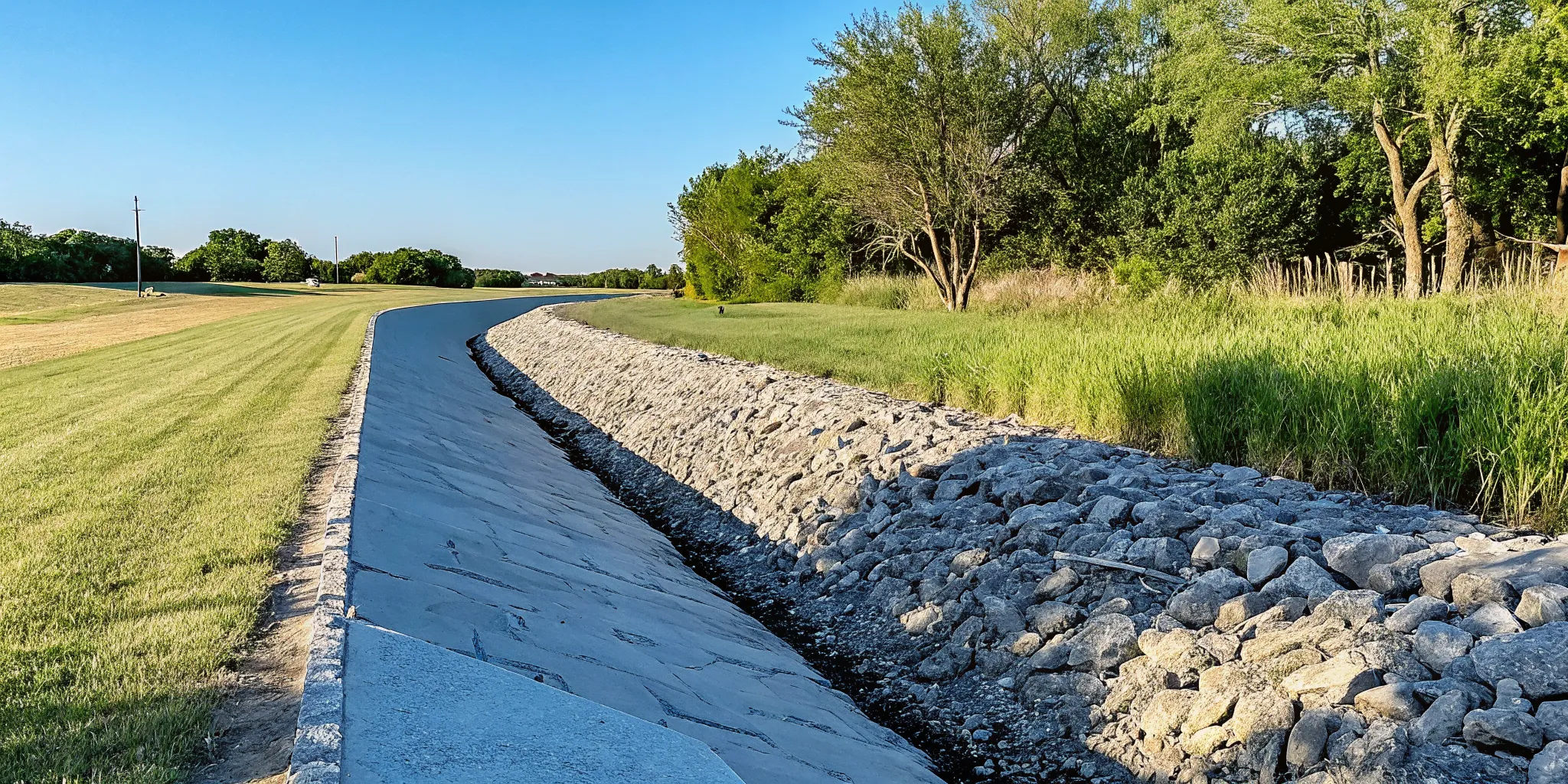
Compare McCraw Landscape Supply’s rock selection and gravel selection when planning quantities and finish.
Drainage aggregate should be selected for hydraulic performance and stability before appearance. In North Texas, low-permeability clay makes deliberate drainage design especially important. Both materials can serve drainage applications, but particle shape changes how each performs in a trench, around pipe, or across a finished channel.
Firm grip and water flow
Crushed stone has sharp, jagged edges. Those angular faces interlock under compaction, helping the aggregate resist lateral movement. This interlock makes clean crushed stone a reliable choice for French drains. It resists displacement while preserving connected voids for water movement. Using crushed stone helps build a strong base that holds weight well. This is key if you plan to drive over the area later.
River rock has a smooth, rounded profile that is more prone to rolling or shifting under concentrated flow and applied loads. This makes them less firm in a deep drain. Their smooth shape suits dry creek beds designed to resemble a natural channel. If you need a dry creek bed drainage plan, river rock is the top choice for beauty. It mimics the look of a real stream bed found in nature.
Cost and project use
Installed cost matters, especially on larger projects in Van Alstyne and Anna. Crushed stone is often the more economical structural aggregate. Bulk limestone is readily available for long trenches and other aggregate-intensive installations. Our #4 Limestone is a top pick for many local jobs. River rock often carries a higher material cost, so it delivers the most value in exposed features where its finished appearance is part of the design.
When you look at river rock vs crushed stone for drainage, you should think about the local dirt. Effective subsurface drainage must remove excess water before the subgrade loses strength. This is true in the Blackland Prairie soil we have here. This expansive soil retains water and swells as moisture levels rise. Crushed stone keeps things firm and stops the ground from shifting. River rock provides a refined finish in exposed landscape applications. Many builders use crushed stone in the ground and then put river rock on top.
Selecting stone by performance requirement
The appropriate material depends on the system requirements. If the drain is hidden under the grass, use crushed stone. It can control installed cost while delivering dependable structural performance. If the drain is part of your flower bed, river rock might be better. A layered assembly can use crushed stone for subsurface performance and river rock as the visible finish. Use our area calculator to see how much of each you need. This tool helps you get the right amount for your North Texas yard.
| Feature. | Crushed Stone. | River Rock. |
|---|---|---|
| Shape. | Sharp and jagged. | Smooth and round. |
| Firmness. | Locks in place. | Can roll or shift. |
| Water Flow. | Top drainage. | Good drainage. |
| Look. | Plain style. | Wild and soft. |
| Best Use. | French drains. | Dry creek beds. |
| Price. | Low cost. | High price. |
How does river rock handle water and erosion?
River rock manages surface runoff effectively when it is installed in a properly graded, reinforced channel. Its rounded finish reduces sharp edges at the surface and creates a natural-looking path for water. But it can migrate if flow velocity is high or the bed lacks adequate containment.
River rock is well suited to selected North Texas surface-drainage applications. These stones have a smooth, round shape from years of water flow. When you look at river rock vs crushed stone for drainage, the shape makes a big change in how they work. River rock conveys surface water while providing a finished appearance. It is well suited to visible drains intended to resemble a natural channel.
Hydraulic performance in open channels
The round shape of river rock keeps it from packing down tight. This creates interconnected voids that allow water to move through and across the aggregate layer. Since the stones do not lock together, surface water can sink into the ground or move along a path without getting stuck. This makes it a helpful tool for moving water away from your home or garden beds.
U.S. road studies show that the shape and size of stone affect how well a system drains. Although rounded stones convey water, they resist movement less effectively than angular aggregate. In areas with very heavy rain or steep slopes, the water might push the round rocks around. You should use them in spots where water moves at a steady pace rather than a rush.
Surface performance and finished appearance
People in Van Alstyne and Anna often choose river rock for its soft, neutral colors. It blends well with native plants and local soil. You can use it to build a dry creek bed drainage feature that works during storms but looks like a dry stream when it is sunny. This adds value to your land while solving wet-spot problems in your lawn.
North Texas Blackland Prairie soil presents drainage challenges because its fine clay structure has low infiltration rates. Adding a layer of river rock helps keep water from sitting on top of the soil. This stops mud from forming and keeps your yard looking clean. You can use our area tool to find out how much rock you need for your work. This tool helps you plan your costs and makes sure you have enough stone for good drainage.
Containing stone under erosive flow
One thing to keep in mind is that river rock can roll. Unlike crushed stone, it does not have sharp edges to grip the ground or other rocks. This means it may shift over time if people walk on it or if the water is very deep. Use river rock for visible channels rather than beneath walls, roads, or other load-bearing areas. It suits areas where drainage performance and a finished landscape appearance are both priorities.
When you pick your stone, think about the size of the area. Larger river rocks stay in place better than small ones during a storm. Using a mix of sizes can also help fill in gaps and slow down the water. This helps stop soil loss by breaking the force of the rain before it hits the ground. It keeps your soil where it belongs while letting the water move safely away.
Why does crushed stone work for structural drainage?
Angular crushed stone creates a stable, permeable envelope around drainage pipe. The pieces interlock instead of rolling, which helps preserve trench geometry and support loads while open voids in clean, washed stone allow water to reach the pipe.
When you build a system to move water away from a house, the stone shape matters. Angular crushed stone has sharp edges and flat sides. These parts let the rocks lock together like puzzle pieces. This interlock makes a stable base that does not shift under heavy weight. In North Texas, where soils can grow and shrink, having a firm base for your dry creek bed drainage or French drain is key.
Structural stability through aggregate interlock
Crushed stone stays in place better than smooth, round rocks. While river rock can roll when weight is applied, crushed stone holds its shape. That stability is important in structural assemblies. Research shows that angular stone particles are better for load-bearing jobs. They help prevent settling over time. That interlock makes angular stone appropriate beneath roads or near walls where aggregate stability is essential.
Using crushed stone can also help stop ruts in roads and paths. When stones lock together, they spread weight more evenly. This lowers the stress on the soil below. If you are a pro contractor in Van Alstyne or Anna, you know that keeping a site stable starts with the right base. For many North Texas projects, rip rap for drainage projects or crushed limestone gives the strength needed for a long life.
Why clean washed stone outperforms material with fines
For drainage to work, water must move through the gaps between the stones. This is why pros use washed stone rather than stone with fines. Fines are small bits of dust and sand. If they stay in the mix, they can fill the gaps and block water flow. Clean, washed stone ensures that the spaces between the rocks stay open. This gradation supports efficient flow and reduces the risk of long-term clogging.
The size of the stone also plays a role in how well it drains. Larger aggregate such as #4 limestone can support higher-flow applications. Proper removal of water is needed for pavement elements to perform as they should. Without good drainage, water can sit in the soil and weaken the whole build. Choosing the right rock for river rock vs crushed stone for drainage often comes down to this need for flow and strength.
Talk with McCraw Landscape Supply before ordering bulk drainage rock.
Which material fits common North Texas drainage projects?
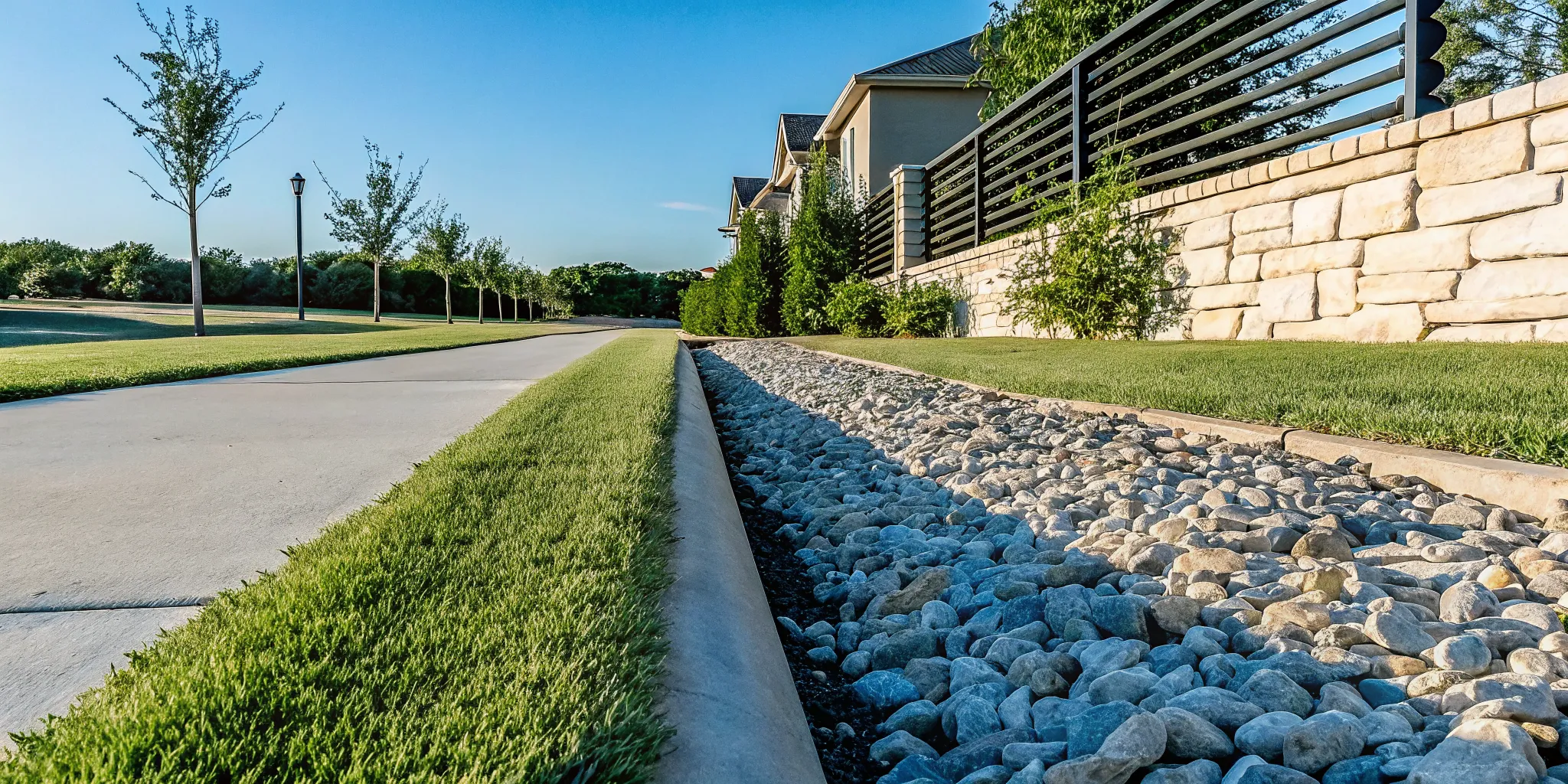
Project function should drive the material decision. Crushed stone is typically appropriate below grade and where stability matters. River rock is typically appropriate at the surface where controlled runoff, erosion protection, and appearance are priorities.
North Texas yards face tough tests from nature. The local Blackland Prairie soil is a thick, heavy clay. This soil has a low infiltration rate.
When big Texas storms hit, water can sit in your yard or wash away your grass. You need a plan to move that water away from your home. Choosing between river rock vs crushed stone for drainage is the first step in that plan.
Managing expansive clay and concentrated runoff
Most land in Anna and Van Alstyne has soil with a low flow rate. This means the dirt acts like a sponge that is already full. It cannot take in more water during a downpour.
If you do not have good underground drainage, your yard can stay soft for days. This wet dirt can lead to big problems for your lawn and house base. The heavy clay expands when wet and shrinks when dry.
This shift puts stress on your home and yard builds. Research from Iowa State experts shows that clearing water is needed for any outdoor build to last.
Crushed stone for stable subsurface drainage
For projects like French drains or driveway base layers, crushed stone is the top choice. Its angular faces provide the interlock needed for a stable aggregate envelope. The pieces compact into a firm, load-supporting bed.
This keeps the stone from moving or sinking when water flows through it. Crushed limestone is a common, cost-effective material for these applications. #4 limestone is commonly considered where the specified system needs larger aggregate and dependable void space.
Most North Texas drainage jobs use stone that is about one to two inches wide. This size supports water movement while maintaining placement stability. It is a smart pick if you want a drain that lasts for years.
Some big jobs might even use rip rap for drainage projects to stop soil from washing down a hill. This heavy stone is ideal for steep slopes where smaller rocks might slide.
River rock for visible dry creek beds
River rock is most valuable in exposed features. Its rounded shape and varied color suit visible dry creek beds and surface channels.
These beds act like a path for water during a storm but look like a real stream the rest of the time. But since these rocks are smooth, they can roll or shift. They do not grip each other like crushed stone does.
If you are building a dry creek bed drainage path, use a mix of sizes. Larger rocks on the bottom and sides help keep the path in place when the rain is heavy.
You can use an area tool to find out how much rock your project needs. Getting the right amount helps you avoid extra trips to the yard.
How to choose drainage stone for your site
Choosing the right rock for your North Texas site starts with knowing how water moves across the land. Local Blackland Prairie soil often has a slow water soak speed because of its high clay content. This can lead to standing water, muddy spots, and long-term dampness near your home. To fix this, you must pick a stone that keeps flow speed high while staying firm in its place.
Evaluate site conditions first
Start by looking at the source of your water. Large roof catchments, steep slopes, and off-site runoff can create erosive flow that displaces undersized stone. If your project sits near a drive or a busy path, you will also need a stone that can handle a heavy load without shifting. Using angular crushed stone helps with load bearing because the jagged pieces lock together to form a solid base.
The grade of your land also matters for your drain. Steep slopes need larger rocks to stop soil loss during heavy North Texas rain. For areas with very high flow or erosion issues, you might look into rip rap for drainage projects to keep the ground firm and safe. Smaller gravel may work on flat ground, but it won’t hold up as well on a hill.
Match aggregate to performance requirements
When you weigh river rock vs crushed stone for drainage, think about both use and looks. Rounded river rock provides an appropriate finish for a visible dry creek bed drainage system. But smooth stones can shift under weight. Crushed stone often costs less and remains stable in deep trenches or below slabs where structural performance takes priority over appearance.
- Find the water source. Look for roof runoff, high ground, or low spots where water pools after a storm. Estimating flow velocity helps determine a stone size that will resist displacement.
- Check the grade and load. A steep grade needs bigger rock to stay put. If cars or heavy gear will drive over the area, choose crushed stone for better support and to prevent deep ruts in the yard.
- Pick your stone type. Use river rock for yard features that add style. Use clean crushed limestone or another specified drainage aggregate for buried French drains where stability takes priority over appearance.
- Use yard fabric. Always lay a weed sheet or fabric under your stone. It keeps the thick North Texas clay from mixing with the rock. If the clay and rock mix, the drain will clog and stop working over time.
- Plan the outlet. Make sure the water has a clear path away from your home. Direct the flow toward a low point, a storm drain, or an area where it can soak in without causing new problems.
- Keep up with care. Check your drainage area after big storms. Clear out leaves, twigs, and silt to keep the water moving well. This simple task ensures your drain lasts for many years.
Confirm grade, outlet, and material quantities
Aggregate sizing is another critical drainage-design decision. Small stones like pea gravel work well for tight spots or light runoff. Larger #4 limestone can be appropriate for higher-flow drainage applications. Deep foundation cracks, recurring washouts, or concentrated runoff near structures warrant professional drainage evaluation. They can help you design a full system that protects your North Texas home from water damage and keeps your site dry.
Installation details matter as much as stone choice
Correct slope, separation fabric, clean aggregate, and a dependable outlet determine whether a drainage system performs. Even the right stone can fail if fines clog the voids, pipe lacks fall, or discharged water has nowhere safe to go.
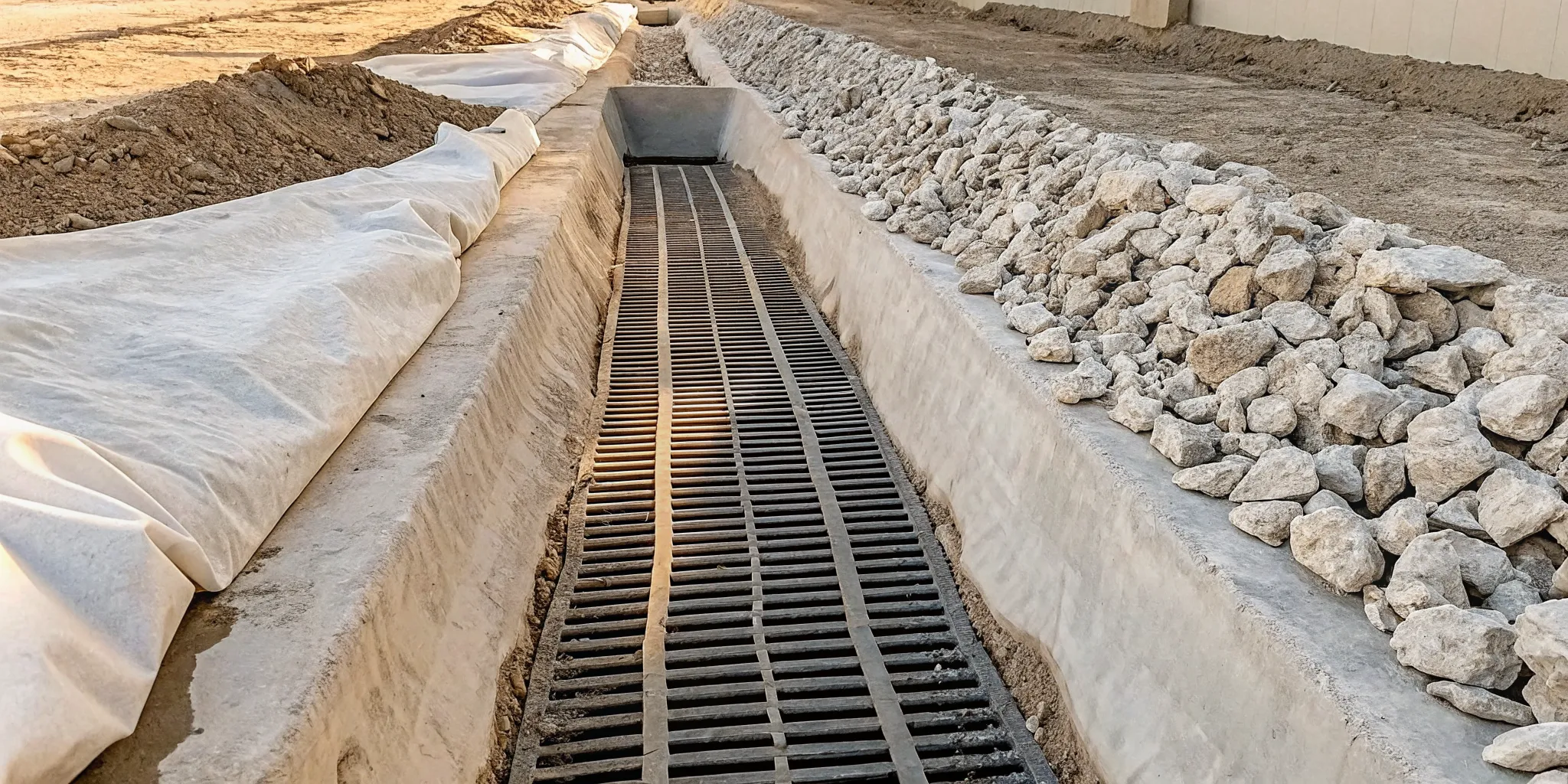
Even suitable aggregate will underperform when grading, separation, or outlet design is inadequate. A good drainage system does two things. It keeps water out of places where it should not be. It also conveys water efficiently after it enters the system. You must plan for every part of the path. This starts with the first scoop of dirt and ends with the final exit point. Success depends on how well you manage the flow from start to finish.
Excavation depth and positive grade
Proper digging is the first step to a dry yard. You must cut a trench with a steady slope. A grade of at least one to two percent is needed to keep water moving. If the land is flat, you will need to dig deeper as you go. This makes the fall needed for gravity to do the work. Without a good slope, water will sit and pool in the pipe. Planning a dry creek bed drainage system helps establish a controlled runoff path. Take your time to measure the depth at each point to avoid low spots.
Separation fabric and clean washed aggregate
After you dig the trench, line it with a non-woven geotextile fabric. This fabric acts as a filter. It keeps soil from mixing with your stone over time. If dirt gets into the gaps between the rocks, the system will clog. This causes the drain to stop working. Use washed stone for the fill instead of base stone. Washed stone has no small bits of dust or sand that can block the flow. Proper subsurface drainage design relies on connected voids to convey water efficiently. You should also use landscape edging to keep your stone in place so it does not shift during heavy rain.
Outlet planning and long-term maintenance
A safe, dependable outlet is as important as water collection. Your system must have a clear outlet to release the load. You can use pop-up emitters or let the pipe end in a safe area. This is often called daylighting the pipe. Check the outlet often to clear out leaves, grass, or dirt. Use rip rap for drainage projects at the exit point to stop soil from washing away. This helps spread the force of the water as it leaves the system. Keeping the outlet clear reduces backup risk during heavy rain.
When professional drainage design is warranted
Most home projects are fine to do yourself. But some sites have big risks. If you have very steep hills, you might need a pro. Large volumes of water from a neighbor can also be a challenge. In these cases, a drainage engineer can help. They can work out the exact flow and slope needed for your soil. This is very helpful in North Texas where clay soil holds water. A pro ensures your system can handle heavy rain. Getting help early can save you from big repair bills later. Use sediment control during the build to keep silt out of the new pipes.
Frequently Asked Questions
Is river rock or crushed stone better for drainage?
Crushed stone is often better for drainage systems that need to stay stable. Its angular shape lets the pieces lock together. This stops the stone from shifting or sliding. This is very helpful for systems like French drains. River rock is smooth and can roll, which makes it less steady. McCraw Landscape Supply can help match crushed stone or river rock to the drainage function and finished design.
Why is crushed stone preferred over river rock for French drains?
French drains typically use clean crushed stone because angular pieces interlock while connected voids convey water to the pipe. These sharp edges also bind together to stop the pipe from moving or sinking. Rounded river rock does not lock in place and might shift later. Experts at FHWA research state that angular stones improve solid strength and load bearing in drainage bases.
Is crushed stone cheaper than river rock for drainage?
Yes, crushed stone is often cheaper than fancy river rock for most drainage jobs. River rock costs more due to its smooth look and the work needed to get it. For a large trench, crushed limestone can provide a cost-effective structural drainage envelope. McCraw Landscape Supply can help estimate the quantity and appropriate crushed stone size for the trench.
Are there specific North Texas soil considerations for drainage stone?
Yes, North Texas has thick Blackland Prairie soil that holds water and grows when wet. This heavy clay soil needs strong drainage to prevent soaking and home damage. Properly specified stone helps convey water away from yards and roads. Local experts at McCraw Landscape Supply suggest using crushed limestone for these soil types. Effective drainage reduces prolonged saturation that can weaken road subgrades.
Ready to request material help for your North Texas drainage?
If you wait to fix your yard drainage, you risk more than just a wet lawn. Pooled water can lead to mold or even damage your home foundation over time. Choosing the right rock today will keep your soil in place and protect your North Texas land. Our team can help select aggregate that supports a properly designed system for moving water away from the house. You will save money by avoiding big repairs and keeping your yard safe and dry all year. Our local crew knows how North Texas weather can shift quickly and cause flooding. Starting your project now means you are ready for the next heavy rain.
Ready to request material help? Call (903) 327-2231 to request material help today.
