River Rock vs Pea Gravel for North Texas Landscaping
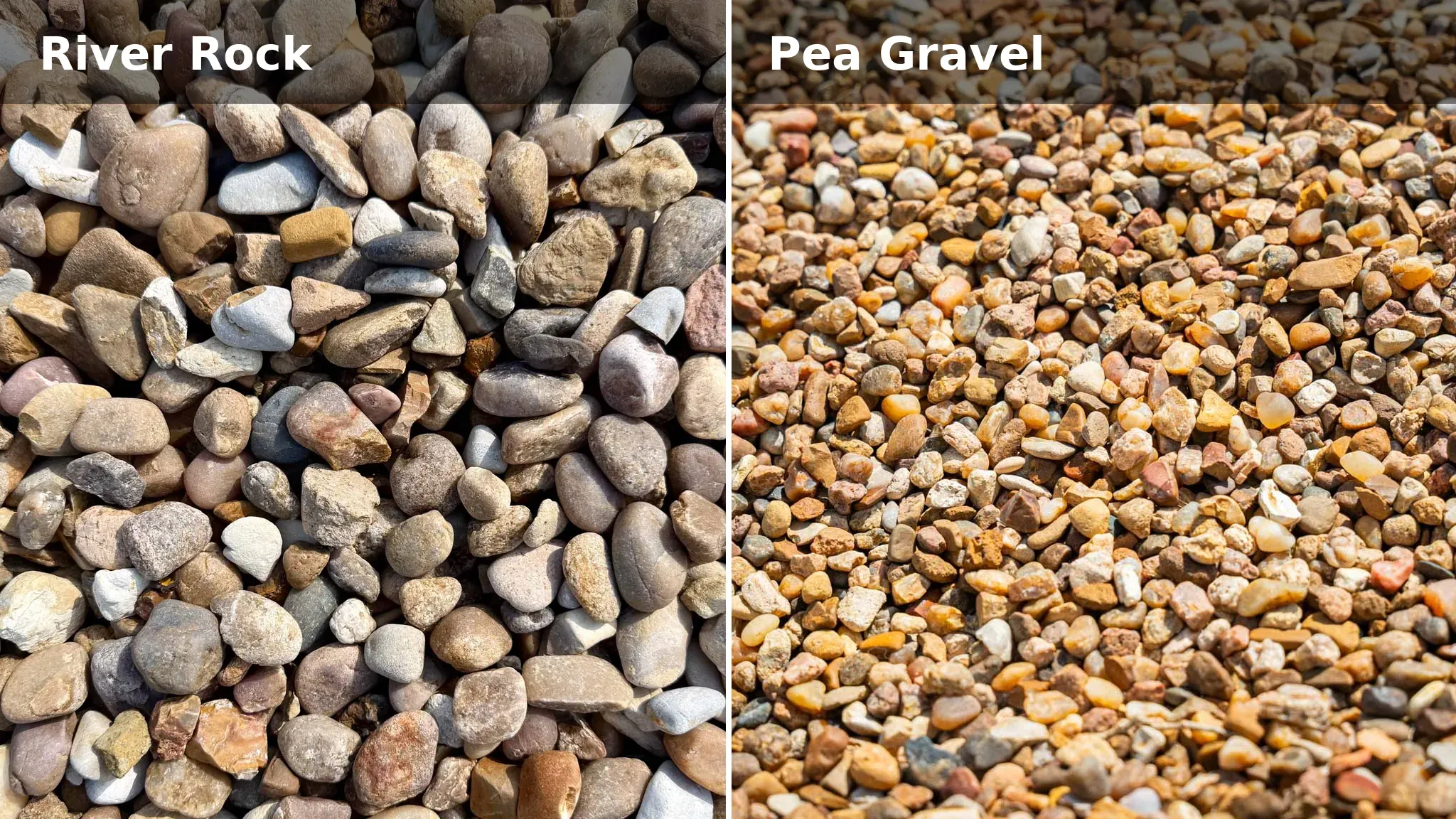
Choosing between river rock vs pea gravel comes down to how the area will be used. Pea gravel is smaller, smoother, easier underfoot, and a strong fit for walkways, sitting areas, dog runs, and decorative beds. River rock is larger, heavier, more dramatic visually, and usually better for drainage features, dry creek beds, erosion-prone spots, and larger landscape borders.
Planning a rock or gravel project in Van Alstyne, Anna, or nearby North Texas? Start with McCraw Landscape Supply’s area calculator, then request a quote for the right material and quantity.
Both materials can look excellent in North Texas landscapes, but they do not solve the same problems. The wrong choice can scatter into your lawn, hold heat next to plants, wash out during heavy rain, or create a surface that is uncomfortable to walk across. The right choice gives you a cleaner landscape, better drainage, and less maintenance over time.
Quick Answer: Should You Use River Rock or Pea Gravel?
Use pea gravel when you want a small, smooth, walkable material for patios, paths, seating areas, playground borders, and low-traffic decorative spaces. Use river rock when you need a heavier decorative stone for drainage swales, dry creek beds, downspout areas, foundation borders, and larger landscape beds where movement control matters.
| Project Need | Better Choice | Why |
|---|---|---|
| Walkways and garden paths | Pea gravel | Small rounded stones feel better underfoot and create a more even walking surface. |
| Dry creek beds | River rock | Larger stone looks natural and handles visible drainage routes better. |
| Patio or fire pit seating area | Pea gravel | It levels more easily and works well with edging and a compacted base. |
| Downspout drainage | River rock | Heavier pieces resist washout better during hard North Texas rain. |
| Modern decorative bed | Either | Pea gravel gives a softer texture. River rock gives a bolder natural look. |
| Primary driveway surface | Neither, usually | Crushed or angular gravel usually performs better under vehicle traffic. |
What Is Pea Gravel?
Pea gravel is a small, rounded decorative gravel, commonly around 3/8 inch in size. Because the pieces are smooth and relatively uniform, pea gravel is one of the most comfortable loose aggregates for foot traffic. It also has a clean, finished appearance that works well around patios, fire pits, container gardens, walkways, and planting beds.
For homeowners, the appeal is simple: pea gravel looks tidy without feeling too formal. For contractors, it is useful because it spreads quickly, finishes cleanly, and works across many residential landscape designs. McCraw’s pea gravel product page is a good place to review the material before estimating your project.
Best Uses for Pea Gravel in North Texas
- Garden walkways and side-yard paths
- Fire pit and patio seating areas
- Decorative ground cover in low-traffic beds
- Dog runs with proper base prep and edging
- Play areas where a small rounded stone is preferred
- Drainage-friendly borders around raised beds or containers
Pea gravel is not the best choice where you need a locked-in, compacted surface. The same rounded shape that makes it comfortable also means it can shift under tires, chairs, or fast water. For driveways, review McCraw’s guide to driveway gravel types for North Texas homes before defaulting to pea gravel.
What Is River Rock?
River rock is a rounded decorative stone available in larger sizes than pea gravel. McCraw carries river rock options such as Native River Rock 1 inch and Native River Rock 2 to 4 inch, giving homeowners and contractors options for different scales of landscape design.
Because river rock is larger and heavier, it has more visual weight. It reads as a landscape feature, not just a surface covering. That makes it especially effective in dry creek beds, drainage channels, foundation borders, culvert areas, and larger beds where small gravel would look too busy or wash around too easily.
Best Uses for River Rock in North Texas
- Dry creek beds that move stormwater through a yard
- Downspout splash zones and drainage outlets
- Decorative borders around homes, fences, and beds
- Large landscape beds where a stronger visual texture is needed
- Sloped areas where smaller loose gravel may migrate
- Native-style and low-water landscape designs
For channels, slopes, culverts, or washout-prone areas that need heavier erosion control, compare rip rap gabion stone.
River rock is not automatically better because it is larger. For a narrow path or seating area, bigger stone can be awkward underfoot and harder to keep level. For a drainage feature or larger bed, that same size and weight can be exactly what the project needs.
Which Gravel Handles North Texas Drainage Better?
Van Alstyne, Anna, and many nearby communities sit in a region where clay-heavy soils can make drainage more complicated. Clay holds water, expands and contracts, and can create muddy low spots after a hard rain. Rock and gravel do not fix grading problems by themselves, but the right material can help water move across the surface more cleanly when paired with proper slope, fabric, edging, and base preparation.
River rock usually performs better where water is visible and moving. A dry creek bed, swale, downspout route, or low spot needs stone that can stay in place when water runs through it. Larger river rock creates a more open texture and a more natural drainage appearance.
Pea gravel drains well in the sense that water can pass through the voids between stones, but it is easier to displace. In hard rain, pea gravel can travel if the area is sloped, poorly edged, or receiving concentrated runoff. It is better for flatter areas where drainage is needed but water is not rushing across the surface.
Rule of thumb: if water is supposed to move through the area, start with river rock. If people are supposed to walk or sit on the area, start with pea gravel.
Appearance: Clean Texture vs Natural Feature
Pea gravel gives a landscape a smaller, more uniform texture. It works well when the goal is a clean background that supports plants, furniture, pavers, or edging. It can make a side yard feel finished without drawing too much attention away from the rest of the design.
River rock has more variation and visual movement. It can turn a drainage solution into a design feature. In North Texas yards where turf, fences, new construction, and clay soil can make landscapes feel flat, river rock adds contrast and depth.
The best choice depends on scale. A small courtyard, narrow walkway, or compact seating area usually looks better with pea gravel. A wide bed, drainage run, or larger front-yard feature often looks stronger with river rock. If you are building a layered landscape, you can also use both: pea gravel for the walkable zone and river rock for the drainage accent.
Maintenance: Which Material Is Easier to Keep Clean?
Neither material is maintenance-free, but they have different maintenance patterns.
Pea gravel can shift, scatter, and get kicked into turf or planting beds if the edges are weak. It also needs occasional raking to keep the surface even, especially around chairs, gates, play areas, and footpaths. Good edging is not optional. Steel edging, stone borders, paver borders, or a strong landscape edge will make a pea gravel project last longer and look better.
River rock is heavier and usually moves less once installed. That makes it easier to maintain in drainage areas and larger beds. The tradeoff is that leaves, mulch, and soil can settle between larger stones. If the area is under trees, expect periodic blowing or hand cleanup to keep it looking sharp.
| Maintenance Factor | Pea Gravel | River Rock |
|---|---|---|
| Scattering | Higher without edging | Lower because stones are heavier |
| Raking | More frequent | Less frequent |
| Leaf cleanup | Moderate | Moderate to higher in large stone gaps |
| Weed control | Requires base prep and fabric where appropriate | Requires base prep and fabric where appropriate |
| Long-term movement | More likely on slopes or traffic areas | Less likely in drainage and bed applications |
How Much Should You Budget for River Rock vs Pea Gravel?
Pea gravel is often one of the more economical decorative gravel choices, while river rock can cost more depending on size, color, and source. Larger and more decorative river rock varieties typically have a higher material cost, and they may also require more careful placement if the project is highly visible.
That said, the cheapest material is not always the lowest-cost project. If pea gravel washes out of a drainage run, you may pay for cleanup and replacement. If river rock is used in a small sitting area where chairs wobble and walking is uncomfortable, you may end up replacing it. Match the material to the use first, then compare pricing.
To estimate quantity, measure the length and width of the area, choose your depth, and use the McCraw area calculator. As a general planning range, decorative rock projects often use a 2 to 3 inch depth, while drainage and larger rock features may need more depending on the base, slope, and design.
Need help sizing a project? Use the calculator, then request a material quote so McCraw can help confirm product availability, delivery options, and the right quantity for your space.
Where Pea Gravel Is the Better Choice
Pea gravel is the better fit when comfort and clean finish matter most. If people will walk, sit, or spend time on the surface, pea gravel usually beats larger river rock.
Pea Gravel Walkways
For garden paths and side-yard walkways, pea gravel provides a softer walking surface than larger stones. The key is containment. Install a proper base, use landscape fabric where appropriate, and add edging high enough to hold the stone in place.
Pea Gravel Patios and Fire Pit Areas
Pea gravel is popular around fire pits because it drains well, spreads evenly, and gives the space a relaxed look. It is also easier to refresh than a hardscape patio. For chairs and tables, use a compacted base and avoid installing it too deep. Too much loose gravel can make furniture sink or wobble.
Pea Gravel Around Raised Beds
In vegetable gardens and raised bed areas, pea gravel helps create clean walking lanes and reduces mud. It is a strong choice for homeowners who want low-maintenance access paths between beds without pouring concrete or installing pavers.
Where River Rock Is the Better Choice
River rock is the better fit when the project needs weight, drainage control, or stronger visual impact. It is especially useful where North Texas storms send water across a yard in a predictable path.
River Rock Dry Creek Beds
A dry creek bed is one of the best uses for river rock. It can guide water through a landscape while looking intentional instead of purely functional. Use larger river rock as the main surface, then vary size where needed for a more natural look.
River Rock Drainage and Downspout Areas
Where downspouts discharge water, small gravel can scatter. River rock is heavier and better suited for splash zones, drainage outlets, and areas where water needs to be slowed and spread out.
River Rock Landscape Borders
For foundation beds, fence lines, and large planting areas, river rock creates a clean border that does not break down like organic mulch. Keep plant health in mind. Rock can hold heat, so leave room around sensitive plants and use the right depth.
Common Mistakes to Avoid
- Using pea gravel on a slope without containment. Rounded gravel migrates downhill when water, foot traffic, or gravity work against it.
- Using large river rock where people need to walk. It may look good, but it can be uncomfortable and uneven underfoot.
- Skipping edging. Both materials perform better with a defined edge, especially pea gravel.
- Installing rock too shallow. Thin coverage exposes fabric and soil, making the project look unfinished.
- Ignoring drainage direction. Rock improves a drainage plan, but it does not replace proper grading.
- Choosing by price only. Material cost matters, but project fit matters more.
How to Choose the Right Rock for Your Project
Before ordering, answer four questions:
- Will people walk or sit on it? If yes, pea gravel is usually the better starting point.
- Will water move through it during storms? If yes, river rock is often the safer choice.
- Is the area flat or sloped? Sloped areas need heavier stone, stronger edging, or a different material.
- Is this a background surface or a design feature? Pea gravel is subtle. River rock makes a stronger statement.
If you are still comparing options, browse McCraw’s full landscape supply products or review related materials such as decomposed granite. Decomposed granite can be a better fit than either pea gravel or river rock when you want a firmer path surface with a more compacted finish.
FAQ: River Rock vs Pea Gravel in North Texas
Which is cheaper, river rock or pea gravel?
Pea gravel is usually cheaper than decorative river rock, although final pricing depends on size, color, source, delivery distance, and current availability. For most Van Alstyne and Anna projects, the smarter budget decision is to match the material to the use first, then compare delivered cost. Pea gravel can become expensive if it washes out of a drainage area and has to be replaced.
Can I use pea gravel for drainage?
Yes, pea gravel can support drainage in flat or lightly used areas because water can move through the gaps between stones. It is not the best choice for concentrated runoff, steep slopes, downspout outlets, or dry creek beds because the small rounded pieces can migrate. In those situations, larger river rock is usually the safer material.
How deep should river rock be installed?
Most decorative river rock beds use about 2 to 3 inches of material, while drainage features, dry creek beds, and larger stone installations may need more depth based on slope, stone size, and water volume. A thin layer can expose fabric and soil, while an overly deep layer can trap debris and raise project cost. Measure the area and use McCraw’s area calculator before ordering.
Is pea gravel good for patios and fire pit areas?
Pea gravel can work very well for patios and fire pit seating areas when it is installed over a proper base and held with strong edging. Keep the finished layer controlled rather than overly deep so chairs and tables do not sink or wobble. Larger river rock is usually less comfortable for sitting areas because it creates an uneven walking surface.
Do river rock and pea gravel prevent weeds?
Neither material prevents weeds by itself. Weed control comes from site prep, appropriate landscape fabric where it fits the application, proper depth, clean edges, and periodic maintenance. Windblown soil and organic debris can collect between stones over time, so both materials still need occasional cleanup.
Bottom Line: River Rock vs Pea Gravel
For most North Texas homeowners and contractors, pea gravel is the better choice for walkable, small-scale, decorative spaces. River rock is the better choice for drainage features, larger beds, and areas where weight and visual impact matter. Both can perform well when installed with the right base, depth, edging, and drainage plan.
McCraw Landscape Supply serves Van Alstyne, Anna, and nearby North Texas communities with rock, gravel, soil, sand, mulch, sod, and other landscape materials. If you know your square footage, use the area calculator to estimate quantity. If you are comparing products or planning delivery, contact McCraw Landscape Supply or request a quote for project-specific guidance.
