Sandy Loam vs Topsoil for North Texas Lawns and Gardens
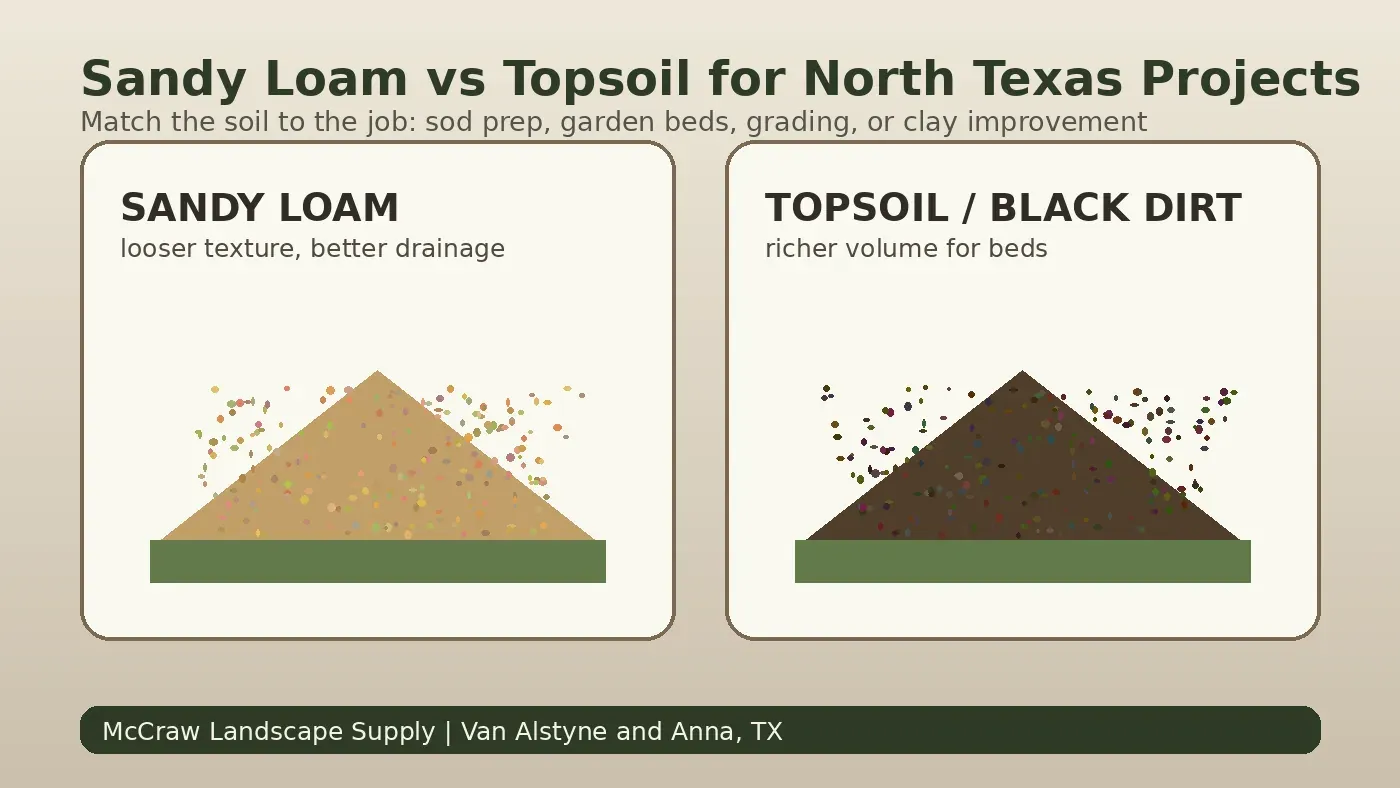
If you are comparing sandy loam vs topsoil in North Texas, the right answer depends on what you are building: a new lawn, a garden bed, a drainage fix, or a grading base. Sandy loam is usually the better choice for sod prep and lawn leveling because it drains, grades, and supports turf roots well. Screened topsoil or black dirt is better when you need organic matter, bed building, or general landscape fill. Compost is not a replacement for either one, but it is the amendment that helps North Texas clay behave like soil instead of concrete.
Planning a soil, sod, or bed project? Use McCraw Landscape Supply’s area calculator to estimate cubic yards before you order.
That difference matters around Van Alstyne, Anna, Sherman, McKinney, and the growing North Texas corridor, where many yards sit on heavy clay, compacted construction soil, or thin builder-grade fill. Ordering the wrong material can leave sod sitting wet, garden beds hungry, or low spots returning after the next storm. This guide breaks down when to use sandy loam, screened topsoil, black dirt, compost, and bedding soil so homeowners and contractors can match the material to the job.
Quick Answer: Sandy Loam vs Topsoil in North Texas
Use sandy loam when you need a workable soil blend for turf establishment, sod prep, lawn leveling, or improving heavy clay drainage. Use screened topsoil or black dirt when you need a richer general-purpose soil for filling beds, building grade, or adding soil volume where plants need more organic matter.
| Material | Best Use | Why It Works |
|---|---|---|
| Sandy loam | Sod prep, lawn leveling, turf base, light grading | Drains better than clay, spreads smoothly, supports root oxygen |
| Screened topsoil | New beds, lawn repair, general landscape soil | Balanced soil texture with organic matter and fewer clumps or rocks |
| Black dirt | Economical fill, bed raising, broad landscape use | Adds soil volume and improves poor existing soil when used correctly |
| Compost | Soil amendment, garden enrichment, clay improvement | Adds organic matter, improves structure, and supports microbial activity |
| Bedding soil or garden mix | Vegetable gardens, flower beds, raised beds | Blended for planting performance, not just fill or grading |
What Is Sandy Loam?
Sandy loam is a soil texture that contains more sand than clay, with enough silt and clay to hold some moisture and nutrients. For landscape projects, the appeal is simple: it is easier to spread, easier to grade, and less prone to staying saturated than heavy native clay.
For North Texas lawns, sandy loam and top soil products are especially useful when preparing for Bermuda or Zoysia sod. The sandier structure helps water move through the root zone, while the loam portion gives roots something more stable than straight sand. That balance makes it a strong base for sod that needs quick root contact after installation.
Sandy loam is not magic soil. It still needs proper grading, enough depth, good sod installation, and watering discipline. But when the existing yard is hard, slick, and clay-heavy, a properly placed sandy loam layer can create a better transition zone between the sod and the native soil.
What Is Topsoil?
Topsoil is the upper layer of soil used for general planting and landscape projects. In supplier terms, topsoil can vary widely, so it is important to know whether you are buying screened topsoil, unscreened topsoil, black dirt, or a specific soil blend.
Screened topsoil has been processed to remove larger debris, rocks, and clumps. That makes it easier to rake, spread, and use in visible landscape areas. Black dirt is often used as an economical soil option for adding volume, raising low areas, and improving beds when paired with the right amendments.
For gardens and ornamental beds, topsoil can be more appropriate than sandy loam because plants often need more organic matter and nutrient-holding capacity than a turf base requires. The mistake is assuming all topsoil is automatically rich garden soil. If the project needs plant performance, topsoil often needs compost or a bedding mix to finish the job.
North Texas Soil Changes the Decision
Soil decisions in North Texas are different from soil decisions in a loamy Midwest yard or a sandy coastal yard. Much of the region is influenced by Blackland Prairie clay and related heavy soils. These soils can hold moisture, compact under foot traffic and equipment, and become hard when dry.
That is why contractors and homeowners around Van Alstyne and Anna should think in terms of soil function, not just soil name. A lawn area needs drainage, oxygen, and grade. A vegetable bed needs organic matter and workable depth. A low side yard may need drainage correction before any soil is added.
Texas A&M AgriLife Extension guidance notes that lawns need several inches of well-drained, organic-rich soil so roots can access oxygen, moisture, and nutrients. That is the core issue: native clay often needs both structure improvement and organic matter. Sandy loam helps with structure and drainage. Compost helps with organic matter and soil biology. Topsoil or black dirt adds volume and planting medium.
When Should You Use Sandy Loam?
Use sandy loam when the project depends on drainage, smooth grading, or turf root establishment. It is one of the most practical soil materials for lawn work in North Texas because it can be spread evenly and does not behave as sticky as clay-based fill.
Use sandy loam for new sod prep
For new sod, sandy loam can help create a smooth, workable surface beneath Bermuda or Zoysia. The goal is not to bury the yard under loose soil. The goal is to correct grade, improve the upper root zone, and create firm soil-to-sod contact.
Before installing sod, remove construction debris, break up compacted areas, correct drainage, and lightly incorporate the soil where appropriate. Sod performs best when roots can move into the prepared layer instead of sitting on a slick clay shelf.
Use sandy loam for lawn leveling and low spots
Sandy loam is also useful for filling shallow low spots and smoothing lawn areas before turf work. For established lawns, keep topdressing thin enough that grass blades can grow through the material. Deep piles of soil over living turf can smother the lawn.
Use sandy loam when clay drainage is the problem
In compacted clay yards, sandy loam can improve the surface layer and make grading easier. However, do not use sandy loam as a shortcut for a true drainage issue. If water flows toward the house, pools for long periods, or comes from a neighboring grade, the fix may require grading, swales, drain rock, pipe, or professional drainage work before soil is added.
When Should You Use Topsoil or Black Dirt?
Use topsoil or black dirt when you need soil volume, bed building, or general landscape improvement. These materials are often better for planting areas than a sandier turf base, especially when mixed or amended correctly.
Use screened topsoil for beds and lawn repair
Screened topsoil is a good fit for filling new flower beds, repairing bare lawn areas, and improving planting zones where a cleaner texture matters. Because it is screened, it is easier to rake and shape around edging, trees, shrubs, and walkways.
Use black dirt for economical soil volume
Black dirt can be the practical choice when you need to raise a bed, add soil volume, or fill broad landscape areas without paying for a specialty mix everywhere. It is not always the final planting recipe by itself. For gardens, flowers, or high-value planting areas, blend or top off with compost or bedding soil for better performance.
Do not use topsoil to hide drainage problems
Adding topsoil over a wet, compacted, poorly graded area rarely solves the underlying issue. It may make the area look better for a few weeks, then settle, wash, or stay wet again. Fix grade and drainage first, then use soil to finish the surface.
Need help choosing the right bulk material? Start with the soil product options, then calculate your square footage and depth before scheduling pickup or delivery.
Where Compost Fits Into the Mix
Compost is an amendment, not a grading soil. It improves soil structure, adds organic matter, and helps clay soils become more workable over time. In garden beds, compost is often the ingredient that turns basic topsoil into a more productive planting medium.
For North Texas clay, compost helps create air space and supports beneficial soil life. For sandy or loose soils, it helps improve water and nutrient holding. That makes it useful in nearly every planting project, but it should be used at the right rate and mixed into the soil instead of dumped in thick layers by itself.
For existing lawns, a light compost topdressing after aeration can help organic matter move into the root zone. For new beds, compost can be blended with topsoil or native soil. For sod prep, compost may be useful in moderation, but too much loose organic matter directly under sod can settle unevenly.
Bedding Soil vs Topsoil: What Is Better for Gardens?
For vegetable gardens, annual beds, and raised beds, bedding soil for planting beds or garden mix is usually better than plain topsoil. A good bedding mix is designed for root growth, drainage, and nutrient availability. Plain topsoil adds volume, but it may not provide the structure or fertility that vegetables and flowers need.
If you are building a new garden bed in Anna or Van Alstyne, think in layers and blends. Native clay can provide mineral content but needs organic matter. Topsoil adds bulk. Compost improves structure and fertility. A bedding mix brings those components closer to a ready-to-plant medium.
For raised beds, avoid filling the entire bed with dense topsoil alone. It can compact, drain poorly, and become difficult to work. Use a planting-focused mix or blend topsoil with compost and other amendments based on what you plan to grow.
How Much Soil Do You Need?
Soil ordering becomes much easier when you measure square footage and choose the depth before calling for bulk material. Most soil, compost, mulch, sand, and gravel is estimated in cubic yards.
Use this simple formula:
- Length in feet x width in feet = square feet
- Square feet x depth in inches / 324 = cubic yards
For example, a 1,000 square foot lawn area with 2 inches of soil needs about 6.2 cubic yards. A 200 square foot bed with 6 inches of material needs about 3.7 cubic yards. Always account for settling, grading, and the fact that real yards are rarely perfect rectangles.
McCraw’s area calculator helps homeowners and contractors estimate material needs before ordering. It is especially useful for comparing scenarios, such as a 1-inch leveling layer versus a 3-inch sod prep layer.
Common Soil Mistakes to Avoid
The biggest soil mistakes happen when people order by name instead of use case. Sandy loam, topsoil, black dirt, compost, and bedding soil each solve a different problem.
- Using compost as fill: Compost improves soil, but it is not the right material for building grade or filling deep low spots.
- Using dense topsoil under sod without drainage thought: Turf roots need oxygen. Heavy, wet soil can slow establishment.
- Topdressing too thick over live grass: If the grass cannot grow through the layer, the material can smother it.
- Ignoring construction compaction: New homes often have compacted lots. Loosen and correct the base before adding nicer material on top.
- Ordering without measuring: Guessing cubic yards is how projects run short or leave a pile of soil sitting in the driveway.
- Trying to fix drainage only with soil: Soil helps finish grade, but slope and water movement still matter.
Best Material by Project Type
Here is the practical breakdown for common North Texas projects.
New Bermuda or Zoysia sod
Choose sandy loam for the prepared surface, especially where you need grading and better drainage than native clay. Pair it with proper soil preparation and quality sod from a local supplier. If you are still choosing turf, review McCraw’s sod options for North Texas lawns.
Vegetable or flower beds
Choose bedding soil, garden mix, screened topsoil amended with compost, or a blend based on the plants. Plain fill dirt is rarely enough for productive beds.
Low spots in a lawn
Choose sandy loam for shallow leveling and topdressing. For deeper grade changes, evaluate whether the area needs base fill, compaction, and drainage correction before the final soil layer.
General landscape fill
Choose black dirt or topsoil when the goal is adding soil volume. Finish visible or planting areas with screened material or compost-amended soil.
Clay soil improvement
Choose compost for long-term structure improvement. Sandy loam can help the surface layer for turf and grading, but compost is the material that builds organic matter.
FAQ: Sandy Loam, Topsoil, Compost, and Black Dirt
Is sandy loam better than topsoil for sod?
For many North Texas sod projects, sandy loam is better than standard topsoil because it spreads smoothly, drains better, and supports strong root contact. Topsoil can work when it is clean and well balanced, but heavy or clay-rich topsoil can stay too wet under turf.
Can I use topsoil for a vegetable garden?
Yes, but plain topsoil is usually not enough by itself. For vegetable gardens, blend topsoil with compost or use a bedding soil designed for planting. This gives roots better structure, nutrients, and moisture management.
Is black dirt the same as topsoil?
Black dirt is often used like topsoil, but terms vary by supplier and region. Ask whether the material is screened, what it is best used for, and whether it should be amended with compost for planting beds.
How deep should soil be before laying sod?
A healthy lawn needs several inches of workable, well-drained soil for roots. In North Texas clay, the exact prep depth depends on compaction, grade, drainage, and the existing soil. Many projects benefit from loosening the base and adding a prepared sandy loam layer before sod.
Should I mix compost into clay soil?
Yes. Finished compost is one of the best amendments for heavy clay because it improves structure, air movement, water movement, and soil biology. Work it into the root zone instead of leaving a thick unmixed layer on top.
Get the Right Soil for Your North Texas Project
The choice between sandy loam vs topsoil in North Texas is really a choice between functions. Sandy loam is the turf and grading workhorse. Screened topsoil and black dirt add soil volume and planting medium. Compost improves the soil you already have. Bedding soil gives gardens and raised beds a better growing environment.
Ready to price and plan your project? Measure the area, use the McCraw area calculator, then compare sandy loam and top soil, black dirt, and compost for your lawn, garden, or grading project. When you are ready to schedule material, request a soil delivery quote from McCraw.
