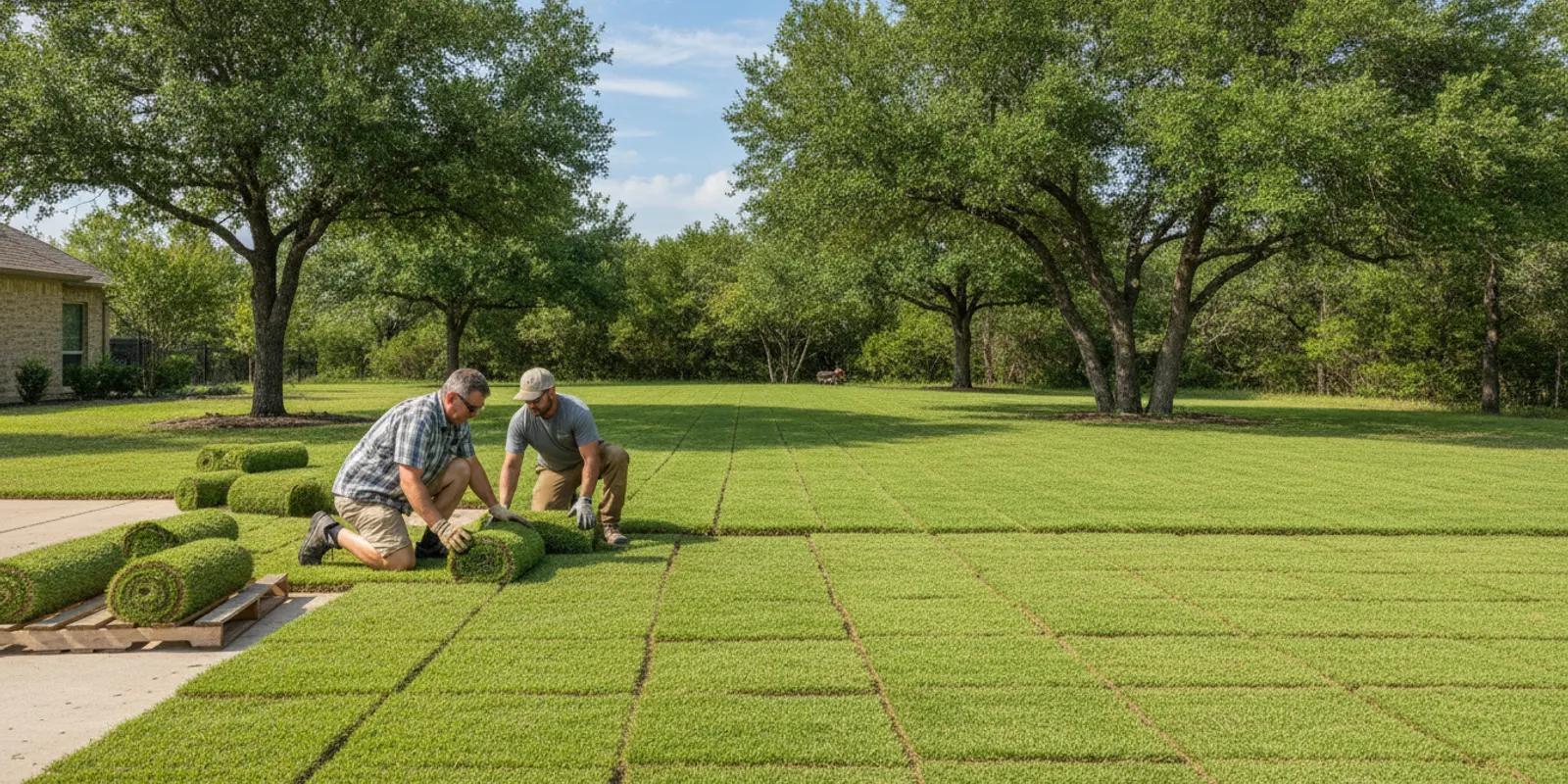
Planning sod for lawn coverage means more than choosing green grass and placing an order. In North Texas, a good result depends on matching the grass to the site, preparing the ground, measuring carefully, and making sure the delivery can be installed promptly. Use this guide to decide whether sod fits your project and what to have ready before you order.
Ask McCraw about planning your sod order
Is sod the right way to establish your lawn?
Sod is established grass with soil held together in sections or rolls. It gives a new lawn an immediate green surface after installation, while seed takes time to germinate and fill in. That quick visual change can matter for a new home, a renovation, or an area where bare ground needs to be covered soon. But sod is not a shortcut around site preparation or early care. The ground still needs to be graded and made suitable for rooting, and the new grass needs consistent attention as it establishes.
Before ordering, decide what the lawn must do. Is it primarily a view from the street, a play area, a path between the house and yard, or a mix of uses? Note where people will walk, where water tends to collect, and which areas receive shade. Think about how much time you can give watering and care during the first weeks. Those answers help determine whether sod is practical and which grass characteristics matter most.
Sod can be a good fit when you want broad coverage in a short installation window and can prepare the site in advance. Seeding may suit a project with more time and the ability to protect the area while grass fills in. Repairing only a few damaged patches may call for a smaller targeted approach. Compare the basic tradeoffs before committing:
| Approach | Useful when | What to plan for | Early appearance |
|---|---|---|---|
| Sod | You want broad, immediate lawn coverage | Ground preparation, accurate quantity, prompt installation, and early watering | Green coverage as soon as it is laid |
| Seed | You have time for grass to germinate and fill in | Suitable seed and soil conditions, protection from disturbance, and ongoing care | Bare soil remains visible while the grass develops |
| Small-area repair | The lawn is mostly healthy and damage is limited to a few spots | Matching the repair material to the existing lawn and correcting the cause of damage | Coverage develops in the repaired areas |
This is a planning comparison, not a guarantee of establishment. Weather, site conditions, grass type, and care all affect the outcome. If the area is large or the ground has drainage or grading problems, resolve those issues before choosing a covering. Laying sod over a recurring problem can hide it briefly without fixing it.
What should you assess before choosing grass?
Start with a simple site walk. Sketch the lawn and mark the house, walks, driveway, trees, fences, beds, and slopes. Then note how sunlight changes during the day. A lawn that gets open sun has different needs from one shaded by buildings or mature trees. Identify high-traffic zones and any spots that stay wet or dry out quickly.
Grass selection should match the conditions you actually have, not only the appearance you prefer. McCraw lists Bermuda and Zoysia sod among its sod options. Review the available Bermuda sod and Zoysia sod information, then compare the listed product details with your site and intended use. The right choice depends on the conditions and preferences for your particular lawn; avoid selecting solely by a product name or a neighbor’s result.
Make a short requirements list before seeking advice:
- Light: Which areas are in full sun, partial shade, or heavier shade?
- Use: Will the lawn have regular foot traffic, or is appearance the main goal?
- Shape: Is the lawn a simple rectangle, or are there many curves and narrow strips?
- Water: Can you provide the early watering the new sod needs, and are there local restrictions to check?
- Maintenance: How much mowing and ongoing care are you prepared to provide?
Do not assume one grass will perform equally across every corner of a complicated yard. If part of the site is deeply shaded or affected by runoff, discuss those details before ordering. A supplier can help you understand the listed material choices, but site preparation and care remain essential parts of the project.
It can help to divide a mixed-condition yard into zones. Mark sunny open lawn separately from shaded strips beside a fence or under a tree, and identify the parts that receive the most foot traffic. Then decide whether the whole yard needs one consistent grass choice or whether some areas need a different landscape treatment. Do not order material for a shaded section until you have confirmed that your selected grass suits those conditions. A little planning can avoid having to replace a section that was never a good match.
Also consider the finished look you want and the work you are willing to do after installation. A lawn is a living surface, not a one-time construction finish. Set realistic expectations about mowing, watering, and keeping the area clear while it establishes. If you are comparing options with a landscape professional, share both your priorities and your limitations so the recommendation reflects how you will actually use the yard.
How do you measure the lawn for a sod order?
Measure the actual area to be covered, not the entire property. For a rectangular section, multiply its length by its width. Divide an irregular lawn into rectangles and triangles, calculate each section, then add the results. For a triangle, multiply the base by the height and divide by two. Keep measurements in the same unit, commonly feet, so your area is in square feet.
Subtract areas that will not receive sod, such as patios, beds, walks, and permanent structures. For a curved edge, break it into smaller measurable shapes rather than guessing from the outer boundary. A rough sketch with dimensions is useful when checking your math or discussing the order. Re-measure any section where the lawn edge changes significantly.
Measure separate strips along walks and around beds with care. A narrow strip that looks small can add meaningful area when it runs along a long edge. Record each section on the sketch and mark what is included or excluded, so you do not accidentally count a patio twice or forget a side yard. If different people take measurements, compare notes before using the final total. Keep a copy of your calculations so you can explain how you arrived at the requested coverage.
Ask the supplier whether the quantity should be rounded to whole units and how its product is packaged. Avoid padding the estimate by an arbitrary amount without checking how the material is sold or how complicated the layout is. A simple open rectangle and a yard with many curves or narrow cuts can create different installation needs even when their measured areas are similar. The goal is a defensible estimate that can be reviewed before the order is set.
For example, a simple area measuring 30 feet by 40 feet covers 1,200 square feet before subtracting any beds or hard surfaces. If a 10-by-8-foot planting bed is inside that rectangle, subtract 80 square feet, leaving 1,120 square feet to cover. This example is only a measurement demonstration; confirm how the sod is packaged and how much each unit covers before translating area into an order quantity.
Use McCraw’s landscape material calculator as another way to check area estimates. Keep your hand sketch and measurements, too. A calculator can help with the arithmetic, but it cannot identify obstacles, confirm site dimensions, or decide how much extra material your particular layout needs. Ask the supplier how its sod is sold and whether the listed coverage is based on square feet, pallets, or another unit.
What ground preparation should happen before delivery?
Plan preparation so the site is ready when sod arrives. Remove existing weeds, unwanted grass, debris, and loose material. Address low spots and high areas, and establish the intended slope so water can move away from structures without creating an erosion or drainage problem. Avoid leaving a rough surface with ridges and depressions; uneven ground can make installation harder and affect how the finished lawn looks and drains.
Check the existing soil condition before assuming it needs a particular amendment. Soil differs from one property to another, and filling a lawn with an unsuitable material can create new problems. McCraw carries several soil products, including topsoil and garden soil. If you think the site needs additional soil, identify whether the goal is to correct grade, improve the planting layer, or fill a low area. Those are different tasks. Ask what material is appropriate for the job rather than ordering by a generic label.
Finish with a reasonably smooth, firm surface that is ready for the sod and can be watered. Clear away tools and loose debris from the installation area. Make sure access routes are open and that the placement location for a delivery is agreed in advance. Do not leave preparation until the truck is on the way: the installation plan should be settled before you arrange the order.
Walk the prepared area from several angles and check for leftover lumps, holes, exposed roots, and spots where water is likely to collect. Take time to adjust these before the sod goes down, since it is much easier to correct the surface before it is covered. Keep the final grade consistent with the surrounding walks and beds so the lawn transitions cleanly and does not create a trip edge. If grading near the house, utilities, or retaining structures is involved, make sure the work is appropriate for the site and does not direct water where it can cause damage.
Do not treat added topsoil as a universal fix. A low spot may need grading correction, while a planting area may call for a different soil approach. Identify the problem first, and if you are unsure, ask for guidance on the material and quantity. Having the intended finished elevation in mind makes it easier to estimate any soil requirements separately from the sod coverage.
How should you plan delivery and installation day?
Sod is perishable plant material, so coordinate the delivery with the people and equipment needed to lay it. Before confirming a date, know who will unload, where the material should be placed, how it will reach the lawn, and whether the installation area will be ready. If you are managing the work yourself, avoid scheduling delivery on a day when other commitments could delay installation.
Consider access for a truck and equipment. Note narrow gates, overhead branches, soft ground, parked vehicles, and places where a delivery cannot safely unload. Be clear about the desired drop location and how far material will need to be carried. If the project involves multiple lawn sections, plan a practical sequence so the crew can work through them without unnecessary handling.
Think through the route from the drop point to the farthest section. If the route crosses a driveway, narrow passage, or finished landscape feature, mention it in advance and determine how the material can be moved without damaging the property. On a larger project, organize tools and helpers so one person is not left trying to manage unloading and installation at the same time. Make sure the planned work window is realistic for the crew and the area being covered.
When you contact a supplier, have the following information ready:
- Your measured square footage and a basic sketch of the area.
- The grass type you are considering and any questions about the available options.
- Your preferred delivery window and the date the site will be prepared.
- Access limits, unloading preferences, and any special placement instructions.
- The person who will be present to receive the material and coordinate installation.
McCraw serves North Texas communities including Van Alstyne and Anna, and its locations page can help you find location information. Service and delivery details depend on the project and should be confirmed directly. If you are near Anna, see the Anna location information when planning your next step.
What should you expect during early care?
New sod needs attention after it is installed. Follow the care guidance supplied for the specific grass and conditions rather than relying on a fixed schedule meant for a different season or property. In North Texas, heat, wind, rainfall, soil, and local watering rules can all affect how you manage water. Check whether your water provider has current outdoor watering guidance. The Texas Living Waters Project’s North Texas Outdoor Watering Survey reviews how providers in North Texas approach outdoor water use; it is a useful reminder to verify local guidance rather than assuming the same rules apply everywhere.
Plan to be present to observe the new lawn and respond to conditions. Look for areas that dry out faster than others, especially edges, slopes, and places exposed to wind or sun. Also watch for pooling water. If water is running off before it can soak in, or collecting in a low area, investigate rather than simply increasing watering everywhere. Follow the recommended early care instructions for your grass and seek advice when the site behaves differently than expected.
Limit unnecessary foot traffic while the sod settles and roots into the prepared ground. Keep pets and equipment off the area as appropriate, and be cautious about mowing or other activity until the grass is ready according to its care guidance. Establishing a lawn is a process; the day it looks green is not the end of the work.
Keep a simple record of watering and observations during establishment. Note the date, weather conditions, and any places that show stress, so you can spot patterns instead of reacting to a single patch. Avoid making major changes based on appearance alone: confirm the care recommendations for the sod and consider whether shade, slope, or runoff explains the difference. If a section is struggling, identify the cause and ask for advice rather than applying a general fix across the whole lawn.
What should you confirm before placing the order?
A clear order conversation helps prevent surprises. Confirm the grass type and product, the quantity basis, the delivery date or window, the drop location, and any site-access details. Ask how the product is packaged and what coverage is associated with each unit. If you have an irregular layout or a narrow installation window, mention that before the order is finalized.
Also verify that your site plan is realistic. You should know who is preparing the ground, who will lay the sod, and how early care will be handled. If one of those steps is uncertain, resolve it before delivery. McCraw’s landscape supply products page provides a starting point for reviewing product categories, while its bulk material quote request is available if you want to discuss a project and delivery needs.
When you reach out, a short description of the area, measurements, location, target date, and preferred sod type makes the conversation more useful. You can also use the contact page to ask about the next step. Confirm current availability and delivery arrangements directly rather than assuming a product or date is guaranteed.
Frequently Asked Questions
How do I know how much sod to order?
Measure only the sections that will be covered, subtract beds and hard surfaces, and add the areas together. Then confirm the coverage unit and packaging with the supplier before placing an order. A calculator can check the arithmetic, but careful site measurements are still needed.
Should I order sod before the ground is ready?
Plan the product and delivery in advance, but coordinate the actual delivery for a time when the site and installation plan are ready. Sod should not sit while ground preparation or staffing remains uncertain. Confirm timing with the supplier and arrange for prompt installation.
Can the same sod work in every part of my yard?
Not necessarily. Sun, shade, traffic, drainage, and maintenance preferences can vary across one property. Map those conditions and compare them with the listed grass options before deciding. If some areas have unusual shade or drainage, raise those concerns when asking for guidance.
What if the lawn area has poor drainage or uneven grade?
Address the underlying site issue before placing sod. Correcting the grade or drainage may require a different plan than simply adding a covering layer. If water repeatedly pools or runs toward a structure, determine how to resolve that safely before proceeding.
Contact McCraw to discuss your sod project
Plan the lawn as a complete project
A successful sod project starts with a lawn that suits the site and a plan that connects measurement, preparation, delivery, installation, and early care. Make a sketch, note the sun and use conditions, prepare access, and confirm product coverage and timing before you order. With those details in hand, you can make a more informed choice for your North Texas lawn.
